West Virginia ATV Rules During Deer Season
There’s nothing quite like the crisp air of a West Virginia autumn, the promise of a successful hunt, and the convenience of your ATV or UTV to help you get out into the backcountry. But before you load up your gear and head for the woods, it’s crucial to understand the specific rules and regulations that govern ATV use during deer season. Many hunters face the frustration of wanting to use their machine for scouting, hauling stands, or retrieving that trophy buck, only to be unsure if they’re crossing a legal line. This guide is here to untangle those rules, ensuring your deer season is both successful and compliant.
The Basics: ATVs, Public Land, and Hunting Season in West Virginia
Navigating the landscape of West Virginia during deer season, especially when you plan to incorporate an ATV or UTV, requires a solid understanding of where you can and cannot ride, and under what conditions. It's a common misconception that if you're out hunting, all rules for your off-road vehicle go out the window. That simply isn't the case, and knowing the specifics can save you a lot of headaches, or worse, citations.
General ATV Use on Public Lands During Hunting Season
West Virginia boasts an incredible amount of public land, including sprawling National Forests, various State Forests, and numerous Wildlife Management Areas (WMAs). These areas are often prime hunting grounds, but they come with their own distinct rules for motorized vehicle use. Generally speaking, ATVs and UTVs are restricted to designated trails and roads within these public lands. This means you can't just blaze a new trail through the woods to get to your favorite hunting spot or to retrieve game, no matter how tempting it might be.
Imagine you've been scouting a fantastic area deep within a State Forest, and you've identified the perfect spot for your tree stand. You might think, "My side-by-side can get me right back there!" However, if that path isn't a clearly marked and designated motorized trail or road, you could be in violation. Even established logging roads or old coal haul roads that appear open might not be legally accessible for ATVs. The key is to check maps provided by the West Virginia Department of Natural Resources (DNR), the U.S. Forest Service, or the specific WMA you plan to hunt. These maps typically delineate which routes are open to motorized vehicles. Ignoring these designations could lead to fines, damage to sensitive ecosystems, and even the loss of hunting privileges. It’s always best to park at the nearest designated access point and cover the remaining distance on foot rather than risking a violation.
West Virginia's ATV Title and Registration Requirements for Hunting
Many hunters use their ATVs exclusively on private property, perhaps a family farm or a leased hunting tract. In such cases, they might assume a title or registration isn't necessary. However, West Virginia law states that all ATVs and UTVs operated within the state, even solely on private land, must possess a valid certificate of title. This rule exists for several reasons, primarily to establish clear ownership, deter theft, and ensure machines can be properly identified. For a more detailed breakdown, you can read about [Titling an ATV Used Only on Private Land in West Virginia].
Let's consider a practical scenario: You own a hunting cabin surrounded by your private land, and your ATV lives there year-round, used only for hauling firewood, maintaining food plots, and hunting on your property. While you might not need a trail permit for the Hatfield-McCoy system, that ATV still needs a title. Why? Suppose you need to cross a short section of a public road—say, a gravel county route—to access another parcel of your private property. Even for this brief transit, your ATV must be titled. While an ATV cannot be "registered" in the traditional sense like a car or even a street-legal Special Purpose Vehicle (SPV), the title is your proof of legal ownership. Without it, you could face penalties if stopped, or run into significant hurdles if you ever decide to sell the machine. For farmers, there are specific nuances, so it's worth checking [Do Farmers Need an ATV Title in West Virginia?] if that applies to your situation.
Specific Regulations for Deer Season ATV Use
Hunting deer in West Virginia often involves navigating challenging terrain and moving heavy game. ATVs and UTVs can be incredibly helpful tools, but their use is tightly regulated, especially when it comes to transporting firearms, hunters, and harvested animals. Understanding these specific rules is crucial for staying within the law and ensuring a safe, ethical hunt.
Transporting Hunters and Harvested Game
This is where many hunters find themselves scratching their heads. You’ve successfully harvested a deer, and it’s a long, uphill drag back to the truck. Can you just drive your side-by-side right to the downed animal? The general rule in West Virginia, particularly on public lands like National Forests, State Forests, and WMAs, is that motorized vehicles must remain on designated roads and trails. This means you typically cannot drive off-trail to retrieve game, no matter how difficult the terrain or how big the buck. The same applies to transporting hunters to their blinds or stands; you can only use your ATV on established, designated routes.
Imagine you've just dropped a beautiful 8-point buck about a mile off a designated forest road, deep in the woods. Your UTV is parked on the road. You absolutely cannot drive your UTV directly to the kill site across untouched ground. You'll need to walk to the deer, field dress it, and then physically drag it back to the designated road where your ATV is parked. This can be backbreaking work, but it's the law. These rules are in place to prevent habitat destruction, minimize disturbance to other hunters, and ensure fair chase. Some private lands may have less stringent rules from the landowner, but state hunting laws still apply regarding loaded firearms and general safety. Always confirm the specific rules for the public land area you plan to hunt by consulting their maps and regulations before you go.
Carrying Firearms and Bows on an ATV
The transportation of hunting weapons on an ATV or UTV is another area with strict guidelines in West Virginia. When riding an ATV, all firearms must be unloaded and either cased or broken down, or rendered inoperable by a safety device. This rule applies whether you're on public land, private land, or even briefly crossing a public road. The intent is to prevent accidental discharge and ensure public safety.
Let's say you're driving your quad to a distant hunting spot on your private property. Your rifle needs to be unloaded and securely cased, or at least have a chamber flag in place and secured in a scabbard or gun rack. You cannot have a loaded firearm within easy reach while operating the machine. This is critical for safety, as bumps and jostles on rough terrain can lead to unintended consequences. For bowhunters, bows and crossbows should also be unstrung or de-cocked (for crossbows) and preferably cased or secured in a rack that prevents accidental snagging or damage. A common mistake is to ride with a loaded gun just to be "ready" if game appears. This is illegal and dangerous. Always assume your weapon needs to be rendered safe for transport on an ATV.
Avoiding Trespass and Respecting Private Property
Hunting frequently takes you to the edges of property lines, and sometimes game doesn't respect those boundaries. When using an ATV for hunting, it becomes even more critical to be acutely aware of where you are and whose land you're on. West Virginia's trespass laws are clear, and violating them can lead to severe penalties, including fines and the loss of hunting privileges.
Consider a scenario where you've wounded a deer, and it flees onto adjacent private land that is clearly posted with "No Trespassing" signs. Even if you believe the deer is mortally wounded, you absolutely cannot pursue it onto that land with your ATV, or even on foot, without explicit permission from the landowner. Your ATV must remain on your property or designated public access. The temptation to recover your game is strong, but the legal consequences of trespass are serious. It's always a good practice to carry maps, use a GPS or a mapping app like onX Offroad, and know the boundaries of your hunting area. If possible, establish relationships with adjacent landowners before hunting season to discuss potential game recovery scenarios. Ignorance of property lines is never an excuse.
Equipment and Safety Considerations for Hunting with an ATV
When you combine the thrill of hunting with the utility of an ATV or UTV, safety should always be paramount. The rugged terrain of West Virginia, coupled with the inherent risks of hunting, means preparing yourself and your machine thoroughly. From essential gear to specialized accessories, a well-equipped and safely operated ATV can enhance your hunting experience.
Required Safety Gear and Hunter Visibility
Just because you're out hunting doesn't mean the standard ATV safety rules take a backseat. West Virginia law requires all ATV operators and passengers under the age of 18 to wear a helmet, and eye protection is mandatory for everyone, regardless of age. While adults over 18 are not legally required to wear a helmet on private land or designated trails, it is highly recommended. The risk of head injury is significant, and a helmet could be the difference between a minor spill and a life-altering accident. You can learn more about this in [Do Adults Need Helmets in West Virginia?].
Beyond personal protective equipment, hunter visibility is critical, especially during firearms season. When operating your ATV to or from a hunting area, or when retrieving game, you should always wear blaze orange. This makes you highly visible to other hunters and dramatically reduces the risk of being mistaken for game. Think about it: if you're riding your UTV down a forest road at dawn or dusk to get to your stand, you want every hunter in the vicinity to know you're a person, not a deer. Ensure your blaze orange vest or jacket is worn over any other clothing that might obscure it, and that it's visible from all directions. This simple step is a major contributor to safety during the hunting season.
Machine Preparation and Specialized Gear
Your ATV or UTV is a tool, and like any tool, it needs to be properly maintained and equipped for the job at hand. Before deer season kicks off, give your machine a thorough once-over. Check the tires, brakes, fluid levels, and lighting. A breakdown deep in the woods, especially with a harvested deer, is not something you want to experience. Consider upgrading your tires for better traction on muddy trails or rocky ascents; all-terrain tires designed for aggressive grip can make a significant difference.
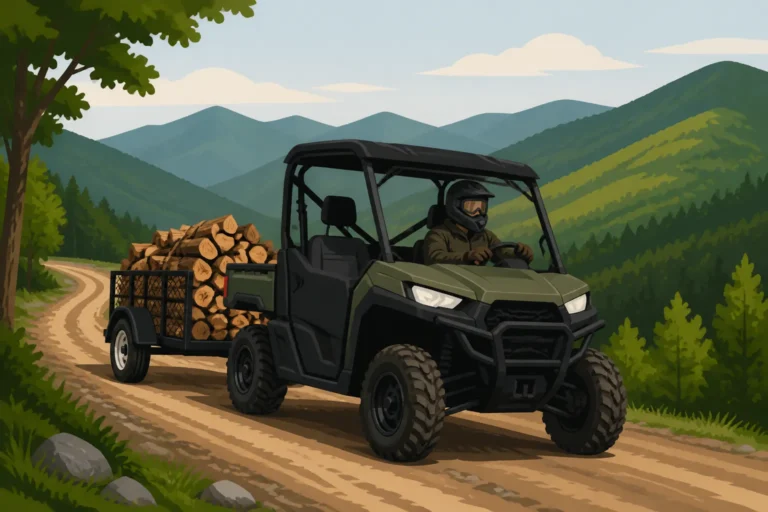
For hauling game, specialized cargo solutions are incredibly useful. Rear cargo boxes, racks, or even small utility trailers can make retrieving a deer much easier and cleaner than trying to strap it directly to your machine. Winches are another invaluable accessory, especially if you anticipate getting stuck or need to pull heavy game up an incline. Many reputable brands offer robust winches and other off-road accessories. For instance, SuperATV provides a range of heavy-duty winches, cargo racks, and upgraded suspension components that can be incredibly beneficial for hunters navigating challenging West Virginia terrain. Having a good quality shovel, axe, and a first-aid kit on board are also wise precautions. These simple preparations can turn a potential nightmare into a manageable challenge.
Navigation and Communication in Remote Areas
West Virginia's wilderness, while beautiful, can also be unforgiving. Many prime hunting spots are in remote areas with limited or no cell service. Relying solely on your phone for navigation or communication is a risky gamble. Always have a backup plan. A dedicated GPS unit loaded with detailed topographic maps is ideal. Physical maps and a compass, and knowing how to use them, are also essential.
Imagine you're solo, deep in a WMA, retrieving a deer with your ATV, and suddenly your machine gets stuck in a hidden mud bog. Your phone has no signal. What then? Carrying a satellite communication device, such as a satellite messenger or a two-way radio with a range extender, can be a literal lifesaver. These devices allow you to send SOS messages or communicate with others even when cellular networks are out of range. Always inform someone of your hunting plans, including your route and expected return time. Leaving a note on your vehicle dashboard with your intended destination can also be helpful. In these remote areas, being prepared for the unexpected is not just good practice, it's vital for your safety.
Common Misconceptions and Legal Pitfalls
Even experienced hunters can sometimes fall prey to common misunderstandings about ATV use during deer season in West Virginia. The rules can be intricate, and misinterpreting them can lead to unnecessary trouble. Let's clear up some of these common pitfalls to ensure your hunting trips are free from legal complications.
"Farm Use" Exemption and Hunting
Many West Virginia residents own ATVs and UTVs that they primarily use on their farm or private land for agricultural purposes. There's a common misconception that if you're using your ATV for "farm use," it’s exempt from various rules, and this can sometimes extend to hunting activities on that land. While there are some specific exemptions for farm-use vehicles related to road crossing or certain titling aspects, these exemptions are very narrow and do not typically apply to general hunting activities, even on private land. The "farm use" designation usually relates to direct agricultural operations, not recreational hunting.
For example, if you're using your UTV to plant a food plot for deer on your private property, that might fall under a broad interpretation of "farm use." However, if you're using that same UTV to ride around your property scouting for deer, or to retrieve a harvested animal, the primary purpose shifts from agriculture to recreation/hunting. This distinction is crucial. You still need to adhere to all state hunting laws, and your ATV must still be titled, even if primarily used on private land. Relying on a blanket "farm use" exemption for all hunting-related ATV activities is a risky assumption that could lead to unexpected fines.
Road Riding During Hunting Season
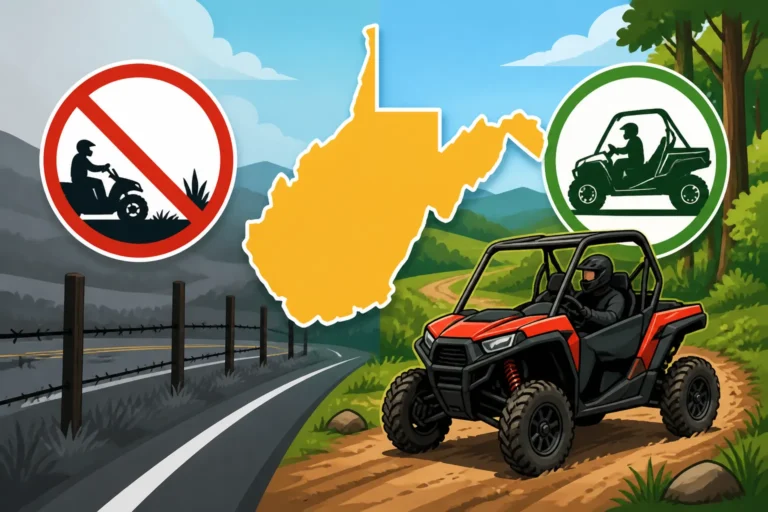
West Virginia has some of the most beautiful roads, winding through mountains and hollers, but it also has strict rules about ATV use on public roads. This doesn't magically change during deer season, no matter how convenient it would be to ride your ATV a short distance down the road to another hunting tract. Generally, ATVs are prohibited from operating on public streets and highways. There are very limited exceptions, such as crossing a road at a 90-degree angle, or specific county routes where local ordinances allow it for short distances, often with speed and mileage restrictions like the [West Virginia's 10-Mile, 25 mph Road Rule].
If you need to move your ATV from one hunting parcel to another and it involves a public road, you generally need to trailer your machine. Many hunters express frustration with this rule, especially if it's only a quarter-mile stretch of pavement. However, deputies and conservation officers are vigilant about enforcing these laws for safety reasons. Even if you're wearing blaze orange and driving cautiously, an ATV is not designed for highway speeds or interactions with cars. Some riders explore the option of making their UTV a [West Virginia's Street-Legal Special Purpose Vehicle Plate] (SPV), which does allow limited road use with specific equipment requirements, but this is a complex process and not a simple workaround for a casual hunting trip. Always assume public roads are off-limits unless explicitly stated otherwise by local ordinance and state law.
Penalties for Non-Compliance
Ignoring West Virginia's ATV and hunting regulations isn't just about risking a polite warning; it comes with real, often significant, penalties. Violations can range from monetary fines to the confiscation of your machine, and even the suspension or revocation of your hunting privileges. Conservation officers and law enforcement take these rules seriously, especially during popular hunting seasons.
Consider a situation where a hunter is caught driving their ATV off a designated trail in a WMA with a loaded rifle. This could result in multiple citations: one for operating an ATV off-trail, and another for illegally transporting a loaded firearm. Each of these could carry substantial fines. Repeated offenses could lead to a loss of your hunting license for a season or more. Furthermore, if your ATV isn't titled, you could face penalties for an [West Virginia Penalties for an Untitled ATV] machine. The costs can quickly add up, turning what should be an enjoyable hunting trip into a financially painful experience. It's far better to invest the time in understanding the rules and operating within the law than to face the legal and financial repercussions of non-compliance.
ATV and UTV Use During West Virginia Deer Season: Do's and Don'ts
To help you keep track of the key considerations for using your ATV or UTV while deer hunting in West Virginia, here’s a quick reference guide. Remember, this information is for general guidance, and you should always consult the latest West Virginia Department of Natural Resources (WV DNR) regulations and local public land rules for the most up-to-date and specific requirements.
| Category | Do's | Don'ts |
|---|---|---|
| Public Land Access | Stay strictly on designated, marked trails/roads for motorized vehicles. | Drive off-trail, create new paths, or enter closed areas, even to retrieve game. |
| Private Land Use | Obtain permission to hunt or retrieve game on adjacent private land. | Trespass, even if pursuing wounded game, without landowner's explicit consent. |
| Title & Registration | Ensure your ATV/UTV has a valid West Virginia title. | Operate an untitled machine, even on private property. |
| Weapon Transport | Transport all firearms unloaded and cased/broken down on your ATV/UTV. | Ride with a loaded firearm or uncased bow/crossbow. |
| Safety Gear | Wear required eye protection at all times; helmets for riders under 18. | Neglect safety gear, especially eye protection. Consider a helmet always. |
| Visibility | Wear blaze orange when operating your ATV during firearms season. | Assume other hunters can see you without high-visibility clothing. |
| Machine Prep | Maintain your machine (tires, brakes, fluids, lights). | Skip pre-hunt inspections or use a poorly maintained ATV. |
| Specialized Gear | Utilize winches, cargo racks (like those from SuperATV), and trailers. | Attempt to strap heavy game precariously to your machine without proper gear. |
| Navigation | Carry maps, GPS, or satellite communication devices. | Rely solely on cell service for navigation or emergencies in remote areas. |
| Road Riding | Trailer your ATV/UTV for public road transport between hunting areas. | Ride on public roads or highways (unless a specific SPV or local exception applies). |
| Game Retrieval | Drag game back to designated motorized trails/roads. | Drive off-trail directly to a downed animal on public land. |
Disclaimer
This article is for general informational purposes only and does not constitute professional advice. Laws, prices and regulations vary by location and change over time. Consult a qualified professional for guidance on your specific situation.