Visibility Flags for Road Sections
Riding your ATV or UTV on West Virginia's public roads, even for short stretches, can feel like you're invisible to other drivers. The tight turns, steep grades, and frequent blind spots on our mountain roads make for a tricky combination, often leaving riders feeling exposed. This guide will walk you through why visibility flags are such a crucial piece of safety gear, how to pick the right one, install it properly, and combine it with other best practices to ensure you're seen and stay safe out there.
Why Visibility Flags Are a Lifesaver on West Virginia Roads
Let's face it, our machines are a blast to ride, but they're relatively small compared to the cars, trucks, and even coal haulers that share our scenic West Virginia roads. This size difference creates a huge visibility challenge, one that a simple flag can dramatically help overcome. It’s not just about what you can see; it’s about making sure they see you.
The Hidden Dangers of Mountain Roads
Anyone who's spent time riding through West Virginia knows our roads are rarely straight and flat. We've got blind curves that seem to appear out of nowhere, steep elevation changes that hide oncoming traffic until the last second, and narrow lanes that demand constant vigilance. Imagine cresting a hill on your side-by-side only to find a full-size pickup truck barreling towards you, or navigating a tight hairpin turn with limited sightlines. These are common scenarios where an ATV or UTV, with its lower profile, can easily disappear from a car driver's field of vision, especially if they're not actively looking for smaller vehicles.
Adding to this, the speed differential is significant. While you might be observing [West Virginia's 10-Mile, 25 mph Road Rule] on a designated connector road, other vehicles could be traveling at highway speeds. A driver might be focused on the road ahead and simply not register a smaller, slower-moving machine until it's too late. The unexpected presence of an off-road vehicle on pavement can catch drivers off guard, and a visibility flag acts as an early warning system, giving them those precious extra seconds to react and adjust.
Making Your Machine Seen: The Science of Visibility
The core principle behind a visibility flag is conspicuity – how easily something can be seen against its background. When you're driving a low-slung ATV or UTV, especially one with a dark color, you blend in more than you think. A brightly colored flag, mounted high above your machine, instantly increases its visual footprint. It breaks up the silhouette of your vehicle, making it stand out from the road, the trees, or even other traffic.
Think of it like this: a car driver might not see your headlights or the top of your helmet over a small rise or around a gentle curve. But a flag waving several feet higher than your machine is far more likely to catch their eye. This is particularly effective in our mountainous terrain, where dips and rises can hide entire vehicles. The flag literally reaches above the immediate line of sight, often being the first thing another driver perceives. It signals "something is there" even before they can identify what is there. It's a simple, yet highly effective, visual cue that grabs attention and prompts other drivers to pay closer attention, especially when you're [Riding an ATV on the Road in West Virginia].
Choosing and Installing Your Visibility Flag
Now that we understand why these flags are so important, let's talk about getting the right one and putting it on your machine properly. You don't want to just grab any old flag; durability and visibility are key, especially with the varied terrain and weather we experience here in West Virginia.
What Makes a Good ATV/UTV Visibility Flag
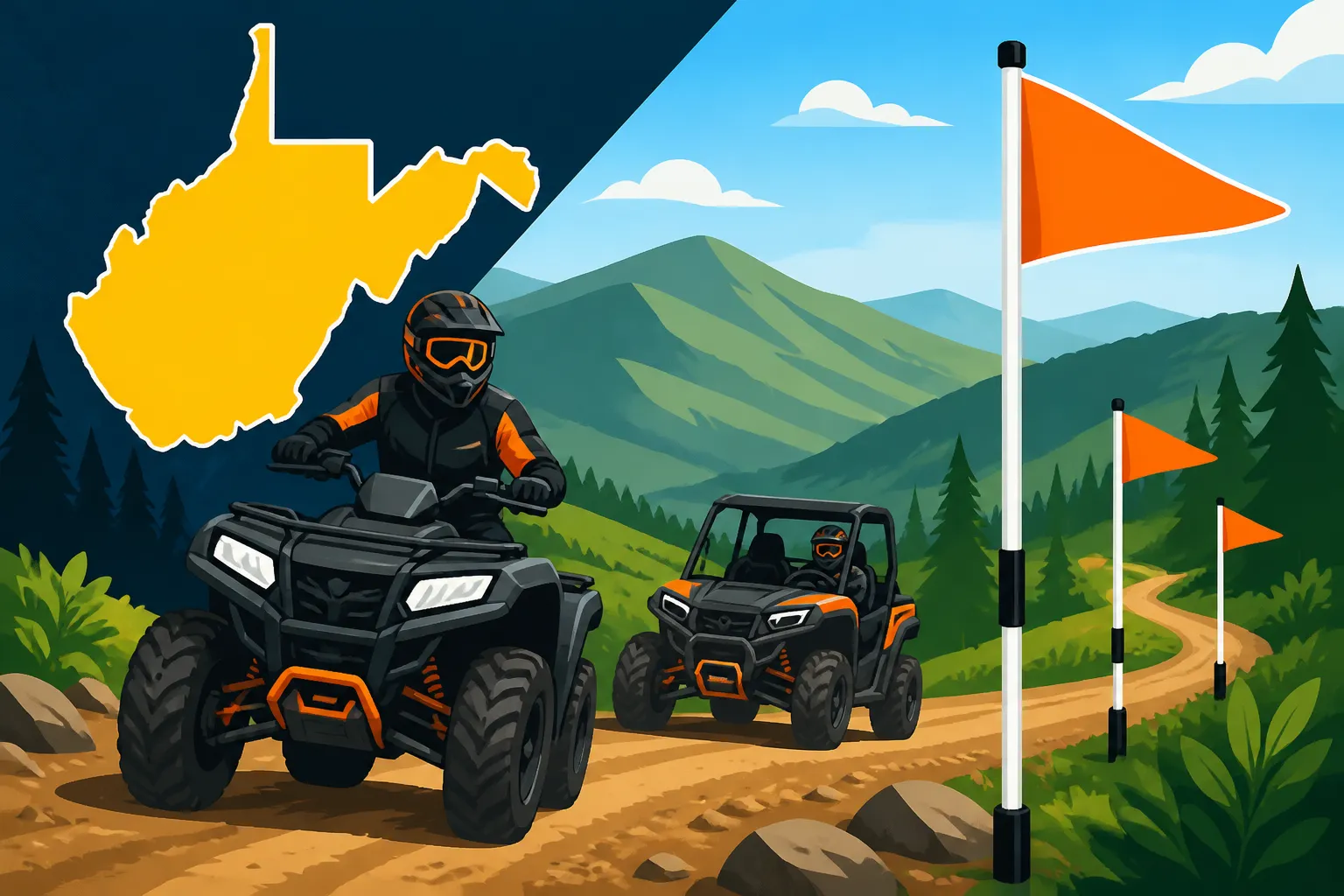
When you're looking for a good visibility flag, think ruggedness and brightness. The flag itself should be made from a durable, weatherproof material like heavy-duty nylon or polyester that can withstand sun, wind, rain, and mud without tearing or fading quickly. Fluorescent colors like orange, yellow, or lime green are excellent choices because they stand out vividly in both bright daylight and overcast conditions. Some riders even opt for checkered patterns or multiple colors for maximum contrast.
The pole is equally important. It needs to be flexible enough to bend without snapping, but rigid enough to keep the flag upright. Fiberglass or composite poles are common for their balance of strength and flexibility. Crucially, consider the height. The flag should ideally extend several feet above your machine, clearing roll cages, roofs, and even a modest hill in front of you. A flag that's only a foot or two above your machine's roof might not offer enough advantage on our rolling roads. Many flags come with spring mounts, which allow the pole to flex and absorb impacts, reducing the chance of snapping, while others use more direct, rigid mounting. Brands like SuperATV offer a range of well-regarded flags and mounting solutions designed specifically for off-road vehicles, ensuring they stand up to the rigors of trail and road use. Look for flags that include reflective stripes or panels. These are game-changers for low-light conditions, making your machine visible even when the sun is setting or you're riding through a shadowed hollow.
Step-by-Step Installation Guide
Proper installation ensures your flag stays put and performs its job. Here's a general guide:
- Choose Your Mounting Spot: The most common and effective spot is on the rear of your ATV or UTV, typically on the frame, bumper, or roll cage. The goal is to get it as high as possible without interfering with your vision, lights, or other accessories. For UTVs, the rear corner of the roll cage is often ideal.
- Gather Your Tools: You'll likely need basic hand tools like wrenches (for bolts), screwdrivers, and possibly a drill if you're installing a permanent mount without existing holes. Always check the specific instructions that come with your flag kit.
- Secure the Base: Whether it's a clamp-on bracket or a bolt-through mount, ensure the base is firmly attached to your machine. Wiggle it to make sure there's no play. Loose mounts can vibrate off or break on rough roads. If using a spring mount, make sure it's oriented correctly to allow maximum flex.
- Attach the Pole: Slide the flag pole into its base. Some poles might thread in, while others use a pin or a quick-release mechanism. Ensure it's fully seated and secured. If your pole has multiple sections, assemble them tightly.
- Affix the Flag: Attach the flag to the pole. Many flags simply slide over the top of the pole, while others might tie on. Make sure it's free to wave and isn't tangled around the pole or any other part of your machine.
- Final Check: With the flag installed, sit on your machine and look around. Does the flag obstruct your view, block your taillights, or get in the way of any other safety equipment? If so, adjust the mounting location or pole height. Also, give the flag a good tug to ensure it's secure. You don't want it flying off halfway down a county road.
While West Virginia law doesn't explicitly require visibility flags for general road use, it's always a good idea to check specific regulations for managed trail systems if you plan to link up your road riding with trail access. For instance, some parks or private properties might have their own flag requirements.
Legalities and Best Practices for West Virginia Road Riding
Understanding the rules of the road is paramount for any ATV or UTV rider in West Virginia. While state law might not explicitly mandate visibility flags for all road use, their safety benefits are undeniable. It's about being proactive and responsible, especially when navigating shared public ways.
Are Visibility Flags Required by West Virginia Law?
Here's the straight talk: for most standard road riding permitted under West Virginia's ATV laws, there isn't a specific state statute that mandates the use of visibility flags on your ATV or UTV. This means that unlike, say, the requirement for headlights or brake lights, you won't typically get a ticket for not having a flag on your machine while crossing a road or riding on a designated route.
However, just because something isn't legally required doesn't mean it isn't absolutely critical for safety. We often recommend flags as an essential piece of equipment for anyone venturing onto public roads with their machine, particularly if you're serious about [Making a UTV Street Legal in West Virginia] or simply using road sections to connect trails. Think of it as an extra layer of protection, especially when you consider how easily a smaller vehicle can be overlooked by a driver in a larger car or truck on our winding, hilly roads. While the law might not require it, common sense and a strong commitment to your own safety certainly should. Always remember that specific managed trail systems, like the Hatfield-McCoy Trails, or private properties you might ride through, could have their own distinct flag requirements, so it's always wise to check ahead.
Beyond the Flag: Other Ways to Boost Your Visibility
A good visibility flag is a fantastic start, but it's just one piece of the puzzle when it comes to being seen on West Virginia's roads. Here are several other crucial steps you can take to make yourself and your machine more conspicuous:
- Wear Bright, High-Contrast Clothing: This is perhaps the simplest and most effective way to make yourself visible. A fluorescent vest, jacket, or helmet in colors like neon green, orange, or yellow stands out dramatically against almost any background. Avoid dark colors that can blend into shadows, trees, or the road itself.
- Utilize Your Lighting – Day and Night: Your machine's headlights, taillights, and brake lights aren't just for after dark. Running your headlights during the day, even if they're not legally required, significantly increases your front-on visibility. Ensure your brake lights are always functioning perfectly, as they provide critical warning to drivers behind you. If you have them, turn signals are also vital for clearly indicating your intentions on the road.
- Stay to the Right Edge of the Road: When permitted to ride on the road, always keep as far to the right as safely possible. This gives other drivers more room and makes it easier for them to pass you. Be especially mindful of this when navigating turns or blind spots. On roads without a marked center line, this is doubly important.
- Mirrors are Your Friends: Ensure you have functional mirrors that give you a clear view of what's behind you. They're not just for seeing who's gaining on you; they allow you to make safe, informed decisions about your position on the road and potential maneuvers. Many aftermarket companies, including SuperATV, offer robust mirrors designed to withstand off-road use while providing excellent visibility.
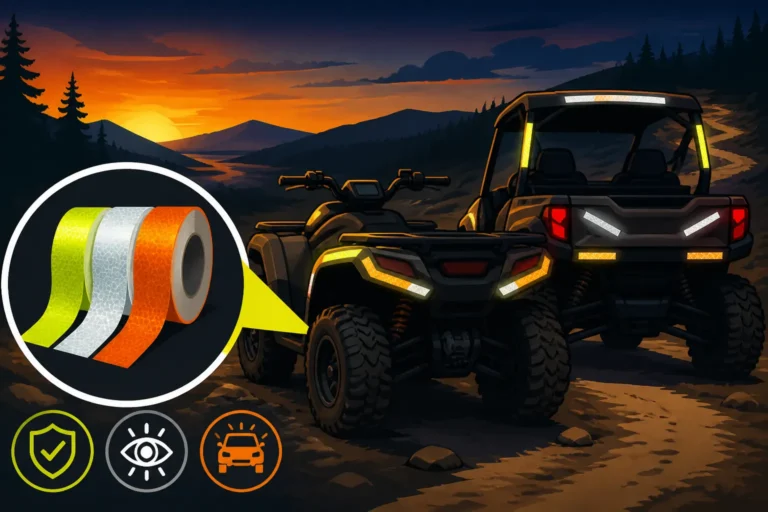
- Reflective Tape and Decals: Consider adding reflective tape to strategic points on your machine or helmet. Even small strips can dramatically increase your visibility in low light conditions when illuminated by another vehicle's headlights.
By combining a high-quality visibility flag with these other best practices, you create a comprehensive strategy for being seen and staying safe on West Virginia's diverse road network. It's all about making sure you're as noticeable as possible, giving other drivers ample time to react and share the road responsibly.
| Visibility Booster | Description | Ideal Use Case |
|---|---|---|
| Visibility Flag | Brightly colored flag on a tall pole, extending above the machine's profile. | Mountain roads, blind curves, cresting hills, increasing overall visual footprint. |
| High-Visibility Clothing | Fluorescent vests, jackets, or helmets (neon green, orange, yellow). | All road riding conditions, especially in varied lighting or inclement weather. |
| Daytime Headlights/Taillights | Using machine's lights even during daylight hours. | Enhances front and rear visibility, especially for oncoming traffic and those behind. |
| Functional Mirrors | Properly adjusted mirrors providing a clear view of rear traffic. | Situational awareness, making safe lane adjustments or turns. |
| Reflective Accents | Reflective tape or decals on machine, helmet, or clothing. | Low-light conditions, dawn, dusk, night riding, improving conspicuity under lights. |
| Turn Signals (if equipped) | Clearly indicating directional changes. | Signaling intentions when turning or changing lanes on the road. |
Riding our beautiful West Virginia roads on an ATV or UTV is an incredible experience, but it comes with a unique set of safety considerations, particularly around visibility. While there's no state law explicitly mandating flags for general road use, equipping your machine with a bright, tall visibility flag is a proactive step that could literally save your life. Couple that with bright clothing, proper lighting, and smart riding habits, and you'll significantly reduce the risk of being unseen by other drivers. Stay safe out there, and enjoy those mountain roads!
Disclaimer
This article is for general informational purposes only and does not constitute professional advice. Laws, prices and regulations vary by location and change over time. Consult a qualified professional for guidance on your specific situation.