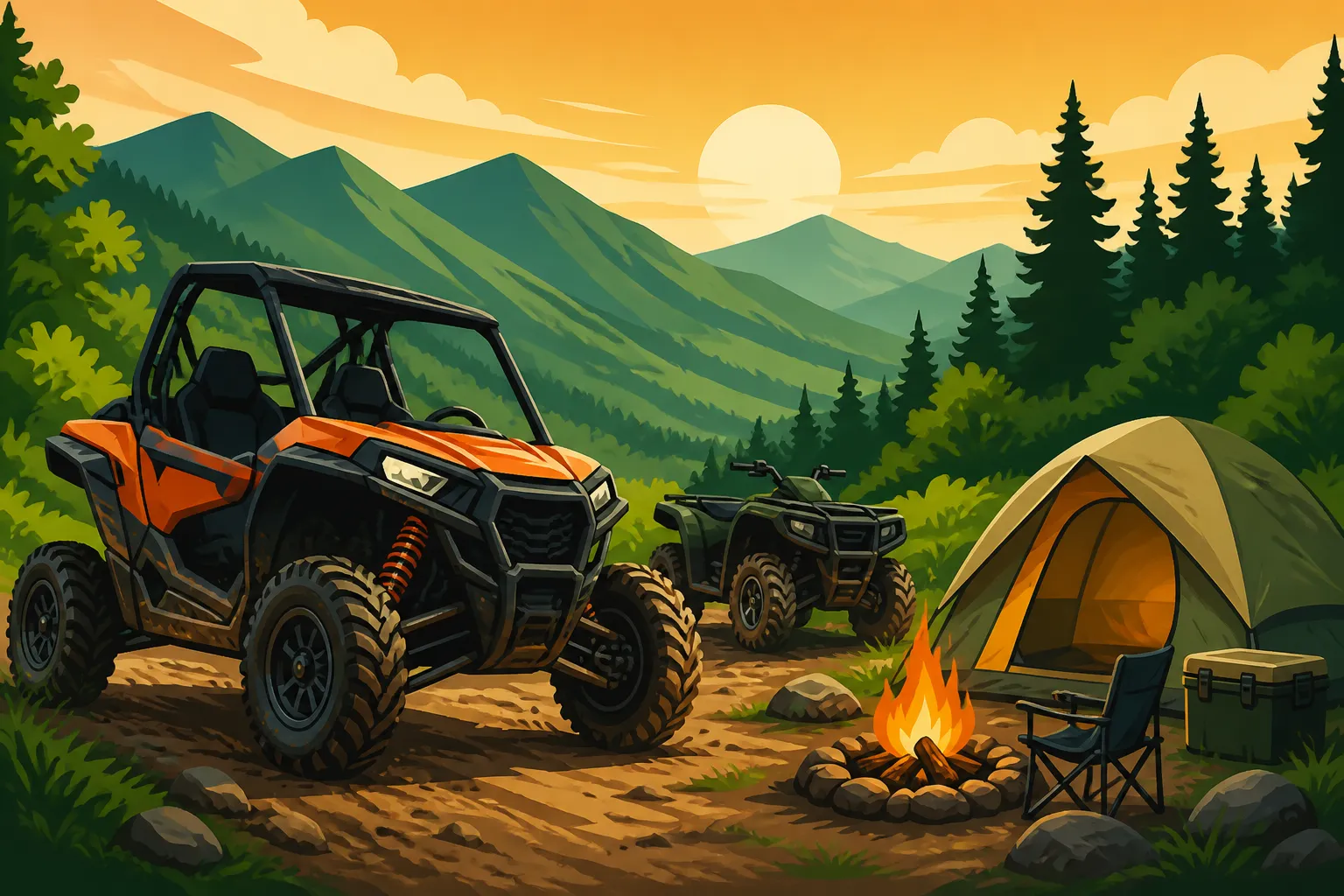
Camping Beside West Virginia’s Trails
Camping beside West Virginia’s ATV and UTV trails can make a riding weekend easier, but a nearby campsite does not automatically mean you can ride straight from your door. Access depends on the property, trail connections, machine rules, and current closures. This guide explains how to choose a campsite, plan the ride between camp and trail, and avoid the common surprises that can disrupt a trip.
Choose a campsite that matches your ride
Decide what “trail access” means before booking
A campground can be close to a trail system without having a legal, rideable connection to it. “Near the trails” might mean a short truck-and-trailer drive to a trailhead, not a route you can take on your ATV or UTV from the campsite. Before reserving, ask the host exactly how riders get from the property to the trail: Is there an authorized connector, or do you need to haul your machine to a separate parking area?
This distinction matters in southern West Virginia, where trail systems, private land, public roads, and communities can sit close together. A route that looks short on a phone map may cross land you cannot ride on, or lead onto a road where different rules apply. Don’t assume that a visible trail, forest road, or access track is open to motorized use.
Ask whether “direct access” means a legal trail connection for your specific machine, or simply a nearby trailhead. Confirm whether the connection is open to your machine’s width and type, and whether you need a permit before using it. For help comparing properties that advertise nearby riding, see [Campgrounds With Hatfield-McCoy Trail Access] and [Cabins With Direct West Virginia Trail Access].
Pick a campground that fits your machine and group
The right campsite depends on more than the number of people in your group. If you’re hauling a side-by-side, check whether there is enough room to turn around and park your trailer without blocking a campground road. Ask about the surface and slope of the site, access to electrical hookups if needed, and whether the layout suits a long tow vehicle as well as the trailer. A site that looks spacious in a listing can feel very different when you arrive with a loaded rig.
Think through the whole group, too. A family with children may care more about quiet hours, bathrooms, and a safe place for kids to move around than immediate trail access. A group of friends planning full days on the machine may prioritize secure parking, wash-down access, and an easy drive to the trailhead. If riders are staying in different kinds of accommodations, confirm that everyone can reach the same staging point without confusing detours.
When you compare places, get clear answers rather than relying only on words such as “ATV-friendly.” Ask where trailers can be parked, whether machines may be stored overnight, and whether riding is allowed on campground lanes. Rules vary by property. A host’s approval for parking a machine is not the same as approval to ride it around the campground or onto a nearby route.
Compare camping options by access and practicality
A tent site, an RV site, a cabin, and a trailhead-adjacent property each solve different problems. Tent camping may keep the trip simple, but it gives you less covered space for wet gear and muddy riding clothes. An RV can make meals and drying layers easier, while demanding more room for parking and maneuvering. A cabin may offer a more comfortable place to recover after a long ride, but you still need to check where the machine and trailer can be kept.
Use this kind of comparison as a starting point, then confirm the details directly with the property:
| Camping option | What may work well | What to confirm before booking |
|---|---|---|
| Tent site | Simple setup and a compact footprint | Vehicle and trailer parking, ground conditions, weather exposure |
| RV site | A place to rest and store dry clothes | Turning space, hookups, site slope, and trailer parking |
| Cabin | Indoor shelter and space to regroup | Machine storage, parking rules, and actual trail connection |
| Campground near a trailhead | Convenient staging for a day ride | Whether the route to the trailhead is legal to ride or requires hauling |
| Remote or dispersed site | A quieter setting | Landowner permission, camping rules, access restrictions, and limited services |
For a bigger rig, compare the campsite itself with the route you’ll drive to reach it. Tight turns, steep approaches, and limited room to reverse can turn arrival into a stressful start to the weekend. The planning details in [West Virginia Trailhead Parking That Fits a Toy Hauler] can also help you think through trailer space at the riding end of the trip.
Plan the campsite-to-trail connection
Verify routes and boundaries before you unload
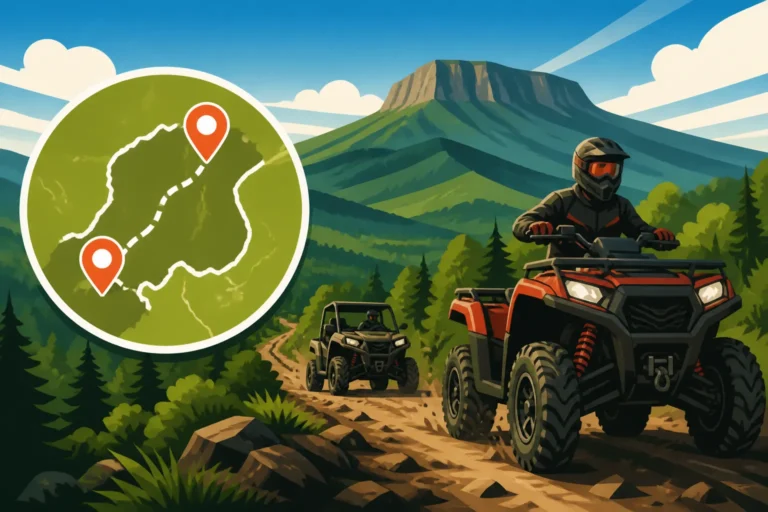
Before the first ride, identify where the campground property ends, where public roads begin, and where authorized trails start. A trail shown on a mapping app is a useful planning clue, not proof that the route is open or that you have permission to use it. Ask the campground host which access route guests are allowed to use, and check trail-system information for current rules and closures.
This is especially important when a campsite sits beside woodland, a creek, or an unpaved lane. The setting can make it tempting to follow a track that looks like an obvious connector, but it may cross private property or lead somewhere riders are not permitted. Stay on marked and authorized routes, and turn around if signs, gates, or barriers indicate that access is restricted.
Digital maps can help you orient yourself and compare a planned route with surrounding roads and trails. Some riders use onX Offroad to plan and keep track of a route, but a mapping tool should not replace local trail information, posted signs, or permission from a landowner. Save the route information you need before leaving camp, particularly if your group expects weak cell reception in a hollow or wooded area.
Know when to haul instead of ride
Hauling your machine from camp to a trailhead may feel less convenient than riding out, but it can be the safer and more legally straightforward choice. If the campground has no authorized connector, don’t improvise one across neighboring property or use a public road without confirming the rules for your machine and route. Load up, drive to an approved staging area, and begin the ride from there.
Before you leave camp with the trailer, check that the trailhead has parking that suits your rig and that you can unload without obstructing traffic or other riders. Give yourself time to secure the trailer, inspect the machine, and organize helmets, permits, water, and other gear. Crowding the departure into the last few minutes before riding can create avoidable mistakes, especially when several machines are involved.
A useful starting point is [Hatfield-McCoy Trailheads and Where to Start]. It can help you think about trailhead selection, while [West Virginia Trailhead Parking That Fits a Toy Hauler] is relevant when your campsite plan includes a large towing setup. Confirm details with the destination and property before traveling; parking and access conditions can differ from one location to another.
Check whether roads are part of the route
Some riders may need to use a public road to connect a campground with a trailhead or riding area. Do not assume that every road near an ATV-friendly town is open to your machine, or that road permission is the same as trail permission. Road access can depend on the road, machine, local rules, equipment, and other conditions.
If your plan includes riding through a town or along a road, review the applicable requirements before the trip. The guide [Riding an ATV on the Road in West Virginia] is a useful place to consider road-riding questions, while [West Virginia Trail Rules Every Rider Signs Up To] can help distinguish trail-system expectations from campground rules. When in doubt, ask the relevant local authority or trail operator rather than treating a road as an informal shortcut.
It also helps to plan a return route before leaving camp. If weather changes, a trail closes, or a machine develops a problem, you don’t want to discover that your only way back depends on a road you cannot legally use. Keep the campground address and a practical hauling plan available to the group, not just on one rider’s phone.
Set up camp for muddy, changeable conditions
Prepare for wet gear and quick weather changes
West Virginia trail weekends can involve mud, dust, rain, and temperature changes, sometimes within the same day. Pack clothes you can change into without bringing trail dirt into every part of camp. A separate bin or heavy-duty bag for muddy gear helps keep clean sleeping clothes, bedding, and food away from wet helmets, boots, and gloves.
A simple drying area can make the next morning more comfortable. Bring spare towels, a place to hang damp layers, and a way to keep riding gear out of shared walkways. If you’re in an RV or cabin, ask where wet equipment can be stored. If you’re tent camping, be thoughtful about where muddy items go so that rain and runoff don’t soak the rest of your supplies.
Don’t treat a clear forecast at check-in as a guarantee for the whole trip. Rain can affect trail conditions, visibility, and access roads, while dry spells can mean dusty sections. Check conditions before riding and be prepared to change the day’s plan. [West Virginia Trail Conditions After Rain] offers useful context for thinking about how wet weather may affect a ride.
Keep machines, fuel, and camp areas organized
A campground’s machine and fuel rules are property-specific, so ask before unloading or storing anything. Find out where machines may be parked, whether fueling is allowed on-site, and how the property expects visitors to handle spills or maintenance. Don’t assume that a gravel pad, grassy spot, or area near your campsite is an approved place to work on a machine.
Keep keys, tools, spare parts, helmets, and riding gear in predictable places. When several people share a site, assign a spot for each machine and trailer so that everyone can move around without stepping over straps or equipment. This small bit of organization is especially helpful when riders return tired, muddy, and ready to eat rather than search through a pile of gear.
Plan fuel and food before the day’s ride, not after you’ve already left camp. Services may not be right beside your chosen trailhead, and a group’s needs can differ depending on machine, route, and riding pace. Look into [Fuel and Food Along West Virginia Trails] and confirm your own route’s practical stops. Carry what your group needs within safe storage limits, and follow the campground’s rules for fuel and equipment.
Respect quiet hours and neighboring campers
A trail-focused camping weekend can still be a shared outdoor experience. Starting a machine early, idling for long stretches, or returning late can affect neighboring campers even when everyone is there to ride. Ask about quiet hours and machine-use rules at check-in, then plan loading, unloading, and departures so you’re not needlessly disturbing people nearby.
Be considerate about where you wash muddy gear, park trailers, and gather as a group. Keep campground lanes clear, supervise children around machines and towing vehicles, and don’t let riding excitement turn common areas into staging grounds unless the property allows it. If a host gives an instruction about where to park or how to move machines, follow it rather than assuming the rule is optional.
Trail etiquette matters beyond the campsite, too. Let faster riders pass where it is safe, use designated routes, and be mindful of other trail users. [West Virginia Trail Etiquette on Shared Routes] is a useful companion when your group includes riders with different experience levels or when you expect to share the route with other users.
Plan for permits, safety, and changing conditions
Confirm what paperwork and trail access you need
A campsite reservation does not, by itself, provide permission to ride on a trail system. Find out whether your planned riding area requires a permit, where to obtain it, and whether every machine needs its own permit. If you are renting, ask whether the rental includes trail access or whether the rider must arrange the permit separately.
Keep your documents and important details easy to find. Before leaving home, confirm that the machine is ready for the planned type of riding and that you have the items required for your trip. Carrying a paper copy of key information can be useful if a phone battery runs low or cell service drops. For a broader packing checklist, see [What to Carry on a Remote West Virginia Ride].
If your camping plan involves more than one trail system, do not assume one system’s rules apply everywhere. Trail access, permitted machine types, hours, and restrictions can differ. Check the relevant operator’s information for the specific place you intend to ride, and make sure your plan is still valid when you arrive.
Give your group a realistic riding plan
A campsite-based weekend can make it tempting to fill every daylight hour with riding. But groups often move more slowly than expected, especially when riders are unfamiliar with the area, stopping to regroup, or dealing with a mechanical issue. Choose a route that fits your least experienced rider and leave room for breaks, lunch, navigation, and the return to camp.
Agree on basic group procedures before starting. Decide who leads, who rides at the back, what to do if someone is separated, and where you’ll regroup after a turn or trail junction. Make sure every rider knows the campground name, the planned trailhead, and who to contact if plans change. A short conversation at camp can prevent confusion once the group is spread out.
Use a map to understand the route, but don’t let a digital estimate dictate your pace. Terrain, trail conditions, stops, and experience can all affect how long a ride takes. Tools such as onX Offroad may help riders review routes and keep their bearings, but stay alert to signs and local instructions. Leave enough time to return before your group is fatigued or daylight is fading.
Build a backup plan for closures and breakdowns
Trail access can change because of weather, maintenance, landowner concerns, or other conditions. Check the status of your intended route before departing and pay attention to signs on the ground. If a trail is closed, don’t go around a barrier or try to find an unofficial way through. A change of plan is frustrating, but ignoring a closure can create bigger problems for riders and for continued access.
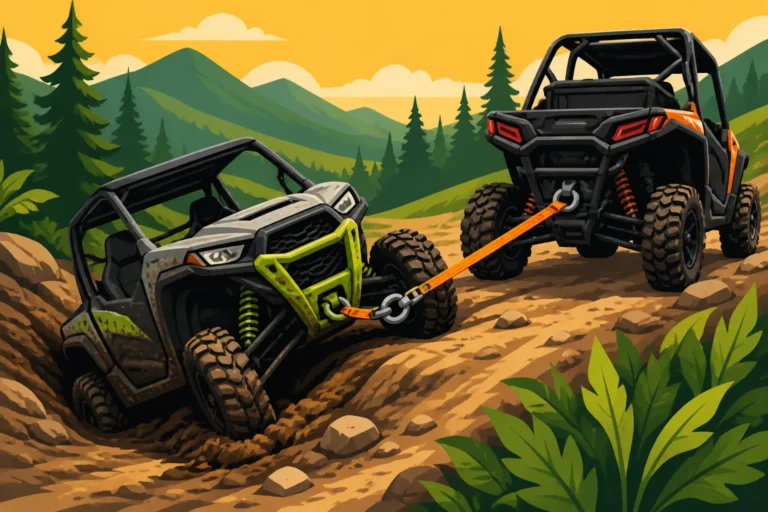
Have a basic response ready if a machine breaks down. Know how your group will get a disabled machine back to the trailhead or campsite, and identify who has the tools or recovery equipment your route may require. For remote rides, tell someone outside the group where you expect to ride and when you plan to return. The guidance in [Trail Closures on West Virginia's Trail System] can help you think ahead about checking access before committing to a route.
If you’re camping several nights, keep at least one lower-key option in mind. That might be a shorter ride, a different authorized trail, or a day spent exploring the nearby community instead of trying to force a full ride after poor conditions. Staying flexible helps protect the trip from a single closure or rainy morning—and gives everyone a chance to enjoy the campsite itself.
Make the most of a trail-side camping weekend
Choose a base camp around your priorities
The best base camp is not always the one closest to a trail on a map. For one group, it may be a campground with room for a large trailer and an easy drive to a trailhead. For another, it may be a cabin where everyone can dry out and rest after a wet ride. A family with younger riders may value facilities and a manageable route more than a direct connection to the trail system.
Before booking, write down your group’s non-negotiables: parking, permitted machine storage, access to bathrooms, a place to cook, or a legal route to the trail. Then ask the property to confirm each item. This makes it easier to compare options without getting distracted by attractive photos or broad claims about being “close to riding.”
If you’re planning around Hatfield-McCoy, explore the specific town and trail system you want to visit rather than treating the region as one continuous riding area. Gilbert, Man, Williamson, and other trail towns each provide a different setting and access pattern. Use [West Virginia Trail Towns With Direct Trail Access] to consider how a town’s location might fit your preferred style of trip, then verify the route and campsite details directly.
Leave time for the place beyond the trail
Camping beside the trails does not have to mean riding from breakfast until dark. Build time into the weekend to rest, cook, talk through the next day, and enjoy the surrounding community. A relaxed evening can make the next morning’s departure smoother, particularly after a long ride or a day in wet conditions.
If your group wants to visit a nearby town, make sure the plan respects the distinction between driving there and riding there. A machine cannot automatically use a public road just because a restaurant or store is close to camp. Check applicable road rules and local guidance before setting out on a machine; otherwise, use a road-legal vehicle or arrange another way to get there.
Finally, leave the campsite in good condition. Follow the property’s checkout instructions, pack out what you brought, and report any damage or access issue to the host. A considerate visit helps keep campgrounds welcoming to future riders and supports the relationships that make trail-area travel possible.
Disclaimer
This article is for general informational purposes only and does not constitute professional advice. Laws, prices and regulations vary by location and change over time. Consult a qualified professional for guidance on your specific situation.