Lodging in Man, West Virginia
Finding lodging in Man, West Virginia, can take a little more planning than booking a room beside a large resort: places to stay and trail access are spread across the surrounding mountain communities. This guide explains how to choose a practical base, compare cabins and other lodging, plan your ride logistics, and avoid assuming that a nearby road is an authorized ATV route.
Choosing lodging in Man for an ATV trip
Decide whether you want to stay in town or near a trail system
Man can work as a base for exploring southern West Virginia, but it is worth checking the exact relationship between your lodging and your intended trailhead before you book. A place described as “near the trails” may still involve a drive to a permitted access point. Trail access does not automatically begin at a motel, cabin, or town street.
If you want to ride the Hatfield-McCoy Trails, identify the system you plan to visit first, then compare its official trailhead location with the lodging address. Bearwallow is associated with the Logan area, while other systems serve different parts of the region. Start with Hatfield-McCoy Trailheads and Where to Start and Bearwallow Trail System Near Logan to understand the general geography before choosing a place to sleep.
Think about your group’s routine, not just the map. If you are bringing a trailer, ask whether the property has space to park it and turn around. If you expect to ride early, find out whether you can load or unload without disturbing other guests. A cabin that looks convenient online may be awkward for a long trailer on a narrow mountain driveway.
It also helps to consider how you will handle meals, fuel, groceries, and a tired group after a full day on the machine. Staying in or near a community may make everyday errands easier, while a more secluded rental may offer extra room and a quieter evening. Those are different kinds of convenience, so decide which one matters most to your group.
Compare lodging types by what your ride requires
The right lodging depends on how many people are traveling, how many machines you are hauling, and whether you want to cook or eat out. In and around Man, check the specific property’s features rather than relying on a broad label such as “trail lodging.” A cabin, motel room, campground site, or vacation rental can each be useful, but the practical details vary.
| Lodging type | Often works well for | Check before booking |
|---|---|---|
| Cabin or vacation rental | Families, groups, and multi-night stays | Trailer parking, driveway grade, machine storage rules, kitchen setup, and trail access |
| Motel or inn | Short stays and riders who want a simple base | Parking layout, space for a trailer, check-in arrangements, and distance to services |
| Campground or RV site | Travelers bringing their own accommodation | Site size, hookups, access roads, quiet hours, and whether machines may be parked at the site |
| Lodging near a trail town | Riders who value nearby food and services | Whether the trail connection is legal and where the nearest authorized access point is |
For a group, assign someone to confirm parking and access directly with the host. Ask whether the trailer can remain attached to the tow vehicle, whether there is room for more than one rig, and whether the property permits overnight storage of ATVs or UTVs. These questions can feel fussy until you arrive after a long drive and discover that the only available parking is a steep, tight turn.
If your priority is stepping out of your accommodation and riding straight onto a trail, look specifically for verified trail-access lodging rather than assuming that any rural rental offers it. Cabins With Direct West Virginia Trail Access and Riding From Your West Virginia Cabin Door can help you think through what “direct access” should mean. Confirm the exact route, permitted access, and any property rules before you count on it.
Planning trail access from Man
Match your lodging location to your chosen ride
Southern West Virginia’s trail systems are not one continuous route that begins wherever you happen to stay. The riding area, trailhead, permitted road connections, and lodging location all need to fit together. Before committing to a reservation, choose the trail system and access point you expect to use, then plan the drive from the property to that point.
A route that appears short on a map can take longer than expected on winding mountain roads. Your group may also need room for a trailer at the trailhead, a place to unload, and time to check permits and equipment. Build those steps into the day instead of treating the ride as if it starts the moment you leave the cabin.
Do not assume you may ride from lodging through town to reach a trail. Public-road riding has its own requirements, and local access can depend on the road, the machine, and the applicable rules. Trail-town access is a useful feature when it is officially permitted, but it should be confirmed rather than inferred from a lodging advertisement. West Virginia Trail Towns You Can Ride Into offers helpful context for understanding why town access is not the same as unrestricted road access.
Before setting out, review the official information for your selected system and check for closures or access changes. Trail conditions can shift with weather, maintenance, or land-access decisions. Checking West Virginia Trail Status Before You Drive is a sensible step to include in your trip routine, especially when you are traveling a long distance and have built your lodging dates around a particular ride.
Use navigation tools as a backup, not as permission
A navigation app can help with route planning, but a line on a screen does not prove that a road or track is open to ATV use. Private property, public roads, gated routes, and authorized trails can appear close together in rural areas. Stay on marked, permitted routes and follow the trail system’s current guidance.
Some riders use onX Offroad to organize route information and keep track of where they are. It can be useful as a planning aid, particularly when your group wants to compare a mapped route with the official trail information. Still, treat the app as one tool among several—not as a substitute for trail signage, posted closures, or permission to enter land.
Before leaving your lodging, make sure your phone has the information you need for areas with unreliable cell service. Download or save maps when the app allows it, carry a charged battery or power bank, and tell someone in your group what to do if riders become separated. A paper map or written trailhead details can be reassuring when a phone battery, signal, or screen becomes a problem.
onX Offroad can also help your group discuss a route before you leave, but agree on the route as a group and confirm it against the trail system’s official map. When road access or trail boundaries are uncertain, stop and check rather than following a track simply because it appears on a device. For more on preparing for navigation and signage, see West Virginia Trail Maps and Signage.
Booking a stay that works for riders
Ask specific questions before paying
A few direct questions can prevent a frustrating arrival. Contact the lodging provider and explain what you are bringing: the number of people, machines, tow vehicles, and trailers. Ask whether there is enough parking for the full setup and whether the access road is suitable for a trailer. If your group has more than one rig, ask for a clear description of the parking arrangement instead of assuming that “ample parking” means several long vehicles will fit.
Clarify whether the property allows machines to be parked on-site, whether they need to be covered, and whether there are limits on washing or maintenance. Some hosts may be comfortable with trailer parking but not with unloading machines on the lawn or rinsing mud near the building. Getting those expectations in writing helps avoid a disagreement after check-in.
Also ask about the parts of a stay that matter after a dusty ride: where wet gear can go, whether towels or laundry facilities are available, what the kitchen includes, and how check-in works if your arrival is late. If the property is remote, confirm the nearest practical place to buy food or supplies and whether the access road is easy to follow in the dark.
A helpful host may know local directions, but still verify trail access independently. Ask for the address and trailhead guidance, then compare them with official trail information. If the host says riders commonly use a nearby road, confirm that your machine can legally use it and that the route is open to the public.
Choose a setup that fits your group
For families, the main question may be how to keep riding and downtime manageable. A place with separate sleeping areas, space to prepare meals, and safe room to store riding gear can make a multi-day trip feel much less hectic. If children are traveling, check sleeping arrangements and any property-specific safety concerns, such as steep driveways or access to water.
For a group of friends, sleeping capacity alone is not enough. Consider the number of bathrooms, shared living space, parking capacity, and whether people can dry their gear without filling the entire cabin with muddy boots and helmets. A rental that technically accommodates everyone may feel cramped once riding equipment and bags are added.
If you are deciding between Man and another nearby community, compare the complete trip rather than just the lodging rate. Include the drive to your chosen trailhead, trailer access, food options, and your group’s preferred evening routine. Browse Lodging in Man, West Virginia alongside other relevant local lodging information, but verify every property’s current details directly with the provider.
Making the stay and ride go smoothly
Prepare for changing mountain conditions
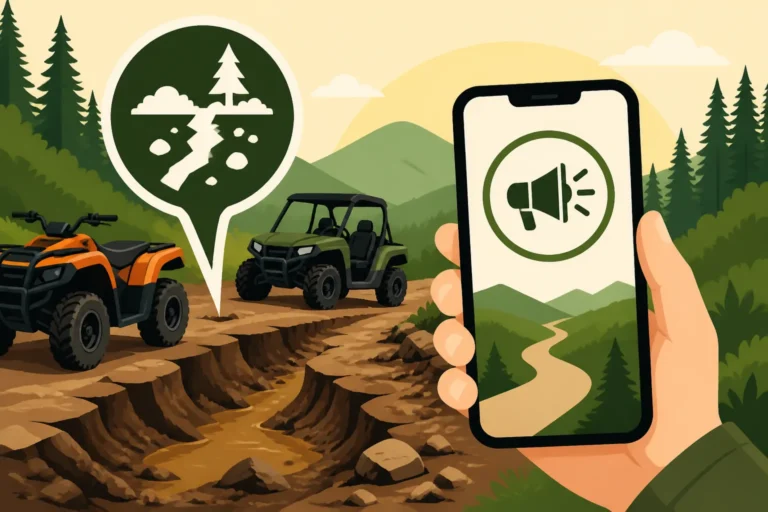
Mountain weather and trail conditions can make a simple plan more complicated. Rain may affect traction, visibility, and the condition of some routes. Pack layers, rain protection, spare gloves, and a way to keep essential items dry. If the forecast or trail notice changes, be ready to adjust the day rather than treating the booked itinerary as unchangeable.
Carry basic supplies for a remote ride, including water, snacks, a first-aid kit, a flashlight, and a way to communicate if your group gets separated. A small repair kit suited to your machine can help with minor problems, but do not attempt a repair on a steep or exposed section where it would put people at risk. What to Carry on a Remote West Virginia Ride is a useful planning companion when you are packing for a day away from your lodging.
Set a return plan before you start. Decide when the group will turn back, what to do if someone has a mechanical issue, and where you will regroup if riders lose sight of one another. Be especially cautious about running late near closing times or riding in poor visibility. Check the trail system’s rules and schedule rather than assuming that a route remains open whenever your lodging is available.
Respect shared routes and the communities around them. Keep noise reasonable near homes, slow down where conditions call for it, and do not leave trash or block access roads. West Virginia Trail Etiquette on Shared Routes can help set expectations for riding responsibly around other visitors and local residents.
Make a simple plan for each day
A practical day plan can be brief, but it should cover the details that tend to cause delays. Confirm the trailhead, parking arrangement, permit needs, and expected return time. Make sure each rider knows where the group is going and has the lodging address saved in case the group becomes separated.
For example, a family staying in Man might plan to drive with its machines to an authorized trailhead, unload there, and ride a route suited to the group’s experience. The group can keep a second option in mind if weather or a closure makes the original plan unsuitable. That is more reliable than setting out from the rental and hoping every nearby route is open and legal.
If you are using onX Offroad to organize navigation, review the plan with everyone before departure and make sure riders understand that trail signs and official directions take priority. Save the lodging address, trailhead location, and a contact number where you can find them without a cell connection. It is a small step that can save a lot of confusion at the end of a long day.
Leave room in the schedule for loading, fueling, meals, and cleanup. When riders are tired, rushing to get back before dark can lead to poor decisions. A well-chosen stay in or around Man should make the trip easier—but the best experience comes from pairing that lodging with realistic travel time, confirmed trail access, and a plan that respects local rules.
Disclaimer
This article is for general informational purposes only and does not constitute professional advice. Laws, prices and regulations vary by location and change over time. Consult a qualified professional for guidance on your specific situation.