RV Parks Near the Rockhouse Trailhead
Planning an RV trip to the Rockhouse Trail System can get complicated fast: a campground may be close on the map but still leave you with a long tow, a separate drive to the trailhead, or no convenient place to park your machine. This guide explains what to look for, which nearby areas to compare, and how to plan a stay that fits your rig and riding plans.
Where to Stay Near the Rockhouse Trailhead
Rockhouse is part of the Hatfield-McCoy Trails network in southern West Virginia, with access around the Gilbert and Man area. “Near the trailhead” can mean very different things here: a campground may offer access to riding routes, sit a short drive from an entrance, or simply be within a reasonable towing distance. Check the exact location and access arrangement before booking.
Twin Hollow Campground and Cabins in Gilbert
Twin Hollow Campground and Cabins is a practical place to investigate if you want to stay in the Gilbert area and make Rockhouse riding the focus of your trip. Its location is associated with trail access, which can reduce the hassle of loading your ATV or UTV onto a trailer for every ride. Confirm which access routes are available to guests and whether your machine can reach the trail system directly from the property under the rules in effect for your stay.
That detail matters. “Trail access” does not necessarily mean that every road between your campsite and the trail is open to every machine, or that you can ride to restaurants and stores without checking local road rules. Ask the campground where riders enter the system, whether there are any road sections to navigate, and what paperwork you need before setting out. The article Rockhouse Trail System for Advanced Riders can help you think through whether this area and its routes suit your group’s experience.
For an RV stay, ask about site dimensions, turning space, hookups, and how trailers are handled. A compact travel trailer and a long fifth-wheel do not have the same parking needs. If you are bringing a truck, RV, and separate machine trailer, describe the whole setup when you contact the property rather than asking only whether it has “RV sites.”
Other Bases Within Driving Distance
You may also come across campgrounds and lodging farther from Gilbert, including places around Logan and other southern West Virginia communities. Chief Logan State Park, for example, is a different kind of base to compare if you want state-park surroundings and are comfortable driving to the riding area. Do not assume that a campground near Logan provides trail access or is interchangeable with a trail-side stay; check the route, travel time, and parking arrangements for your specific dates.
Some riders consider properties around Northfork and other trail communities as well. These can work for a broader West Virginia riding trip, but they may be better aligned with another trail system or a multi-area itinerary than with daily Rockhouse access. Before you choose, compare the campground’s location against the entrance you plan to use and the route you can legally take with your machine.
If this is your first trip, it can help to review Hatfield-McCoy Trailheads and Where to Start and West Virginia Trail Towns You Can Ride Into. Those guides make it easier to distinguish a campground that is convenient for riding from one that merely looks close on a regional map.
How to Choose an RV Park for Your Rig
The best campground is not automatically the one with the shortest drive to the trail. Site access, trailer space, electrical service, road conditions, and your group’s riding routine can make a bigger difference once you arrive.
Check Site Dimensions and Hookups Before Booking
Ask for the usable site length and width, not just a general description of the RV area. You may need space for the RV, tow vehicle, and machine trailer, and you will want enough room to maneuver without blocking a neighboring site. If your rig is long or has a wide turning radius, mention that when you inquire.
Confirm the available hookups and what is included at the site. Electrical service, water, and sewer arrangements vary by property and site type. If you depend on a particular electrical connection or need a full-hookup site, get that detail confirmed rather than relying on a listing’s broad “RV friendly” wording.
Also ask about the approach road. Mountain roads in southern West Virginia can be narrow, steep, or winding, and the last stretch to a campground may feel very different from the main highway. If you are towing a large trailer, ask whether there are tight turns, low clearances, or steep grades on the recommended route. A campground staff member may be able to suggest the most manageable approach.
Compare Trail Access, Parking, and Campground Rules
Ask whether the property provides direct trail access, a nearby trail entrance, or only a place to stay while you drive to the trailhead. Then confirm whether the route from the property is open to your type of machine and whether it involves public roads. West Virginia’s road-riding rules are separate from trail rules, so a short connection should never be treated as automatically legal. For background, see Riding an ATV on the Road in West Virginia and West Virginia Rules for Riding Trail to Trail.
Parking rules deserve the same attention. Some places may have room for an RV but limited space for a second trailer, extra vehicles, or a large group. Ask where you can unload, whether trailers can remain parked at the site, and whether a separate staging or overflow area is available. If you plan to arrive late, confirm access and check-in arrangements so you are not trying to position a long rig in an unfamiliar campground after dark.
| What to confirm | Why it matters | Question to ask |
|---|---|---|
| Site length and width | Your RV, tow vehicle, and trailer may need separate space | Can the site fit my full setup? |
| Hookups | Not every RV site offers the same services | Which hookups are available at this site? |
| Trail connection | “Near the trails” can mean a ride, a drive, or direct access | Where do guests enter the trail system? |
| Machine and trailer parking | Campground space may be limited | Can I leave my trailer and extra vehicle at the site? |
| Approach road | Steep or tight roads can be challenging while towing | Is there a recommended route for a large RV? |
| Campground rules | Noise, unloading, and machine movement may be restricted | What are the rules for riding or transporting machines on the property? |
Plan Your Rockhouse Ride Before You Arrive
A little preparation can prevent the familiar vacation frustration of reaching the campground, unloading everything, and then discovering that your group is missing a permit, has chosen a route that is too difficult, or is unsure where to start.
Match the Trail System to Your Group
Rockhouse includes a range of riding experiences, so think about the least experienced rider in your group when planning a route. A confident driver may be eager for more technical terrain, while a newer rider may need a less demanding first outing. Check trail ratings and signage, and be willing to change the day’s plan if weather, fatigue, or trail conditions make a route a poor fit.
Use a current trail map and the information provided at the trailhead. The onX Offroad app can be useful for reviewing mapped routes and helping your group understand where it is in relation to the trail network. Treat digital mapping as a planning aid rather than permission to leave marked routes: follow posted signs, closures, and trail boundaries, and carry a backup plan if your phone battery or signal becomes unreliable.
If Rockhouse is your first Hatfield-McCoy trip, it is worth reading Which Hatfield-McCoy System to Ride First and West Virginia Trail Difficulty and How It Is Marked. These can help your group set realistic expectations before towing all the way to southern West Virginia.
Sort Out Permits, Safety, and Ride-Day Logistics
Check the permit requirements for every machine and rider in your party before leaving home. Do not assume that a permit is included with a campsite, that one permit covers several machines, or that paperwork for a different state’s trails applies here. The guide West Virginia’s Hatfield-McCoy Trail Permit Explained is a useful starting point, but confirm the details with the trail authority or an authorized seller before your trip.
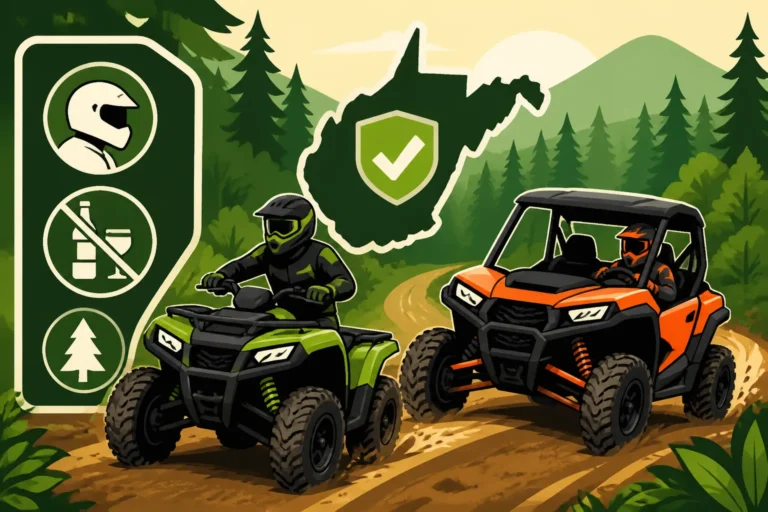
Pack helmets and eye protection suited to the machine and the conditions. Dust, mud, and changing weather can make a ride uncomfortable even when the temperature seems pleasant at the campsite. Bring water, basic tools, a first-aid kit, and a way to navigate if your phone loses service. Let someone at the campground know your planned route and expected return time, especially if your group is exploring unfamiliar sections.
Before each ride, check trail status and closures. Conditions can change after rain, and a route that looked manageable on a map may be more difficult when muddy or damaged. Respect gates and barriers, stay on marked trails, and avoid assuming that nearby private land is open to riding.
Make the RV Stay Easier
A good base camp helps your riding days feel less rushed. Think about the practical routine of arriving, unloading, cleaning machines, sleeping, and getting back out in the morning—not just the campground’s distance from the trail.
Plan for Arrival, Fuel, and Cleanup
If possible, arrive with enough daylight to park and unload safely. Mountain roads and unfamiliar campground turns are easier to handle when you can see clearly, and a late arrival can be stressful if you need to back a trailer into a tight site. Keep essential documents, straps, gloves, and riding gear somewhere easy to reach rather than buried under everything else in the RV.
Ask where you can refuel and whether nearby businesses are convenient for your group. Do not count on every store or service being open when you need it, particularly if your schedule depends on arriving late or riding early. A paper map or downloaded map can help when cell service is unreliable; onX Offroad may support route planning, but save the information you need ahead of time and keep a backup.
Mud is part of the experience, but campground rules may limit where you wash machines or dispose of dirty water. Bring towels, boot trays, and a separate container for muddy gear. A simple cleanup routine can keep your RV livable after a wet ride and reduce friction with neighboring campers.
Build a Flexible Itinerary
Avoid planning every riding hour around a perfect-weather assumption. Leave room for a slower morning, a mechanical issue, a closed trail, or a change in energy after a demanding ride. If your group is visiting for several days, consider alternating a longer day on the trails with a shorter day for supplies, rest, or local exploring.
A simple plan might look like this:
- Confirm the campground reservation, site dimensions, hookups, machine parking, and trail access.
- Check permits, trail status, maps, and any campground rules before departure.
- Arrive with enough daylight to park, unload, and identify the route to your trail access point.
- Start with a route that matches the group’s ability and reassess conditions as the day goes on.
- Check machines and gear at the end of each ride, then adjust the next day’s plan as needed.
For a fuller trip-planning checklist, see Planning a West Virginia Riding Weekend. If your group’s priorities are direct access and minimal loading, focus on trail-connected lodging. If a full-service RV setup and a quieter base are more important, a campground farther away may still make sense—provided you are comfortable driving to the trailhead and have a reliable parking plan.
Disclaimer
This article is for general informational purposes only and does not constitute professional advice. Laws, prices and regulations vary by location and change over time. Consult a qualified professional for guidance on your specific situation.