Family Loops at Hatfield-McCoy
Planning a family ride at Hatfield-McCoy can feel tricky: children may be ready for the trail before they’re ready for its hills, mud, or long stretches between stops. This guide explains how to choose a manageable route, match the ride to your group and machine, and prepare for a safer day without assuming every trail or “easy” rating will feel easy to every family.
What makes a Hatfield-McCoy ride family-friendly
Choose terrain for your least experienced rider
A family ride goes better when the route suits the youngest or least experienced person in the group, not just the most confident driver. A trail that feels like a fun challenge to an adult may be tiring or intimidating for a child, a first-time rider, or someone who has never handled a machine on uneven ground.
Use the trail system’s difficulty ratings as a starting point. Easier routes are generally a better place to begin, but conditions still matter: a dry, broad section may feel very different from a slick climb after rain. Hills, ruts, rocks, and tight turns can turn a short ride into a demanding one, particularly for a new driver.
Before setting out, agree that anyone can ask for a pause or a turnaround without being teased or hurried. That simple expectation helps children speak up before they are overwhelmed. If the group includes riders with different abilities, keep the plan conservative and build in a chance to reassess at a trailhead or another safe stopping place.
For more context on picking a first route, see Family Loops at Hatfield-McCoy alongside West Virginia Trail Difficulty and How It Is Marked and Hatfield-McCoy Trail Ratings Explained. Ratings help narrow the choices, but a family’s comfort level is the deciding factor.
Think about the machine as well as the trail
A route that is suitable for an ATV may not suit every side-by-side, and a machine that carries the whole family may be too wide for some trails. Confirm that your particular vehicle is allowed on the routes you plan to use, including any width restrictions. Don’t rely on a general statement that a trail system is “UTV-friendly” to assume every trail is open to every machine.
Pay attention to the fit of the riders, too. Children should be able to sit securely and follow the manufacturer’s age and size guidance for the machine. On a side-by-side, check that every passenger can use the seat belt correctly and keep hands and feet inside the vehicle. Avoid squeezing an extra passenger into a seat or carrying someone in a way the vehicle was not designed for.
A mixed group may need to plan around the narrowest trail access or the largest machine. If one vehicle cannot safely or legally take a chosen route, the group should pick a route that works for everyone rather than splitting up without a clear meeting plan. For more on choosing appropriate equipment, read Manufacturer Age and Size Requirements and West Virginia Trail Systems Best Suited to Side-by-Sides.
How to plan a manageable family loop
Start with a trailhead and a realistic turnaround point
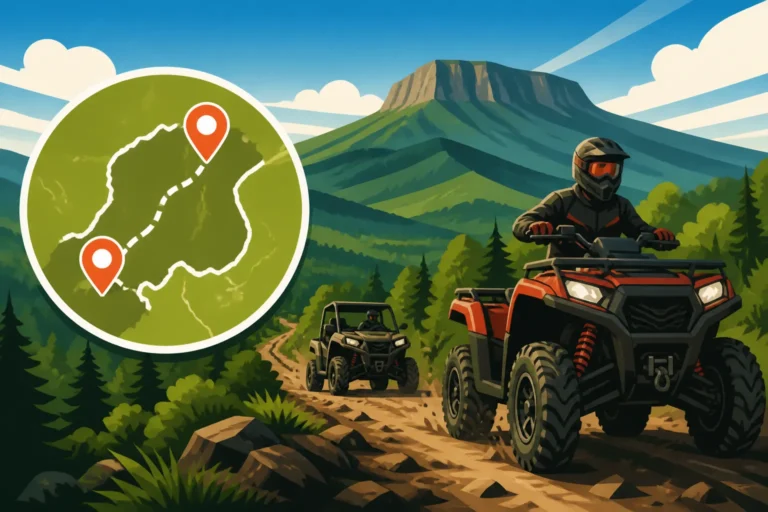
A family “loop” does not always mean a simple circle that starts and ends at the same spot. Trail connections, machine restrictions, closures, and your group’s pace can affect whether a particular route returns to its starting point. Before unloading, look at the map and confirm the route you intend to ride, the expected direction of travel, and how you can shorten the outing if someone gets tired.
Choose a conservative turnaround point rather than planning to use every available hour. Children may need more breaks than adults expect, and stopping for snacks, gear adjustments, or a nervous moment can stretch a short ride. A route that looks brief on a screen can take longer when the group is moving carefully over unfamiliar terrain.
Use the official trail information available to riders at the trailhead, and check for notices before you head out. A downloaded map can be useful when mobile reception is unreliable. Tools such as onX Offroad can help you review route options and keep your bearings, but they should complement—not replace—current trail signage, posted closures, and local guidance. Carrying a paper map is also sensible; see Carrying a Paper Trail Map in West Virginia and West Virginia Trail Maps and Signage.
| Planning question | Why it matters for families | Practical choice |
|---|---|---|
| Can the least experienced rider handle the terrain? | A difficult section can turn an enjoyable ride into a stressful one. | Choose an easier route and keep a short turnaround option. |
| Is the route open to your machine? | Width and access limits may differ by trail. | Check the trail information for the specific vehicle you’re bringing. |
| Does everyone know the plan? | Riders can become separated at turns or crossings. | Share the route, regrouping points, and turnaround plan before starting. |
| Are the children comfortable and properly equipped? | Discomfort or poor fit can quickly become a safety issue. | Check helmets, eye protection, seating, and secure passenger positioning. |
| Have you checked conditions and closures? | Rain, trail work, or other notices can change the day’s options. | Review current information before leaving and again at the trailhead. |
Set a pace that leaves room for stops
Families often enjoy the ride more when they treat it as time outdoors, not a race to cover distance. Pick a pace that allows the group to ride cautiously and leave enough daylight for the return. Stop in safe places to check on children, adjust goggles or helmets, drink water, and make sure every vehicle is still operating normally.
Agree on a simple group routine before you start. For example, the lead rider can wait at turns for the rest of the group, while the last rider checks that no one has fallen behind. Keep vehicles close enough for communication but far enough apart to leave room for braking and unexpected obstacles. If the group gets separated, riders should follow the agreed plan rather than improvising a new route.
Build in a no-pressure exit. If a child becomes scared, a driver feels fatigued, or the trail becomes more challenging than expected, turn around at a suitable location or return to the trailhead by the safest available route. The goal is for everyone to finish feeling capable of riding again, not to prove that the family can complete a difficult loop.
Safety and trail rules for riding with children
Check age, supervision, and protective gear
Before the trip, review the rules that apply to young riders and passengers. West Virginia trail requirements can depend on a rider’s age, machine, and circumstances. Make sure children ride only machines and routes appropriate to them, and understand what direct supervision means for your group. The relevant guides include [West Virginia Age Rules on the Trails], Direct Supervision Rules for West Virginia Riders Under 16, and Helmet and Eye Protection Rules in West Virginia.
Helmets and eye protection should be treated as essential parts of the ride, not gear to borrow at the last minute if something goes wrong. Check that each helmet fits securely and is suitable for the rider. Goggles or other appropriate eye protection help shield eyes from dust, debris, and branches. On a side-by-side, confirm that passengers are seated properly and using the vehicle’s safety equipment.
Do a quick pre-ride check together. Confirm that controls work, tires look properly inflated, lights function where needed, and everyone knows how to stop safely. A child may be eager to get moving, but taking a few minutes to check the machine and explain what to expect can prevent avoidable stress later.
Stay on marked routes and respect closures
Keeping to marked trails protects both riders and the places they came to enjoy. Do not leave the route to explore an unmarked side path, ride around a barrier, or cross onto land that is not open to the trail system. A shortcut can create a trespass problem or lead the group onto terrain that is unsuitable for its machines and experience level.
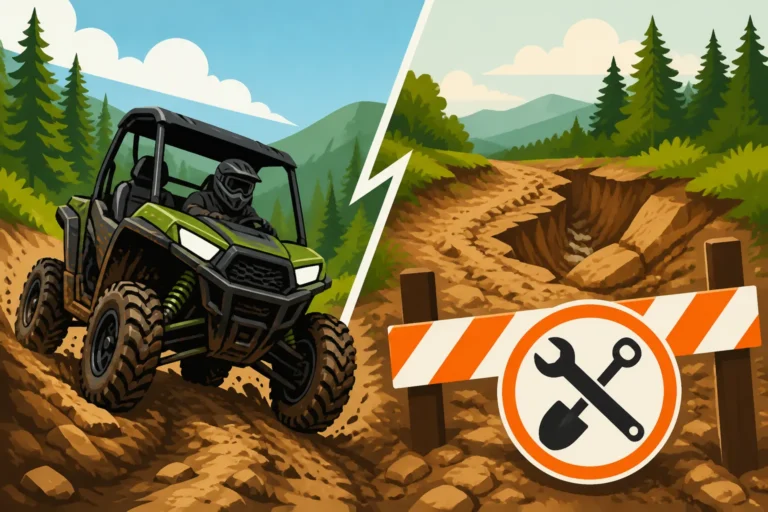
Make sure children understand that trail signs and gates are not suggestions. If a route is closed, choose another open option or end the ride; don’t assume the closure is unimportant because the trail looks passable. Closure information can change, so check it before leaving and pay attention to notices at the trailhead.
Permits, safety requirements, and trail rules are part of planning, too. Review Trail Rules Every West Virginia Rider Signs Up To before the trip, and check the current requirements for each rider and vehicle. Keep any required permit or identification where it can be accessed without stopping in an unsafe place.
Prepare for a smoother day at the trailhead
Pack for children and changing conditions
Bring more water and snacks than you expect to need, especially if children are riding. Pack layers because conditions can change between the trailhead and a shaded hillside. A small first-aid kit, basic repair supplies, a charged phone, and a paper map can also make a difference if the day takes longer than planned.
Dust can be irritating, and weather can change quickly. Make sure eye protection is comfortable enough that children will keep it on. A spare pair of gloves or dry layer can be useful after a muddy stretch or a cool, damp ride. Keep important items secured so they don’t fall out when the machine bumps over uneven ground.
Set family expectations before leaving the parking area: stay with the group, stop only where it is safe, don’t pass without permission, and tell an adult if you feel uncomfortable. These instructions are easier for kids to follow when they are short and specific.
Make the day about the group, not the mileage
A successful family ride may be a short outing with plenty of stops rather than a long route across several trail connections. Take account of travel time to the trailhead, unloading, permit and gear checks, meal breaks, and the ride back. If the day is already running late, scale down the route instead of trying to make up distance by riding faster.
Keep a backup plan for someone who needs to stop early. That might mean returning together, arranging a clear regrouping point, or choosing a route that stays closer to the starting area. Don’t let a child or inexperienced rider feel pressured to keep going just because the adults have planned a longer outing.
After the ride, ask what felt fun and what felt difficult. A child who says a hill was scary is giving you useful information for the next trip. Adjust the route, machine, or pace accordingly. With realistic expectations, suitable gear, and a route that matches the group, Hatfield-McCoy can be an enjoyable place to build confidence one ride at a time.
Disclaimer
This article is for general informational purposes only and does not constitute professional advice. Laws, prices and regulations vary by location and change over time. Consult a qualified professional for guidance on your specific situation.