Riding With Kids Under 16 on the Trails
A family ride can turn stressful quickly when a child is tired, the trail gets rough, or an adult discovers that age and supervision rules differ by location. This guide explains how to plan West Virginia trail rides with riders under 16, choose age-appropriate machines and routes, and prepare for the practical safety decisions families face on the trail.
Understand the rules before you ride
Age and supervision depend on the trail system
West Virginia does not have one simple rule that answers every question about a child riding an ATV or UTV. Requirements can differ depending on whether you are on a managed trail system, public land, private property, or a road. Before setting out, confirm the rules for the specific place you plan to ride—not just the rules you remember from another trail system or a previous trip.
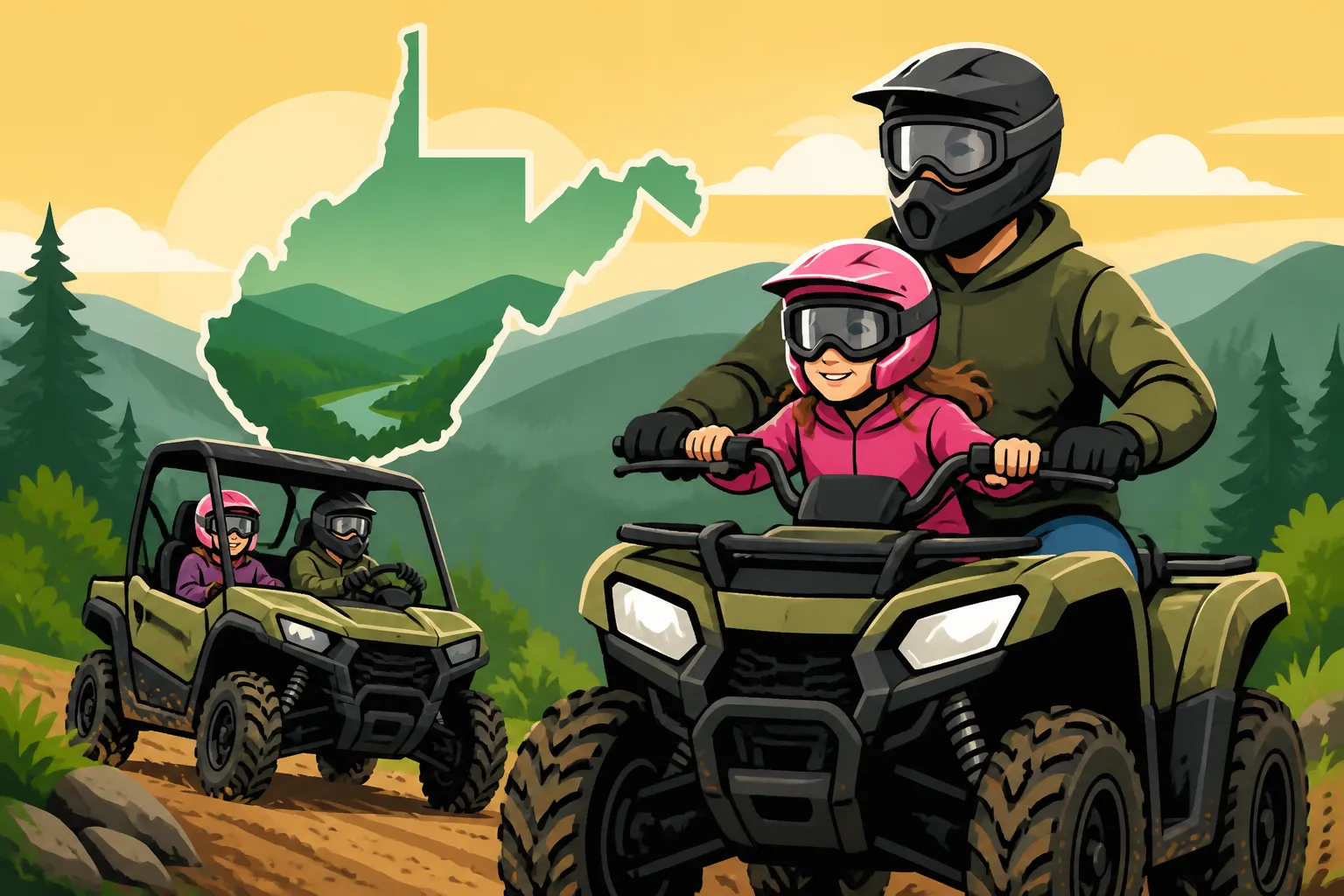
On Hatfield-McCoy managed trails, the minimum rider age is six, and riders under 16 must be directly supervised. That is a minimum threshold, not a recommendation that every six-year-old is ready for every trail or machine. Check the trail authority’s current rules for what direct supervision means, what safety training is required, and whether a particular trail or vehicle has additional conditions. The guide to [West Virginia Age Rules on the Trails] can help you identify the questions to check.
Supervision should be practical, not just technical. An adult who is far ahead around a blind bend may not be able to help a child who stalls, tips, or becomes frightened. Keep younger riders close enough that you can see and communicate with them, and choose a pace that lets the adult supervising respond calmly. For a family unfamiliar with local requirements, reviewing What Direct Supervision Means on the Trails before the trip can help avoid assumptions.
Training, helmets, permits, and trail boundaries
Do not assume that a child’s age alone determines whether a safety course is needed. Course requirements can depend on the rider, the location, and whether the trails are managed under a specific program. Confirm what applies to your ride before you leave home, and carry any required proof of completion. For a clearer starting point, see Who Needs the West Virginia Safety Course and Why Managed Trails Are Exempt From the Course.
Protective gear deserves the same attention as paperwork. West Virginia trail rules include helmet and eye-protection requirements, and minors should have properly fitted gear before the machine starts moving. A helmet that rocks around, sits too high, or has a loose chin strap may not protect a child as intended. Check the requirements for your riding area, then read Helmet and Eye Protection Rules in West Virginia for details to confirm before the trip.
A trail permit, where required, is not permission to ride anywhere you like. Keep the machine on marked routes, respect gates and closure notices, and explain to children that a tempting side path is not automatically part of the trail. A quick pre-trip review of Staying on Marked Trails in West Virginia can help adults set clear expectations before the excitement of the ride takes over.
Match the machine and route to the child
Choose a machine by fit, ability, and manufacturer guidance
A child’s age is only one part of deciding whether a machine is appropriate. Consider the child’s height, reach, strength, coordination, judgment, and experience. They should be able to reach the controls comfortably and understand how to stop, turn, and respond to instructions. Follow the manufacturer’s age and size guidance; an ATV that is technically available to a child can still be too powerful or physically demanding for that particular rider.
For a new rider, a smaller, manageable machine and a quiet practice area are usually a better starting point than a full day on unfamiliar trails. Let the child become comfortable with starting, stopping, steering, and using the controls before adding uneven ground or other riders. If you are shopping for a youth machine, Manufacturer Age and Size Requirements and Minimum Size Requirements for Young Riders are useful topics to review alongside the owner’s manual.
A UTV can feel more secure because it has a seat and restraint system, but it still needs to fit the people riding in it. Use the designated seats and restraints as designed, follow the vehicle’s passenger limits, and do not treat an enclosed or seat-belted vehicle as a guarantee against injury. Children should be able to sit correctly and stay secured throughout the ride. The guidance in Riding With a Child in a Side-by-Side can help families think through passenger-specific questions.
Choose easy terrain with an easy exit
A green or beginner-rated trail can be a sensible place to start, but a rating does not mean the surface will always be smooth, dry, or stress-free. Rain can change traction; rocks and ruts can surprise a young rider; and a child’s confidence can fade as the day goes on. Review the trail system’s current map and conditions, and pick a short route with sensible places to stop or turn back.
Think about the whole route rather than focusing only on its rating. A gentle section may lead to a steep hill, a narrow passage, or a creek crossing that is not right for your child. Ask what the most challenging part of the planned loop is, and whether you can avoid it without getting separated from the group. Trails Suited to a First-Time Rider and West Virginia Trail Difficulty and How It Is Marked can help you compare options before committing.
A map can reduce the unease of not knowing where a junction leads, particularly when a child is ready to stop earlier than expected. Families can use a trail map or navigation tool such as onX Offroad to review route options and identify where a shorter ride might be possible. Download or prepare the map before entering areas with limited service, and remember that a digital route should not override posted closures or trail signs. onX Offroad can support planning, but the trail authority’s posted information remains essential.
| Family situation | A sensible starting point | Reconsider the plan if |
|---|---|---|
| Child is new to riding | Practice in a controlled area, then try a short, easy route | The child cannot confidently stop, steer, or follow basic directions |
| Child is riding as a passenger | Use a suitable vehicle, proper seat, and correctly used restraints | The child cannot sit securely or the vehicle lacks an appropriate passenger position |
| Conditions are wet or unfamiliar | Choose a shorter route and keep a clear turnaround option | The route includes obstacles the child has not practiced handling |
| Several children are riding | Match the plan to the least experienced child | The group’s speed or terrain would pressure a child to keep up |
Prepare for the ride as a family
Set expectations and a pace children can manage
Before leaving the staging area, explain the basic plan in plain language: who leads, who stays behind the youngest rider, where the group will stop, and what the child should do if they become uncomfortable. Keep instructions simple. “Stay behind me and stop when I stop” is easier to follow than a long list of rules delivered while helmets are going on.
Make sure children know they can ask to stop without being teased or rushed. A young rider may not immediately say, “I’m tired” or “I’m nervous.” They may become unusually quiet, ride less steadily, or start making avoidable mistakes. Build in breaks before someone is worn out, and be willing to shorten the ride. A family outing is not a test of endurance.
Adults should agree on the riding order in advance. Place the child where the supervising adult can monitor them, and do not let the group stretch out until communication becomes difficult. If you have several children with different skill levels, plan around the least experienced rider rather than asking that child to match the oldest or fastest. For more practical family planning, Riding West Virginia Trails With Kids offers related guidance.
Pack for changing conditions and minor setbacks
Bring the items your family needs to stay comfortable and safe, not just the gear that fits neatly in a storage compartment. Depending on the ride, that may include water, snacks, weather-appropriate layers, a basic first-aid kit, and a way to communicate if the group becomes separated. Check each child’s helmet fit and eye protection before departure, and make sure clothing will not snag on controls or moving parts.
Prepare for the possibility that the ride takes longer than expected. A child may need a break, a machine may need attention, or a trail section may be temporarily closed. Carry a charged phone, but do not count on cell service in every hollow or remote area. When using onX Offroad, prepare the map before you lose reception and keep the group together rather than relying on everyone to find their own way back.
Finally, make the return plan part of the original plan. Set a turnaround time, account for daylight and weather, and avoid adding a difficult trail just because the group is having fun. If a child is cold, upset, or no longer following instructions reliably, call the ride early. Ending on a calm note is better than pushing through until a small problem becomes a risky one.
Common family mistakes and how to avoid them
Treating the minimum age as a readiness test
A child may meet a trail system’s minimum age and still be unready for a particular machine or route. Age rules set boundaries; they do not measure confidence, physical fit, attention, or judgment. An adult who knows the child well is in the best position to assess those things, but should still be conservative when the route or conditions are unfamiliar.
Another common mistake is assuming that a child will become comfortable simply by continuing. If a young rider is frightened or overwhelmed, extra distance can make the experience worse and lead to poor decisions. Stop in a safe place, check in without pressure, and decide whether to return by the easiest available route. The ride should build confidence, not force it.
Families can also overlook the difference between riding as an operator and riding as a passenger. Each role comes with different responsibilities and risks. An adult should confirm that the vehicle is designed and equipped for the child’s position, that the child can remain properly seated, and that everyone understands the rules for the chosen trail system.
Assuming trail conditions and rules stay the same
A route that was easy on a dry day may feel much more difficult after rain. Mud, loose rock, ruts, and water crossings can affect traction and visibility, while temporary closures can change the route you expected to take. Check trail status close to departure and again at the trailhead, then be ready to change plans.
Do not rely only on a phone map or an old screenshot. Follow signs and barriers in the field, and never ride around a closure because the route appears passable. If the map and signs seem to conflict, stop and check with the trail authority or staff rather than guessing. Navigation tools such as onX Offroad can help you understand where you are, but they do not replace local trail rules.
The most successful family rides leave room for flexibility. Pick a route that can be shortened, bring enough supplies for a delay, and agree beforehand that turning back is always an acceptable choice. When adults model that judgment, children learn that responsible riding means paying attention and making good decisions—not simply finishing the planned loop.
Disclaimer
This article is for general informational purposes only and does not constitute professional advice. Laws, prices and regulations vary by location and change over time. Consult a qualified professional for guidance on your specific situation.