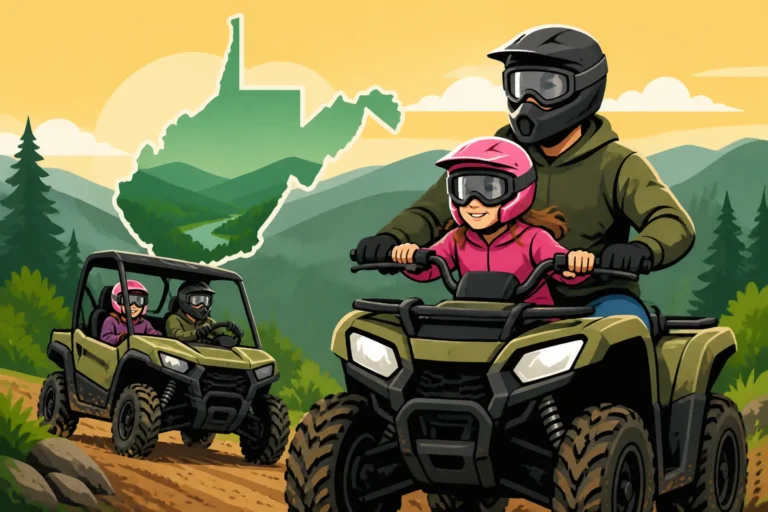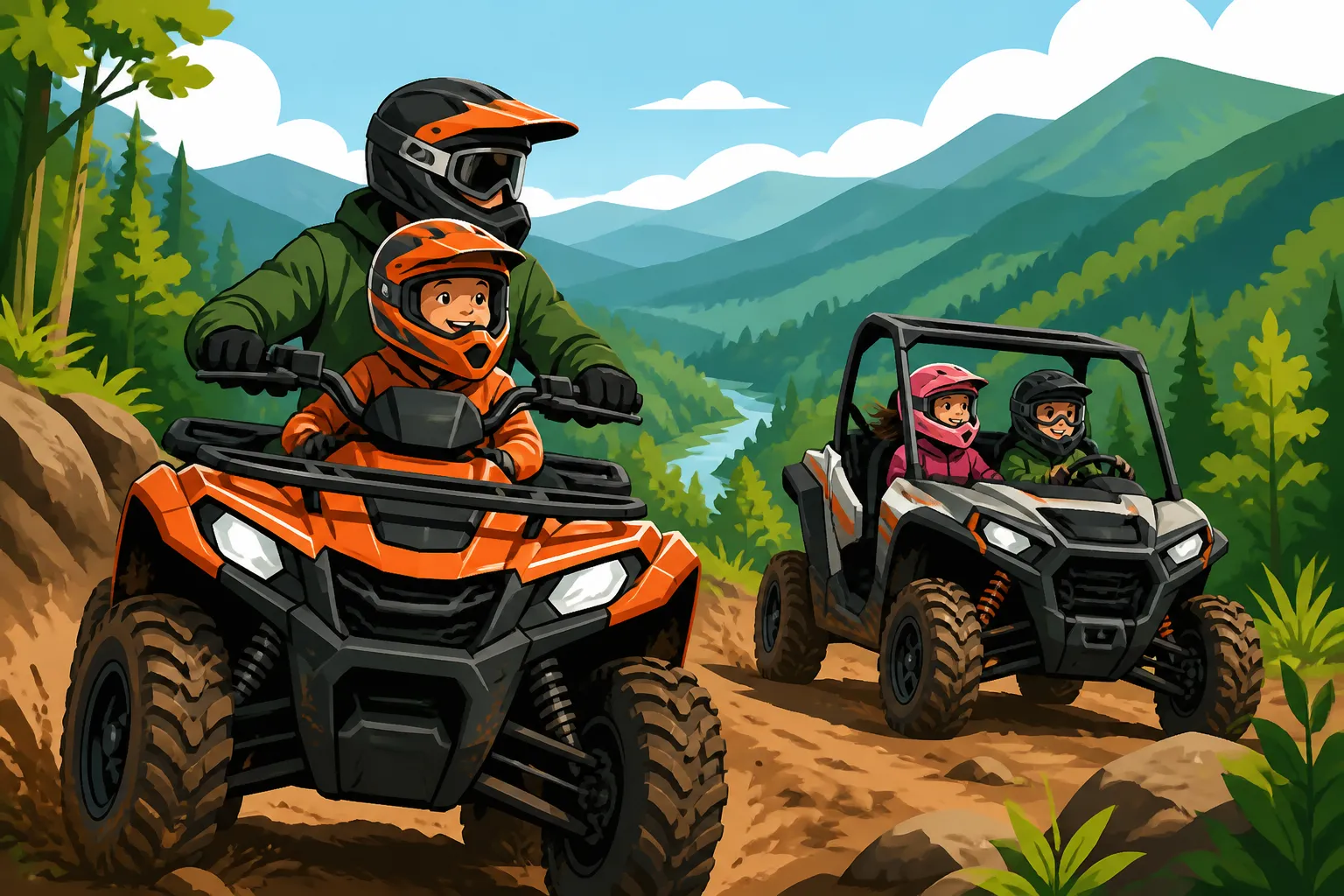
Riding West Virginia Trails With Kids
A family ride in southern West Virginia can shift from easy fun to a stressful day quickly: a child gets tired, a trail feels harder than expected, or the group loses its way at a junction. Careful planning helps. This guide covers age-appropriate preparation, trail choices, safety habits, and practical ways to keep kids comfortable on the ride.
Start with the rules and your child’s readiness
Check age, supervision, and machine requirements
Before choosing a trail, check the rules for the specific riding area. West Virginia’s managed trail systems and other off-highway areas may have different requirements, and rules can depend on a child’s age, the machine, and whether the child is driving or riding as a passenger. For Hatfield-McCoy, review the system’s current age, supervision, safety, and permit requirements before you travel. The overview at [West Virginia Age Rules on the Trails] can help you identify what to confirm.
A child who is old enough to ride is not automatically ready for every machine or trail. Follow the manufacturer’s age and size guidance, and make sure a young driver can reach the controls, steer, and stop confidently. If your child is a passenger, use only a machine designed for passengers, with an appropriate seat and handholds. Never assume that an adult’s ability to manage a machine makes it suitable for a child.
The rules are a minimum, not a readiness test. A cautious child who can follow directions may be a better fit for a short, easy outing than an older child who is anxious, impulsive, or uncomfortable with noise and uneven ground. Make your decision based on the individual child, not just their age.
Match the ride to the child, not the group
Talk through the plan before you load the machines. Ask whether your child is excited, nervous, or unsure about anything. Explain what the engine noise, trail surface, and group riding will feel like. A child who knows that a ride may include bumps, dust, and pauses is less likely to be startled when those things happen.
If your child is driving, practice in a safe, permitted area before attempting a trail ride. Start with basic skills: controlled starts and stops, steering at low speed, looking ahead, and following signals. Keep the practice short enough that the child can finish while still feeling capable. If they are riding as a passenger, show them how to sit, hold on, and communicate that they need a stop.
You do not need to prove anything by completing a long loop. If your child has never ridden on uneven terrain, plan a modest first outing and leave room to turn around. For a refresher on the equipment side of the decision, [Manufacturer Age and Size Requirements] is a useful starting point.
Choose a route that leaves room for a good day
Begin with terrain you can comfortably manage
West Virginia trails can change quickly. A route that starts on a broad, gentle section may lead toward steeper grades, rocks, mud, or narrower passages. Check the trail system’s posted ratings, maps, restrictions, and closure information before setting out. A trail color or rating is useful, but it cannot predict exactly how a particular child will respond to a rough section.
For a first family ride, favor a shorter route with straightforward surfaces and convenient places to stop. Avoid building the day around difficult climbs or a challenging destination. If conditions have been wet, a normally manageable route may become slippery or muddy. Be especially conservative when the trail is unfamiliar or the group includes young or inexperienced riders.
Ask local staff or the trail operator about current conditions and family-suitable routes. At Hatfield-McCoy, trail systems such as Rockhouse, Buffalo Mountain, Bearwallow, and Pocahontas each offer their own layout and riding character. Don’t choose solely by a name you recognize or a trip report from another family; match the route to the skills and machines in your group.
Plan around distance, daylight, and easy exits
Children may tire sooner than adults, especially when they are concentrating on a new activity or riding as a passenger over rough ground. Set a conservative turnaround point and use time, comfort, and conditions—not just miles—to decide how long to ride. A short outing that ends with a happy child is a better first experience than an ambitious loop that turns into a struggle.
Check the trail system’s operating hours and daylight rules, and plan to finish with a comfortable margin. Keep in mind that slow progress, a wrong turn, a mechanical problem, or a long rest break can add time. Do not count on riding late into the day just because the group started early.
Before departure, identify places where you can safely pause and discuss what you will do if the group becomes separated. Download or carry a map, and learn how to recognize trail junctions and markers. A mapping tool such as onX Offroad can help with route awareness, but don’t treat an app as a replacement for official maps, posted signs, or local trail guidance. Cell coverage can be unreliable in remote terrain, so prepare for navigation without a live signal.
| Planning choice | More family-friendly approach | Reason to reconsider |
|---|---|---|
| Route | Short, familiar, and within the group’s ability | Long, unfamiliar, or difficult to exit |
| Terrain | Predictable surface with room to pause | Steep, rocky, muddy, or narrow sections beyond the child’s comfort |
| Timing | Early start with a generous return buffer | A plan that depends on riding near closing or after dark |
| Group size | Small enough to communicate and regroup | A large convoy where a child may be hard to monitor |
| Navigation | Official map, trail markers, and offline backup | Relying only on phone service or memory |
For route-specific preparation, [West Virginia Trail Difficulty and How It Is Marked] explains why ratings and markers deserve attention before you ride.
Prepare the child and machine before the trail
Make protective gear comfortable and correctly fitted
A helmet that fits properly is essential. It should be approved for the type of riding and secured according to its instructions. A loose helmet can shift; one that is too tight can become miserable before the ride is over. Have the child try it on before the trip, not for the first time in a busy parking area.
Eye protection matters too. Dust, branches, and small debris can make a child uncomfortable or distract them. Choose eye protection that fits securely with the helmet and does not fog or slip during movement. Dress for changing conditions: sturdy clothing, gloves, and closed-toe footwear help protect against scrapes and hot or rough surfaces. Bring an extra layer if the forecast or elevation suggests the ride may feel cooler than the parking area.
Do a comfort check before starting: helmet secure, goggles in place, gloves on, and footwear fastened. Ask the child to turn their head, look down, and move their arms. If something pinches, blocks vision, or makes it hard to hold on, fix it before the machine moves. For more on protective equipment, see [Helmet and Eye Protection Rules in West Virginia].
Inspect the machine and establish simple signals
Check that the machine is appropriate for its rider and passenger, and inspect basic controls and safety equipment before the ride. Confirm that brakes, tires, lights, and any required restraints are in working order. For a side-by-side, make sure the child can sit correctly and use the vehicle’s seat belt as designed. Never carry a child in a position or on a machine not intended for passengers.
Agree on a few simple signals before leaving. For example, decide how the child will say they need a break, and how the group will communicate a stop or a problem. Keep instructions short and repeatable. A young rider may not remember a complicated set of hand signals when the engine is loud and the trail is busy.
If the child is driving, an adult should be able to supervise closely and intervene when needed. Avoid placing a novice child at the front of a group where they may feel pressured to keep pace. Keep the ride slow and controlled, and leave enough room between machines to react to sudden stops, dust, or changing terrain. The preparation guide [What to Carry on a Remote West Virginia Ride] can help you build a practical packing list.
Ride at a child’s pace and adapt as you go
Keep the group together without crowding
Before you start, assign an adult to lead and another experienced adult to ride behind the child when the group size allows. That arrangement helps keep the child in view and prevents them from feeling abandoned at the back. If there is only one supervising adult, keep the group small and organized enough that the adult can monitor the child safely.
Leave space between machines. Too close, and a sudden stop can cause a collision; too far apart, and the child may feel separated or lose sight of the group. Pause at trail junctions and regroup before anyone turns. Make sure every rider knows not to continue past a junction until the group has reassembled.
Set expectations about speed and stopping. A child should never feel they need to keep up with faster adults. If the group has to slow down, shorten the route, or skip a section, treat that as normal planning rather than a disappointment. A calm group is easier to supervise and more enjoyable for everyone.
Watch for fatigue and let the child reset
Young riders may not clearly say when they are overwhelmed. Watch for signs such as silence, irritability, slumping, repeated mistakes, or reluctance to continue. A child who was cheerful at the trailhead may be tired after a stretch of bumps or engine noise. Stop somewhere safe, offer water and a chance to rest, and ask a simple question: “Would you like to continue, take a longer break, or head back?”
Build breaks into the plan rather than waiting until someone is upset. A short pause can help the child drink, adjust goggles, stretch, and talk about how the ride feels. If they are cold, overheated, dusty, or uncomfortable, address that before moving again. Do not pressure a child to ride through distress just because the group has a destination in mind.
Be ready to turn around. If the terrain feels harder than expected, weather changes, or a child’s confidence drops, choose the safe exit. That decision can feel disappointing in the moment, especially if the family has traveled a long way, but it is better than turning a recreational ride into a frightening memory. [West Virginia Trail Conditions After Rain] is particularly relevant when wet weather may have changed the surface.
Make the outing easier for the whole family
Pack for practical needs, not just the ride
Bring water, snacks, basic first-aid supplies, and an extra layer of clothing. Pack items so they remain secure and do not interfere with the rider or passenger. A small comfort item—such as a familiar snack or a spare pair of gloves—can make a difference when a child is tired or unsettled.
Carry navigation information in a form you can use without relying on cell coverage. Save relevant maps for offline use where possible, and know the trailhead and the route you intend to ride. Keep a phone protected and charged, but do not assume it will provide dependable directions or a way to contact help everywhere on the trail. A paper map can be a useful backup.
Check permits and other access requirements before the trip, and confirm whether a rental, lodging package, or guided outing includes what your family needs. Requirements can differ between locations and arrangements. If you are renting, ask about child passenger rules, machine fit, safety briefing, gear, and what happens if the child becomes uncomfortable partway through the ride. The practical checklist at [Riding West Virginia Trails With Kids] should be paired with the specific trail operator’s instructions and the rental provider’s terms, if applicable.
Set realistic expectations for the first ride
A good family ride does not need to be long, fast, or technically impressive. For a first outing, success might mean that the child follows directions, enjoys the scenery, and finishes feeling ready to try again. Keep the schedule flexible enough to allow for an early return or a longer break.
Avoid stacking too many activities into one day. Travel, unloading, gear checks, permits, and trail orientation all take energy. A child who has already spent hours in a vehicle may have less patience for a demanding route. Plan food and rest around the ride, and leave enough time to load safely without rushing.
After the outing, ask what the child liked and what felt difficult. Use the answer to plan the next trip: perhaps a shorter route, more passenger breaks, a different machine, or more practice before the next trail day. If you’re considering a family-focused route, [Family Loops at Hatfield-McCoy] can help you explore the idea, while [West Virginia Trail Rules for Young Riders] is a reminder to verify the rules that apply to your child and destination. For a broader look at family trail preparation, [West Virginia Trail Rides for Beginners] is another helpful next read.
Disclaimer
This article is for general informational purposes only and does not constitute professional advice. Laws, prices and regulations vary by location and change over time. Consult a qualified professional for guidance on your specific situation.