Group Rides in Southern West Virginia
A group ride in Southern West Virginia can turn stressful fast when riders have different skill levels, machines, or ideas about how far to go. Add mountain weather, narrow trails, and patchy cell service, and a casual day out needs more planning than it first appears. This guide covers choosing a ride area, organizing your group, staying together, and handling common trail-day surprises.
Choose a Southern West Virginia riding area that fits your group
Match the trail system to the least-experienced rider
A good group route is not the most challenging route your strongest rider can handle. It is one the whole group can enjoy without anyone feeling pressured to tackle terrain they are not ready for. Before choosing a trail system, talk honestly about experience, comfort with steep grades, machine size, and how everyone feels about mud, rocks, and creek crossings.
Southern West Virginia offers several places to plan a ride, including the Rockhouse area near Gilbert, Bearwallow near Logan, Buffalo Mountain near Williamson and Matewan, Pinnacle Creek near Pineville, and Pocahontas near Bramwell. Each has its own access points and character, so do not assume a route or trail connection works the same way across systems. Check the official trail map and current access information before deciding where to meet.
If your group includes beginners, start with a conservative plan and leave room to turn back or shorten the ride. A route that looks manageable on a screen may feel very different to someone who has not ridden rocky switchbacks or a steep, uneven descent before. It also helps to discuss the plan before engines start, when people can hear one another and ask questions without holding up a trail.
For a closer look at choosing a suitable destination, Which Hatfield-McCoy System to Ride First can help your group compare starting points. If you are considering the Rockhouse area, review Rockhouse Trail Difficulty Ratings rather than relying on a friend’s description of a trail as “not too bad.” Riders may have different ideas of what that means.
Pick a meeting point and confirm access
A trailhead is not automatically the best place for every group to gather. A large party with trucks and trailers may need to think about parking space, unloading room, turnaround space, restrooms, and whether everyone can arrive without blocking other visitors. Confirm the meeting location in advance, send a written description, and agree on what to do if someone gets delayed.
Tell riders to arrive with enough time to unload, check their machines, handle permits or paperwork, and hear the ride briefing. When people arrive at different times, the group can be tempted to skip the safety talk or rush onto the trail. That is when someone may discover too late that a machine is not suitable for the route or that a rider did not understand the plan.
Before setting out, check current trail status and restrictions through the relevant official channels. Closures, maintenance, weather, or access changes can affect a plan. Keep a backup option in mind, but do not improvise a route onto an unmarked road, private property, or a trail system you have not confirmed is open to your group.
Plan permits, lodging, and transport separately
A cabin or rental package may make logistics easier, but do not assume it covers every requirement for every rider or machine. Ask what is included, what paperwork remains your responsibility, and whether the group needs to handle permits individually. If some riders are bringing their own machines while others are renting, make a checklist for both groups so no one is left sorting out a missing requirement at the trailhead.
For larger rides, assign one person to verify arrangements and another to keep copies of confirmations and key contact details. That does not mean one person should carry every responsibility. It means the group has a clear source of information if a reservation, trailer plan, or trail access question comes up.
It is also worth reviewing West Virginia Trail Rules Every West Virginia Rider Signs Up To before the trip. Everyone should understand that a trail permit, where required, does not mean riders can leave marked routes or ignore posted closures. Separate paperwork questions from riding decisions: settle the first before the trip, then spend the trail day focused on safe riding.
Build a group ride plan everyone can follow
Set a realistic route and turnaround time
Instead of saying, “We’ll ride until we’re tired,” choose a planned start, a likely stop, and a turnaround point or time. Mountain terrain can make short distances take longer than expected, especially when the group stops often, encounters difficult sections, or needs to assist a rider. A route that fits a fast-moving pair may not fit a dozen machines traveling together.
Ask the group how much time they want to spend riding versus stopping for food, photos, or mechanical checks. Then build in extra time. If you are riding from an area near Gilbert, for example, make the meeting and return plan clear before anyone assumes there will be time for an unplanned detour or stop in town.
Use an official map as the foundation for your route. A navigation app such as onX Offroad can be useful for reviewing mapped routes and discussing a plan before the day, but it should not replace official trail information or posted signs. Download or save the information you expect to need before heading into areas where mobile service may be unreliable. A paper map is a sensible backup; Carrying a Paper Trail Map in West Virginia covers why having one can still matter.
Use a leader, a sweep, and a simple communication plan
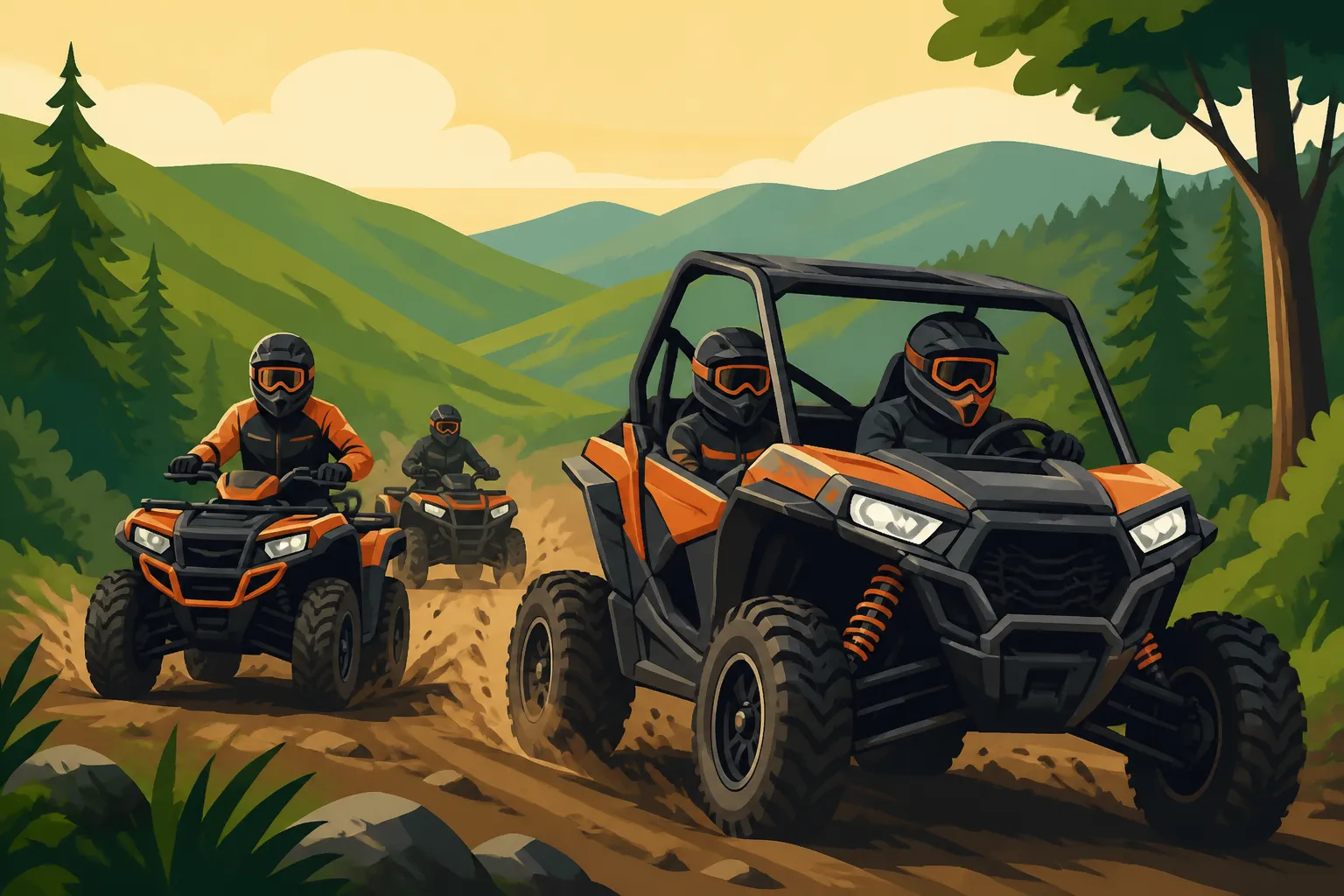
For a group larger than a few machines, name a lead rider and a sweep rider before leaving the parking area. The leader sets a controlled pace and makes route decisions; the sweep stays behind the last rider and helps ensure no one is separated unnoticed. Both should know the planned route and the group’s agreed stopping points.
Keep the formation loose enough to leave room for braking, dust, and sudden obstacles. Riders should avoid crowding the machine ahead or trying to pass just to close a gap. On a narrow section, the leader can stop in a safe, visible place to let the group catch up. The sweep should tell the leader if a machine is falling behind or a rider needs help.
Agree on simple signals and what they mean before starting. For example, decide how the group will communicate a stop, a hazard, or a mechanical problem. Radios can help, but do not make them the only plan. If they fail, riders still need a reliable way to stop safely and regroup. Discuss what to do if someone loses sight of the group: stop at a safe location, avoid taking an unplanned route, and use the agreed procedure rather than riding faster in an attempt to catch up.
Tools like onX Offroad may help a leader review the route and share planning details with others, but every rider should know the basic plan independently. Do not let one phone become the group’s only source of navigation. Before the ride, ask the lead and sweep to confirm they understand the route and have offline or paper backup information available.
Decide in advance how the group will handle different abilities
A mixed-skill group can still have a good ride, but it needs flexibility. One option is to choose a route suited to the newer riders and let experienced riders enjoy the pace without pushing the group into harder terrain. Another is to divide into smaller groups only when the route, meeting points, and return plan are clear and everyone has suitable navigation and communication.
Avoid putting a newer rider at the back without support. They may feel pressure to keep up, and the group may not notice if they stop or struggle. Place a patient, experienced rider near them, and make it clear that asking for a break is normal. A calm conversation at the trailhead can prevent the embarrassment or frustration of feeling rushed once the group is moving.
For youth riders, confirm the applicable age, supervision, machine-size, helmet, and safety requirements before the ride. Do not rely on assumptions based on a child’s height or experience alone. The family-focused guidance in Riding West Virginia Trails With Kids can help you plan a ride with younger participants, while West Virginia Trail Systems Best Suited to Side-by-Sides may be useful when your group is choosing a system for larger machines.
Keep the ride safe when conditions change
Check machines and gear before unloading
A group ride is a poor time to discover a loose strap, a soft tire, or a weak battery. Before leaving home, each rider should inspect the machine, including tires, brakes, lights where applicable, fuel, controls, and visible leaks. Bring basic tools and supplies suited to the machines in the group, but do not assume one universal tool kit will fit every make and model.
For a side-by-side, check that passengers have appropriate seating and restraints and that cargo is secured. For an ATV, confirm the rider has protective gear that fits and is appropriate for the conditions. Dust, mud, rain, and temperature shifts can change what feels comfortable over a full day, so pack layers and eye protection rather than relying on the forecast alone.
The ride leader should ask whether anyone has a machine concern before the group starts. That question gives a rider a chance to mention a warning light or handling issue without feeling they are holding everyone up later. If a machine is unsafe or a rider lacks required equipment, adjust the plan. Leaving one rider behind can be disappointing, but continuing with a known problem can put the whole group in a difficult position.
Allow for weather, fatigue, and trail conditions
Conditions can change quickly in the mountains. Rain can make slopes and rocks more challenging; heat and dust can wear people down; and fog or fading daylight can make it harder to see hazards. Check conditions before departure and keep reassessing during the ride. A route that is reasonable in dry conditions may no longer be a good choice after heavy rain.
Plan regular stops where the group can check on water, fatigue, and machine condition. Do not wait until someone is exhausted or overheated to ask how they are doing. A quieter rider may not want to interrupt a fast-moving group, so the leader and sweep should check in directly and without judgment.
Use onX Offroad or another suitable navigation tool as one part of the plan, not as permission to push on when visibility, weather, or trail conditions become concerning. Confirm your location against signs and official maps where possible. If a route is closed or a section looks unsafe, turn around rather than trying to find an unofficial bypass. Trail Closures on West Virginia’s Trail System is a useful topic to review before a trip, especially when the group is traveling a long distance to ride.
| Planning issue | Before the ride | On the trail |
|---|---|---|
| Route | Choose a system and route that fit the least-experienced rider; confirm access | Follow marked routes and reassess if conditions change |
| Navigation | Review official maps and save useful information offline | Use signs and agreed meeting points; keep a backup map |
| Group structure | Name a leader and sweep; explain signals and regrouping rules | Keep a controlled pace and stop safely for the group |
| Machines | Check tires, brakes, fuel, controls, and visible issues | Stop if a machine develops a safety problem |
| Weather and fatigue | Check conditions and pack suitable gear | Take breaks and shorten the ride if needed |
| Paperwork | Confirm permits, age rules, and package details | Keep required items available and follow posted rules |
Have a plan for a breakdown or separation
Before the first trail, decide what the group will do if a machine breaks down, a rider gets separated, or someone is injured. The exact response depends on the situation, but everyone should know who stays with the affected rider, who contacts help, and where the rest of the group waits. In remote areas, splitting up without agreement can create more confusion than the original problem.
Make sure someone in the group knows the meeting location and the best available contact details for the trail area. Mobile coverage can be inconsistent, so do not count on a call or map loading at the moment you need it. Save information ahead of time, carry a basic first-aid kit, and make sure riders know how to describe their location using trail markers or recognizable landmarks.
A rider who is tired, shaken, or dealing with a mechanical issue should not be pressured to keep moving simply because the group has a schedule. Pause, assess what is safe, and adjust the ride. If the group must split, keep the arrangement deliberate: identify who goes where, who stays, and how everyone will reconnect. For a broader look at preparing for remote riding, see What to Carry on a Remote West Virginia Ride.
Make the day enjoyable for riders and trail communities
Keep stops and parking considerate
Group rides can bring welcome business to towns such as Gilbert, Logan, Matewan, and Pineville, but a large group also takes up space. Park only where permitted, keep trailers and machines from blocking access, and follow local rules about where you can ride. Do not assume that a road or business parking area is open to off-highway machines just because riders are visible nearby.
When planning a food or fuel stop, call or check ahead if the group is large. A restaurant may be able to serve several riders more comfortably if you arrive in smaller clusters or give staff a heads-up. Keep noise and engine revving down around homes and businesses, and avoid blocking sidewalks, driveways, or other customers.
Respectful behavior helps preserve the welcome that makes trail-town visits enjoyable. If riders are uncertain whether a road, lot, or connector is permitted, they should stop and verify rather than follow another machine based on assumption. Useful local context is covered in West Virginia Trail Towns You Can Ride Into.
Keep the group small enough to manage
A long line of machines can stretch out, create dust, and make it harder for everyone to hear instructions. If the ride has grown beyond what the leader and sweep can manage comfortably, split it into smaller groups with separate leaders, clear routes, and set regrouping points. Do not divide casually at a junction and expect everyone to remember where to meet later.
For club rides and organized outings, make expectations clear when people sign up. Share the difficulty level, approximate duration, machine considerations, required gear, and the plan for late arrivals. Tell participants that the route may change if weather, closures, or rider needs require it. That helps people arrive prepared and reduces the pressure to follow a plan that no longer makes sense.
After the ride, check that everyone has returned, machines and trailers are accounted for, and any issue has been addressed. A brief conversation about what worked and what felt too difficult can make the next outing better. Use that feedback when selecting the next area, setting the pace, and deciding whether the group should ride together or in separate skill-based clusters.
A practical pre-ride checklist
- Choose a riding area and confirm current access, closures, and official route information.
- Ask about rider experience, machine type, passengers, and any special needs.
- Confirm permits, paperwork, safety requirements, lodging, and rental details.
- Share the meeting point, arrival time, route plan, and backup option.
- Name the leader and sweep, explain signals, and set regrouping points.
- Check machines, protective gear, fuel, food, water, and basic supplies.
- Save maps or navigation information for offline use and bring a backup.
- Agree that riders can speak up, take breaks, or turn back without pressure.
A well-planned group ride is not about controlling every minute. It is about removing avoidable uncertainty so the group can enjoy the scenery, support one another, and make sensible decisions when the day does not go exactly as planned.
Disclaimer
This article is for general informational purposes only and does not constitute professional advice. Laws, prices and regulations vary by location and change over time. Consult a qualified professional for guidance on your specific situation.