Age Rules for Passengers at Hatfield-McCoy
Taking a child or teen as a passenger on the Hatfield-McCoy Trails raises more than one age question: the trail’s minimum-age rule, who must supervise young riders, and whether the machine is built to carry a passenger safely. The key is to check the age rule and the vehicle’s limits separately before heading out.
The basic age rules for young riders
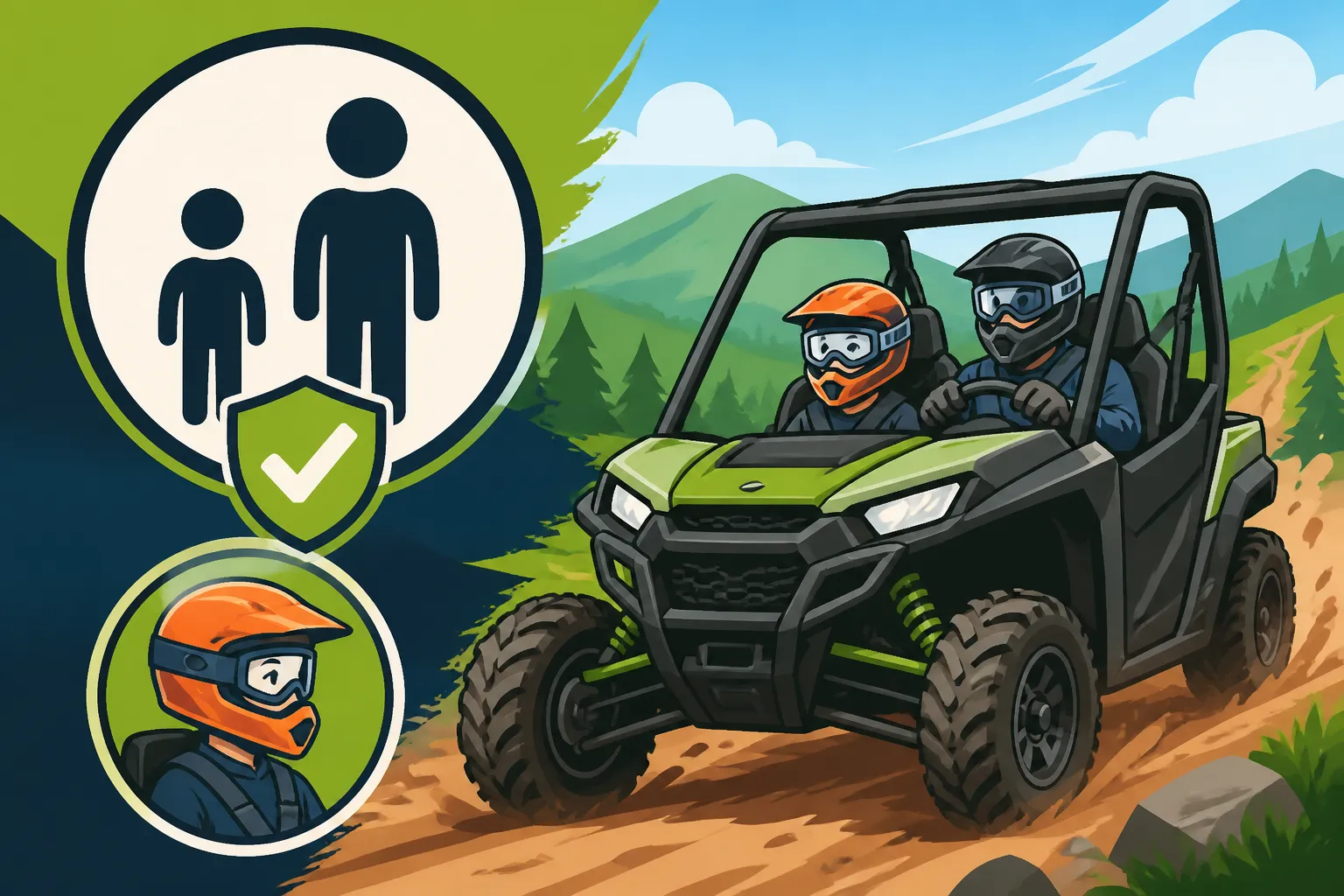
Hatfield-McCoy has a minimum age of six for riding on its managed trail system. Riders under 16 must be under direct adult supervision. These rules matter whether a child is operating a machine or riding along as a passenger, but a passenger’s age is only one part of the decision.
Supervision does not make an otherwise unsafe passenger setup acceptable. A child still needs a seat and footrests designed for a passenger, suitable protective equipment, and a secure way to stay seated. The machine’s owner’s manual may set age or size guidance for passengers; follow that guidance rather than assuming that a child is ready because they meet the trail’s minimum age.
The distinction between riding and driving is important. A child who is old enough to ride as a passenger is not automatically old enough, experienced enough, or permitted to operate every kind of ATV or UTV. For more on who can operate a machine, see West Virginia Age Rules on the Trails and What Direct Supervision Means on the Trails.
| Situation | What to check |
|---|---|
| Child is under six | The managed trail system’s minimum age rule does not allow the child to ride there. |
| Rider is under 16 | Direct adult supervision is required. |
| Child is a passenger | Check the trail age rule, the vehicle’s passenger design and the manufacturer’s guidance. |
| Teen wants to drive | Check age and supervision rules for operators, plus the machine’s age and size guidance. |
| Passenger is in a UTV | Confirm the seat, seat belt and protective equipment are appropriate for that passenger. |
Rules can be updated, and riders may encounter different requirements depending on the activity or location. Confirm current trail rules before traveling, especially when bringing children for the first time. The trail system’s age minimum is a baseline, not a substitute for checking whether the individual passenger can be carried safely.
When a child can ride as a passenger
A child may meet the minimum age for the trail and still be too small to ride safely on a particular machine. Passenger readiness depends on whether the child can sit securely, use the proper restraints or footrests, and stay in the intended position throughout a ride over uneven terrain.
For an ATV, start by checking whether it is designed to carry a passenger at all. Many ATVs are built for one person. A second person on a single-rider ATV may have no properly positioned seat or footrests, and the driver may have difficulty controlling the machine. Do not treat a longer seat or an informal ride-along as proof that the ATV is designed for two. The manufacturer’s manual is the best place to confirm its intended seating capacity and passenger guidance.
A UTV commonly has passenger seating, but that does not mean every seat fits every child. Before leaving the trailhead, make sure the child can sit fully back in the seat, use the seat belt as intended, and remain inside the vehicle. If a belt cannot be positioned correctly or a child cannot stay seated securely, the machine is not a suitable ride for that passenger. Never carry more people than the available designated seats allow.
Use extra caution with young children, who may have trouble holding their position or understanding what to do if the machine jolts. Explain where to sit, how to hold on, and why the passenger must not lean or shift suddenly. On a UTV, explain how and when to use the belt and remind the child to keep arms and legs inside. An adult should reassess the ride if the child becomes tired, frightened, or unable to remain safely seated.
Before the ride, check:
- The machine is designed for the number of people riding.
- The passenger can reach and use the intended footrests, seat belt, or other restraints.
- The child has a properly fitted helmet and any required eye protection.
- The route and planned pace suit the least experienced person in the group.
- The passenger can follow instructions and remain seated without distracting the driver.
For more on matching a young rider to a machine, see Manufacturer Age and Size Requirements. If the child will be driving rather than riding along, Youth Machines Allowed on the Trails and Minimum Size Requirements for Young Riders can help clarify what to check.
Supervision, permits and protective gear
The requirement for riders under 16 to have direct adult supervision is a key part of planning a family ride. Keep the child within the supervising adult’s attention and do not assume that an adult elsewhere in the group is enough. Agree in advance who is responsible for supervising each child, and make sure that adult understands the route and group plan.
A child’s role should also be clear. A passenger should not be expected to control the machine, navigate independently, or take responsibility for keeping the group together. If a young person is operating their own machine, supervision needs to account for that separate vehicle and the rider’s ability. Direct Supervision Rules for West Virginia Riders Under 16 explains the supervision issue in more detail.
Trail access and vehicle paperwork are separate from age. A passenger riding on a permitted machine generally does not need a second machine permit just for being a passenger; the machine must have the required trail permit. If the passenger is bringing or riding a separate machine, check the permit requirements for that vehicle. For a broader overview, see West Virginia’s Hatfield-McCoy Trail Permit Explained and One Permit for Every Trail System.
Do not assume that a permit replaces safety requirements. Passengers should wear the protective gear required for the trail, including an appropriate helmet and eye protection. Choose equipment that fits securely and stays in place. A helmet that shifts or sits loosely can be a poor fit even if it looks large enough. Check the current trail rules for any requirements that apply to the helmet or eye protection being used. See Helmet and Eye Protection Rules in West Virginia for related requirements.
A practical pre-ride check can prevent confusion at the trailhead:
- Confirm each rider’s age and whether the rider will drive or be a passenger.
- Check the machine’s manual for passenger capacity and age or size guidance.
- Confirm the adult supervision plan for anyone under 16.
- Verify that the machine has the required permit and that each person has suitable protective gear.
- Review the trail route and conditions, and choose a pace the child can safely handle.
If any part of the setup is uncertain, resolve it before starting the ride rather than trying to sort it out on the trail.
Common mistakes families can avoid
One frequent mistake is treating the minimum age of six as a universal sign that any six-year-old can ride on any machine. It only answers whether the child meets the trail system’s minimum age. It does not tell you whether the passenger seat is appropriate, whether the child can use the restraint, or whether the route is a sensible choice.
Another mistake is confusing the rules for passengers with the rules for operators. A child may be permitted to ride as a passenger while not being ready or eligible to drive. Likewise, a teen who can operate a youth machine may not be suited to driving a larger adult machine. Check the rules that apply to the child’s actual role, not just their age.
Families also sometimes plan around the machine rather than the passenger. A route that is manageable for an experienced adult can be tiring or intimidating for a young passenger. Long rides, rough sections, steep terrain, and stops that are difficult to access can make a child’s first outing harder than expected. Start with a conservative plan, take breaks, and be prepared to turn back.
Avoid these shortcuts:
- Carrying a passenger on a machine not designed for two.
- Letting a child ride without a properly fitting helmet and required eye protection.
- Treating adult presence somewhere in the group as a clear supervision plan.
- Assuming a child can use a seat belt just because the UTV has one.
- Relying on another rider’s recollection instead of checking current trail rules.
When in doubt, use the more cautious standard: follow the trail’s current age and supervision rules, the machine manufacturer’s passenger guidance, and the protective-equipment requirements. A child’s comfort and ability to stay secure matter just as much as meeting the minimum age.
Disclaimer
This article is for general informational purposes only and does not constitute professional advice. Laws, prices and regulations vary by location and change over time. Consult a qualified professional for guidance on your specific situation.