Alcohol Rules on West Virginia Trails
Alcohol Rules on West Virginia Trails
A trail ride can involve a cooler at camp, a drink at lunch, or a beer packed in a side-by-side. The hard part is knowing where carrying alcohol ends and unlawful or unsafe use begins. West Virginia trail rules and state laws can both matter, and managed trails may set stricter conditions. Here’s how to think through alcohol, operation, passengers, and enforcement before you ride.
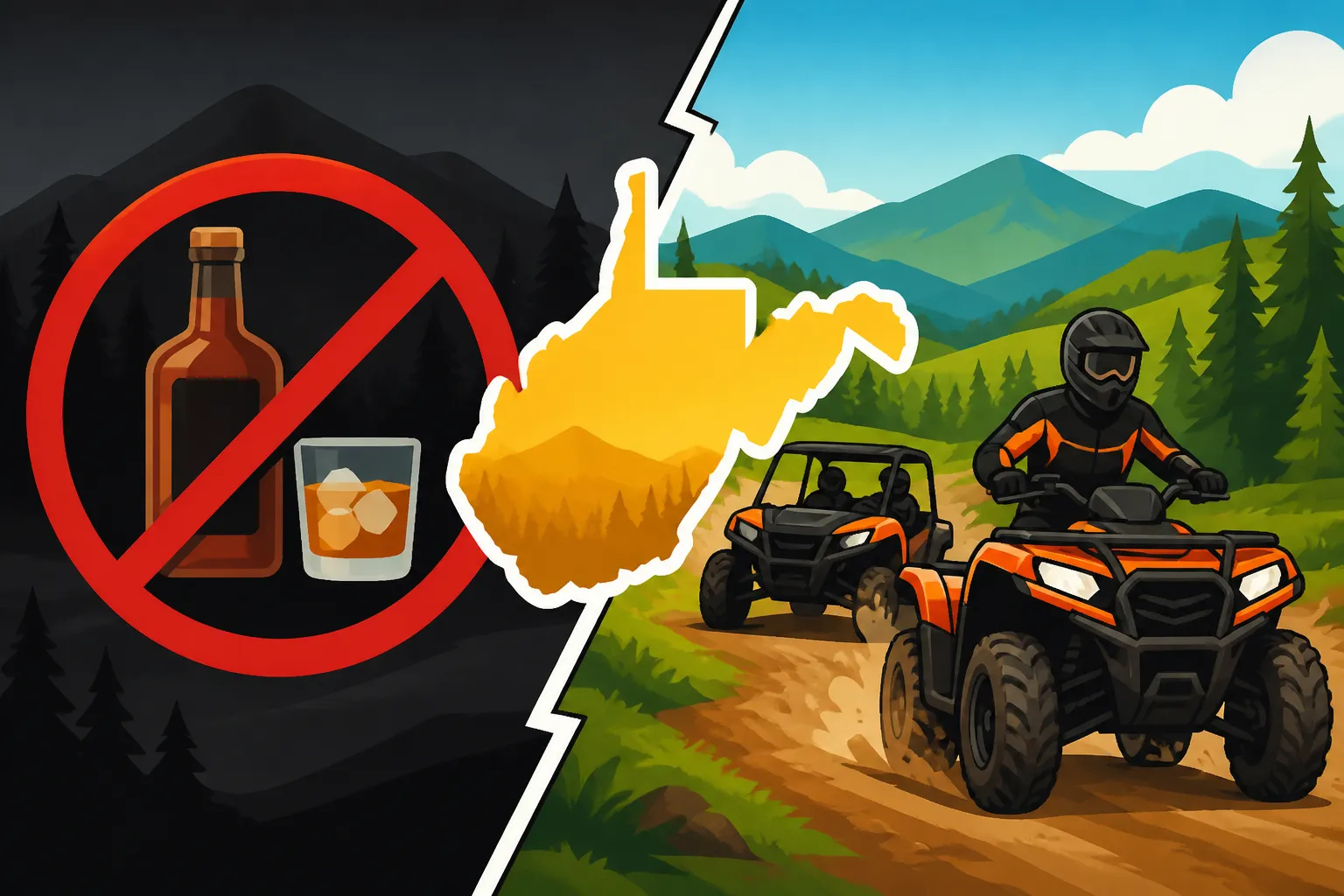
The short answer: do not drink and ride
Treat alcohol and operating an ATV or UTV as incompatible on West Virginia trails. A machine that is off-road does not automatically sit outside state law, and a managed trail system can also enforce its own rules. A trail permit is permission to use a particular system subject to its rules; it is not permission to consume alcohol or operate while impaired.
There are two questions riders often blend together:
- Can alcohol be possessed or carried on a trail or in a machine?
- Can a rider operate after drinking?
The answers may depend on the location, the posted rules, and the circumstances. But there is no safe assumption that an unsealed drink is acceptable just because the machine is off a public road, or that a rider can have a drink and then drive slowly.
The safest practical rule is straightforward: don’t bring alcohol onto a ride, don’t drink during a ride, and don’t operate after drinking. If a group plans to drink at a campsite or lodging, park the machines for the day and arrange another way to get around.
That recommendation protects more than the driver. Trail riding can involve steep grades, loose rock, mud, narrow routes, blind turns, and other riders moving in both directions. Alcohol can affect judgment, balance, reaction time, and the ability to assess a route or recover from a mistake. A passenger may also be hurt if an impaired operator loses control.
State law and trail rules are separate
A rider may be subject to state law, local restrictions, and the rules of the trail system or property owner. These layers are not interchangeable. A trail operator might prohibit alcohol on its property even where a particular state-law question about possession or an open container would be more complicated. Conversely, following a trail’s posted rules does not excuse impaired operation that violates state law.
For that reason, check the specific system’s current rules before traveling. The Hatfield-McCoy Trails, for example, has its own rider rules and permit conditions. Read the official information for the system you plan to visit, and take posted signs and instructions from trail staff seriously. For the broader rule framework, see Trail Rules Every West Virginia Rider Signs Up To and Permits West Virginia Riders Actually Need.
Don’t rely on a road-only assumption
Some riders assume an off-road machine is exempt from impaired-driving laws because it is not being used on a public highway. That is not a safe assumption. West Virginia law may apply to ATV or UTV operation in circumstances beyond ordinary passenger-car driving, and the legal outcome can depend on the facts. The location, the machine, the conduct, and the applicable statute all matter.
A trail’s remote setting does not create immunity. An incident can lead to a response from law enforcement, trail staff, or emergency responders. It can also trigger consequences under the trail operator’s own rules, including loss of access or permit privileges. The exact consequences depend on the situation and the governing rules, so don’t rely on a rumor about what “usually happens.”
If you want the legal details of impaired operation, West Virginia ATV Alcohol Limit and A DUI on an ATV in West Virginia address those questions separately. The practical advice remains the same: do not operate after drinking, regardless of whether you expect to encounter a checkpoint or believe the trail is far from a road.
Carrying alcohol is not the same as drinking, but it can still create problems
A rider may ask whether a sealed can in a cooler is treated differently from an open drink in a cup holder. Those are different situations, but the distinction does not settle every issue. Open-container rules, property rules, trail-system restrictions, and alcohol-possession laws can each be relevant. A sealed container may avoid some open-container concerns, but it does not guarantee that bringing alcohol onto a trail is allowed.
This is why “it’s unopened” is not a complete answer. The trail system may have a rule covering alcohol on the property, not just drinking while operating. A passenger may be holding an open container even if the driver is not drinking. Or alcohol may be carried in a machine that is operated by someone who has already been drinking. Each situation raises different questions.
| Situation | Why it matters | Safer choice |
|---|---|---|
| Sealed alcohol packed in a cooler | A sealed container may be different from an open one, but trail or property rules may still restrict alcohol | Leave it at lodging or confirm the system’s current policy before bringing it |
| Open container in a machine | Open-container rules or trail restrictions may apply, even if the operator says they have not been drinking | Keep alcohol off the machine and out of the riding group |
| Passenger drinking while riding | The passenger’s conduct can still violate a property rule and can distract or affect the ride | Keep everyone alcohol-free while machines are in use |
| Operator drinks during a break | A short wait does not guarantee the operator is unimpaired when riding resumes | Stop riding for the day and use a sober ride plan |
| Alcohol at camp after riding | The primary concern is whether anyone will operate a machine again | Park the machines and secure the keys before drinking |
| Alcohol in a parked machine | A parked machine may still be on property subject to posted rules | Follow the site’s alcohol policy and store alcohol in an approved place |
A rider looking for more detail on the container question can read Open Container Rules on a West Virginia Quad. For side-by-sides specifically, Carrying Beer in a Side-by-Side discusses the issue from the passenger-cabin perspective. Neither topic should be read as permission to carry alcohol wherever you ride; the system’s own policy still matters.
Check the system and the property, not just the machine
Before packing alcohol, ask the trail operator or property manager a direct question: Is alcohol permitted on this property, including in a parked or moving ATV or UTV? Ask whether the rule applies to sealed containers, open containers, passengers, campsites, and trailhead areas. If a rental company, campground, cabin, or event organizer has separate policies, check those as well.
Be precise about the location. A trail route can pass through land managed under different arrangements, and rules at a campground or private lodging property may differ from trail rules. A drink allowed at a cabin’s private patio does not mean it can be carried onto the trail. Likewise, a general statement about alcohol on the property may not tell you whether an open container can be in a machine.
If you cannot get a clear answer, choose the simpler option and leave alcohol off the ride. Bringing it creates a question that is easy to avoid.
What counts as impaired riding
Impairment is not limited to being visibly drunk or unable to stand. Alcohol can affect the decisions that matter on a trail before a rider appears obviously intoxicated. A person may feel normal while reacting more slowly, misjudging speed, overestimating traction, or failing to notice a hazard.
Trail riding requires active judgment. An operator may need to:
- Choose a safe line through rocks, mud, ruts, or a steep descent.
- Stop quickly for another rider, a blocked route, or a sudden change in terrain.
- Stay within the machine’s limits and avoid a risky climb.
- Keep a safe distance from passengers and other machines.
- Respond calmly if the machine tips, gets stuck, or breaks down.
- Follow signs, gates, closures, and trail markers.
Alcohol can undermine these tasks, and the risk is not limited to the person who drank. A rider who loses control can injure a passenger or someone on another machine. A passenger who is drinking may also move unpredictably, distract the operator, or be less able to brace and respond.
A drink at lunch can still matter later
There is no dependable rule that says a rider is safe to operate after a certain number of drinks or a certain waiting period. The effect of alcohol varies, and a person’s sense of sobriety is not a reliable measure of safe operation. Food, water, coffee, a nap, or a short break should not be treated as a guaranteed way to become fit to ride.
If the operator has consumed alcohol, the practical decision is to stop riding for the day. That may disrupt the plan, but it is much safer than trying to decide on the trail whether enough time has passed. Agree on this before the group starts, when no one is under pressure to “just make it back.”
Medication and other substances matter too
Alcohol is not the only substance that can affect safe operation. Some prescription and over-the-counter medications can cause drowsiness, slowed reactions, blurred vision, or impaired coordination. Combining a medication with alcohol can increase those effects. If a label or clinician warns against driving or operating machinery, treat that warning seriously for ATV and UTV use as well.
The same principle applies to cannabis and other impairing substances. Do not operate if you are affected, and do not assume that a substance is safe simply because it is legal to possess in some circumstances. Laws and rules vary, and trail riding still demands alert, coordinated judgment.
What can happen if a rider breaks the rules
The consequences depend on what happened, where it happened, and which law or trail rule applies. A rider who drinks while operating may face a different set of issues from a passenger carrying an open container or a group with sealed alcohol in a parked vehicle. It is not possible to give one penalty that covers every case.
Possible consequences can include a trail-system response, a citation or investigation under applicable law, loss of permission to ride, or liability concerns if someone is injured or property is damaged. A crash can also turn a preventable decision into an emergency involving medical treatment, towing, or a lengthy recovery from a remote location.
Do not assume that a trail authority’s action replaces law enforcement, or that a law-enforcement response automatically resolves a trail permit violation. These processes can be separate. The system may enforce its own conditions even if no criminal charge follows, and law enforcement may investigate even if a rider has a valid permit.
For details on trail-specific sanctions, see Alcohol Penalties on the Hatfield-McCoy Trails. If the concern is the permit itself, Losing Trail Privileges in West Virginia explains why a rider should take access rules seriously. Penalties and enforcement policies can change, so use current official information rather than an old forum post or another rider’s recollection.
A crash can make the consequences broader
If alcohol is suspected after a crash, statements, observations, and the circumstances of the incident may become important. Do not try to hide, discard, or transfer alcohol to avoid scrutiny. Focus on safety: call for emergency help when needed, keep other machines away from the scene, and follow lawful instructions from responders.
A collision can raise questions about fault, insurance, injuries, and property damage in addition to the rider’s conduct. Whether coverage applies depends on the policy and the facts; no one should assume that an insurance policy will pay every loss when alcohol is involved. For related information about coverage, see Insuring an ATV in West Virginia and ATV Crash Injury Claims in West Virginia.
If you are involved in a crash, the right response is not to debate legal theories on the trail. Get people out of immediate danger, contact emergency services when appropriate, and cooperate with responders. Once everyone is safe, write down relevant details and seek qualified legal or insurance advice if the situation calls for it.
Build an alcohol-free ride plan
The best time to settle the alcohol question is before anyone unloads a machine. A clear group plan avoids arguments at lunch, confusion about a passenger’s cooler, and pressure on someone to operate after drinking.
Use this checklist before a ride:
- Read the current rules for the specific trail system. Check the operator’s official site or contact the office if its alcohol policy is unclear.
- Check lodging and campground rules separately. Confirm whether alcohol is allowed at the campsite or cabin and where it may be stored.
- Agree that nobody drinks while riding. Make the rule apply to operators and passengers so there is no debate about who is responsible.
- Keep alcohol off the machines. This avoids disputes about open containers, possession, and whether alcohol is allowed on the property.
- Designate a sober person for any necessary driving. That person should not consume alcohol and should be qualified and authorized to operate the machine.
- Park and secure the machines before drinking. Put the keys somewhere the group cannot casually grab them for “one quick trip.”
- Plan for food, fuel, and emergencies without relying on alcohol. Keep water, a charged phone or communication device, basic repair supplies, and a route plan appropriate to the ride.
- Stop if someone appears impaired. Do not let group pressure, a reservation, or a long ride back override safety.
For a group outing, make the alcohol rule part of the initial briefing rather than waiting until someone opens a cooler. If you are renting, ask the outfitter what its contract and property rules say. Rental terms may impose restrictions in addition to state law and trail rules. For more on rental responsibilities, see West Virginia Rental Safety Briefings and West Virginia Rental Contracts Worth Reading Twice.
If someone has already been drinking
Do not let that person drive an ATV or UTV. Arrange a sober ride by a vehicle that can legally and safely reach the location, or keep the group parked until a suitable plan is in place. If the person is staying at a campground or cabin, use that lodging rather than attempting to ride back.
Do not put an impaired person behind the controls because the route is short, slow, or familiar. A fall, sudden obstacle, or mistake can happen close to camp just as easily as deep in the woods. If the rider is too impaired to make safe decisions or may need medical attention, get help rather than trying to manage the situation alone.
Renting or joining a guided trip
Rental companies and guides may have their own alcohol rules, and those rules can be stricter than what a customer expects. Ask before booking, and read the agreement rather than assuming a trail permit or guided tour includes permission to carry alcohol. If alcohol is prohibited in the rental machine, a passenger’s cooler can still create a contract problem.
A guide’s presence does not make impaired riding safe or lawful. The guide may end a trip or refuse service if a participant violates rules or creates a safety risk. Ask how the outfitter handles a participant who has been drinking, what happens if a ride is stopped, and whether the group has a safe way to return to lodging.
Frequently Asked Questions
Can I bring a sealed beer in my side-by-side?
Do not assume that a sealed container is allowed. Open-container rules and sealed-container possession are different questions, but a trail system or property owner may restrict alcohol more broadly. Check the current rules for the exact trail and property. The lowest-risk choice is to leave alcohol off the ride.
Can a passenger drink if the driver stays sober?
A sober operator does not necessarily make passenger drinking acceptable. The trail system or property may prohibit alcohol for everyone, and an open container can raise separate concerns. Passengers can also affect vehicle safety. Keep the whole group alcohol-free while machines are in use.
Is riding after one drink automatically legal?
There is no reliable universal “one drink” rule that makes riding lawful or safe. Applicable law depends on the circumstances, and alcohol affects people differently. A rider should not operate after drinking. If a person drinks, park the machine for the rest of the ride and use a sober transportation plan.
What should I do if a rider is drinking on the trail?
Do not ride with an impaired operator or get into a machine they are driving. If it is safe, tell the person to stop and arrange sober transportation. For an immediate danger, crash, or medical emergency, contact emergency services. Follow the trail operator’s reporting process for rule violations or hazards.
Disclaimer
This article is for general informational purposes only and does not constitute professional advice. Laws, prices and regulations vary by location and change over time. Consult a qualified professional for guidance on your specific situation.