Does a West Virginia Safety Card Expire?
A West Virginia ATV safety card can be easy to confuse with a trail permit or other riding paperwork. The key question is whether the card itself expires—and whether an older card still counts when you ride. Here’s how to think about its validity, what it does not replace, and what to check if your card is lost or from another state.
Does the West Virginia safety card expire?
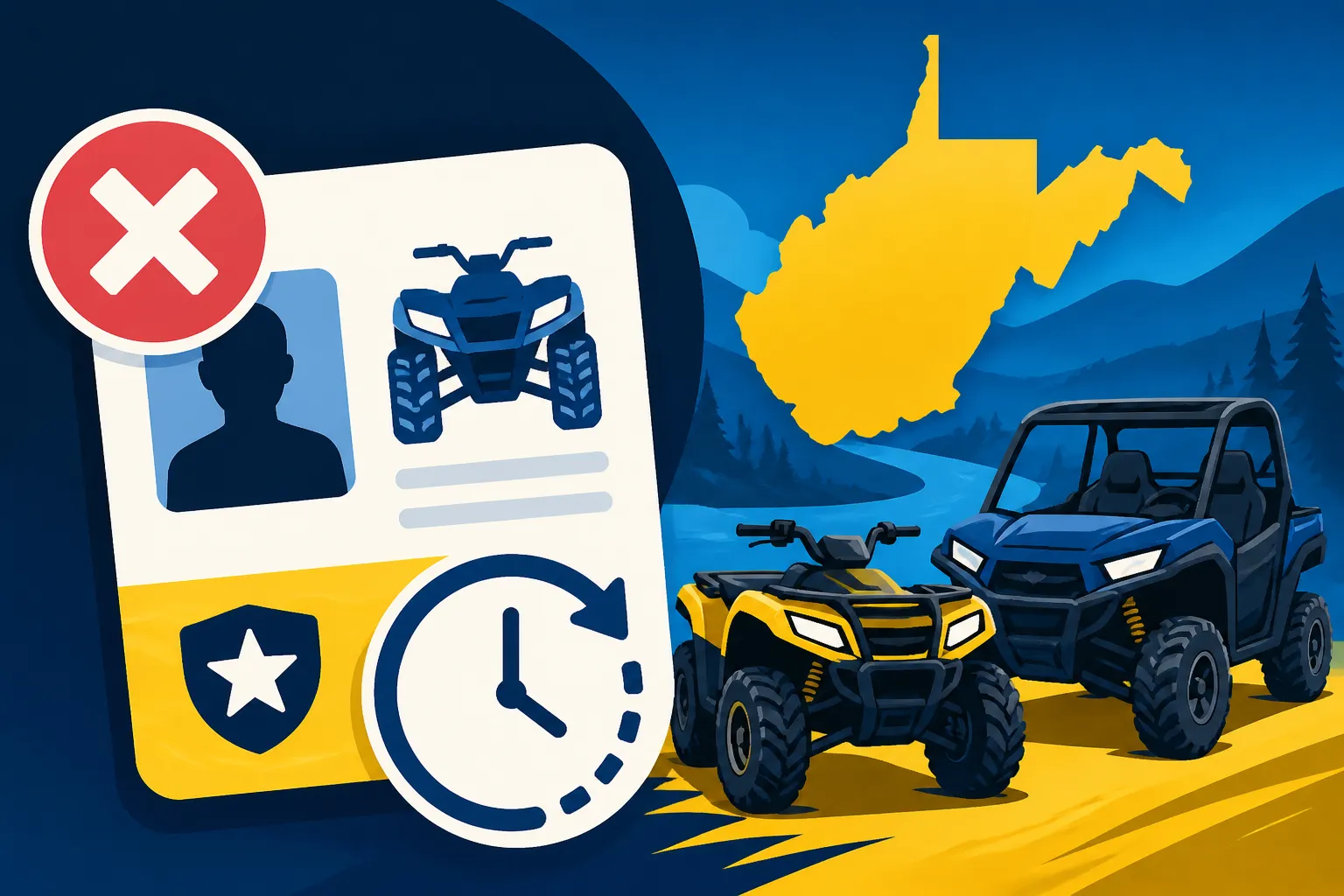
In general, a West Virginia ATV safety course card is not something riders renew on a regular schedule. Completing the course and receiving a card records that you completed the course; it is different from a permit or registration that may have a set validity period.
Still, check the card itself and any paperwork that came with it. If an expiration date is printed, follow it. If there is no expiration date, do not assume that every riding rule or course requirement will stay the same indefinitely. A change in the rules, a specific trail system’s policy, or a change in your circumstances could affect what you need to carry, even if the card itself remains valid.
It also helps to distinguish the course card from anything issued alongside it. A course provider may give a rider more than one piece of documentation, and a helmet sticker or other item may serve a different purpose from the card. Keep each item, and check what it represents rather than treating them as interchangeable. For details about the course and related documents, see West Virginia’s ATV Safety Awareness Course and Safety Card and Helmet Sticker in West Virginia.
If you took the course years ago and still have your card, there is usually no reason to take the course again simply because time has passed. But if you plan to ride somewhere with a specific course requirement, check that location’s current rules before setting out. For example, some managed trail rules may differ from rules that apply elsewhere. Confirm the details for the area you plan to ride, including any course exception described in Why Managed Trails Are Exempt From the Course.
A simple way to frame the answer is:
| Item | What it generally tells you | Does it replace other paperwork? |
|---|---|---|
| ATV safety card | The rider completed a safety course | No |
| Trail permit | The machine or rider is authorized for a particular trail system, subject to that system’s terms | No |
| Title | Ownership information for a titled machine | No |
| Registration or plate | Permission or identification for a particular type of road use, where required | No |
| Helmet sticker or course-related item | May show or support a separate requirement | Not necessarily |
If your card is old, damaged, or hard to read, contact the agency or course provider that issued it and ask whether a replacement or a way to verify completion is available. Do not rely on a faded photo or an unreadable card if you can resolve the issue before a ride. Carrying clear proof can prevent confusion during a check, even when the underlying course record remains valid.
What the safety card proves—and what it does not
A safety card is evidence of course completion. It is not a universal permission slip to operate any ATV or UTV, on any road or trail, at any age. The rules can depend on the rider, the machine, and the place where it will be used.
Age is one important factor. West Virginia has rules that may apply differently to younger riders, and the requirements for road use need not match those for a managed trail. A completed course does not override age limits, supervision requirements, helmet rules, or restrictions based on a machine’s size. Check West Virginia Age Rules on the Trails and Direct Supervision Rules for West Virginia Riders Under 16 when a young person will be riding.
The type of riding matters, too. A card does not make an ATV street legal, authorize travel on a road, or remove equipment requirements. Road riding can involve separate rules about where a machine may travel, what equipment it needs, and who may operate it. If your plans include public roads, review Riding an ATV on the Road in West Virginia and the applicable road-use rules before you ride.
Trail access is another separate issue. A safety card does not buy or activate a trail permit. It also does not prove that a machine has a title, establish who owns it, or serve as insurance. Riders planning to use a managed trail system should check the trail system’s permit and safety requirements independently. Permits West Virginia Riders Actually Need can help sort out which documents serve which purpose, while West Virginia’s Hatfield-McCoy Trail Permit Explained covers the separate permit question.
The practical distinction is this: a safety card relates to the rider’s course completion, while other documents relate to the machine, its ownership, insurance, road use, or access to a particular trail system. One document rarely covers all of those requirements.
For example, a rider might have completed a safety course but still need to confirm that:
- The machine is allowed on the intended trail or road.
- The rider meets the applicable age and supervision rules.
- The rider has any required permit for that riding area.
- The machine meets relevant equipment requirements.
- The rider has appropriate proof of ownership and insurance, where applicable.
This distinction is useful when you are making a checklist for a group. A parent may have the safety card but still need to confirm the child’s age-related requirements. A visitor may hold a trail permit but still need to check whether their course certificate is accepted. A machine’s title does not, by itself, establish that its operator has met a safety-course requirement.
What if your card is lost, damaged, or from another state?
If you cannot find your card, start with the organization or agency that delivered the course. Have any information you still have ready, such as your name at the time of the course, approximate completion date, or course records. Ask whether it can confirm completion or issue replacement documentation. Procedures can vary, so follow the issuer’s instructions rather than relying on an unofficial copy.
If you have a damaged card, make a clear copy or photo for your own records, but ask the issuer whether that is acceptable proof. A phone image may be useful as a backup, but it may not satisfy every check or requirement. If an official replacement is available, it is safer to arrange one before you travel.
A card from another state is a separate question. Do not assume it will automatically count just because it is a safety-course certificate. Acceptance can depend on the course, the requirement involved, and the authority responsible for the riding area. Check Out-of-State Safety Certificates in West Virginia if you completed training elsewhere. If you are visiting to ride a managed system, confirm the rule with that system as well; do not rely on a general answer about state course cards to settle a trail-specific requirement.
This is especially worth doing before a group trip. A rider may have a certificate from another state, while the rest of the group completed a West Virginia course. If the certificate is not accepted for the intended activity, finding out at the trailhead can mean delays or a change of plans. Keep the confirmation with your travel paperwork if the agency or trail operator provides it in writing.
When checking a card or certificate, look for details that can help the issuing organization verify it:
- The rider’s full name and any name change since taking the course.
- The course provider or agency shown on the document.
- A certificate, card, or record number, if one appears.
- The date the course was completed, if printed.
- Any expiration date or condition stated on the card.
An old document without an expiration date is not automatically invalid, but a missing date or illegible number can make verification harder. If a name has changed, ask the issuer how to connect the old record with your current identification. Avoid altering the card yourself.
A practical paperwork check before you ride
A few minutes of checking can prevent the common mistake of treating the safety card as the only document a rider needs. Before leaving, identify the riding area and the type of riding you plan to do. Then check the applicable rules for the rider and machine separately.
- Confirm where you will ride. A managed trail, private property, and public road can have different requirements. Check the current rules for the specific trail system or road section rather than relying on a rule from another location.
- Check rider requirements. Confirm applicable age, supervision, helmet, and course rules. This matters especially when children or teenagers are riding.
- Check the machine’s paperwork. A safety card does not establish ownership or title status. If you are bringing an out-of-state machine, see [Do Out-of-State Riders Need a West Virginia Title?] for the separate title question.
- Check permits and access. Verify whether the planned trail system requires a permit, who needs one, and how long it is valid. Do not assume a safety course card includes trail access.
- Keep the documents accessible. Carry the card or accepted proof in a safe, readable form, and keep other required documents separate. If you are unsure whether a digital copy is accepted, ask the relevant agency or trail operator before relying on one.
If you need replacement riding gear, treat that as a separate safety decision. For instance, a safety card does not certify a helmet. Check the helmet’s approval label and fit rather than relying only on a product description; Amazon can be one place to compare options, but the actual item still needs to meet the applicable requirements.
The takeaway is straightforward: a West Virginia ATV safety card generally does not expire just because it is old, but the card covers course completion—not every rule or document connected to a ride. Check any printed terms, confirm acceptance for your specific riding area, and keep permits, machine paperwork, and rider requirements distinct.
Disclaimer
This article is for general informational purposes only and does not constitute professional advice. Laws, prices and regulations vary by location and change over time. Consult a qualified professional for guidance on your specific situation.