Eye Protection That Meets West Virginia Rules
Riding an ATV or UTV in West Virginia is an incredible experience, but it comes with real hazards, especially for your eyes. Many riders overlook the specific requirements for eye protection or simply grab whatever sunglasses are handy, leading to potential fines, or far worse, serious and permanent injury. This guide will walk you through West Virginia's specific rules for eye protection when you're out on the trails or navigating public roads, ensuring you stay safe and compliant.
Why Eye Protection Isn't Just a Suggestion in West Virginia
Let's be brutally honest: when you're out riding, whether it's tearing down a muddy trail in the mountains or carefully cruising a back road in a trail-friendly town, your eyes are constantly bombarded. It's not just about comfort; it's about preserving one of your most vital senses. West Virginia understands this, which is why eye protection isn't a casual recommendation – it's often a legal requirement. Ignoring it isn't just risky for your vision, it's risky for your wallet too.
The Very Real Dangers Your Eyes Face on the Trail and Road
Think about the environment you're riding in. On a dusty gravel road or a dry trail, the machines ahead of you are kicking up clouds of fine particulate matter. That dust can quickly obscure your vision, irritate your eyes, and, if it contains sharp silica particles, even scratch your corneas. Then there's the mud. One splash from a puddle, or a roost from a buddy's tire, and you're instantly blinded. It's not just annoying; if you're hitting a curve or approaching an obstacle at speed, that split-second loss of vision can lead to a serious accident. Imagine a low-hanging branch on a tight, overgrown trail – without proper eye protection, that branch could cause severe damage, even blindness, in an instant. Insects, pebbles, and even just the sheer force of the wind at speed can also cause discomfort and impair your ability to react safely. Your eyes are incredibly delicate, and the riding environment is anything but.
Even on paved sections of road, the risks don't disappear. Debris from other vehicles, insects splattering against your face, or the blinding glare of a sunset hitting your eyes at just the wrong angle can all lead to dangerous situations. A little pebble that bounces off the road might seem insignificant, but at 25 mph, it can hit your eye with enough force to cause significant trauma. West Virginia's roads, particularly those winding through our beautiful, rugged terrain, can present sudden turns, unexpected wildlife, or potholes that demand your full, unobstructed attention. Any impairment to your vision, whether it's caused by dust, glare, or a flying bug, compromises your safety and the safety of others around you.
West Virginia's Legal Mandate for Eye Protection
West Virginia doesn't just suggest you protect your eyes; in many scenarios, it mandates it. For example, if you're riding a Class I (ATV) or Class II (UTV) off-road vehicle on public roads, such as when you're riding [West Virginia's 10-Mile, 25 mph Road Rule] or making your street-legal special purpose vehicle (SPV) ride into town, state law often requires eye protection. The rules are in place to minimize injuries from all those hazards we just talked about. While there are specific age-based helmet rules, generally, if you're required to wear a helmet, you're also expected to have eye protection. For youth riders under 18, the requirements are often even more explicit and stringent, emphasizing the importance of a comprehensive safety approach, which includes proper eye protection. You can find more specific details related to [Helmet and Eye Protection Rules in West Virginia] for both riders and passengers.
Failing to comply with these rules can lead to more than just a stern talking-to. Law enforcement, particularly in areas frequented by ATV and UTV riders, is well aware of the safety regulations. A deputy might pull you over for a variety of reasons, and if they observe you or a passenger without appropriate eye protection, you could be facing a citation. These fines can quickly add up and put a damper on your riding adventure. Beyond the monetary cost, consider the inconvenience of a stop, the paperwork, and the potential impact on your riding record. It’s always far better, and cheaper, to simply equip yourself and your passengers correctly before you even hit the throttle. When you consider the minor cost of proper eye protection against the major costs of an injury or a ticket, the choice becomes clear.
What "Approved" Eye Protection Actually Means in West Virginia
When the law, or even just common sense, dictates eye protection, it's not talking about your everyday fashion sunglasses. "Approved" means gear specifically designed for impact resistance, full coverage, and clear vision in challenging environments. This typically boils down to two main categories: full-face helmets with integrated face shields or separate goggles worn with an open-face helmet. Both have their merits, but understanding their characteristics is key to making the right choice for your riding style and the conditions you expect to encounter in West Virginia.
Helmets with Face Shields Versus Goggles
For many riders, especially those in UTVs or on street-legal machines that venture onto roads, a helmet with an integrated face shield offers a convenient all-in-one solution. These shields are typically made of impact-resistant polycarbonate and provide a wide field of vision while protecting against wind, dust, and debris. They seal relatively well against the elements, preventing particles from getting behind the shield. If you're riding a [Street-Legal Special Purpose Vehicle in West Virginia], a full-face helmet with a shield can be a great option for comfort and convenience on longer road sections. However, they can sometimes fog up in humid or cold conditions, and ventilation can be less effective than with goggles designed for aggressive off-road riding.
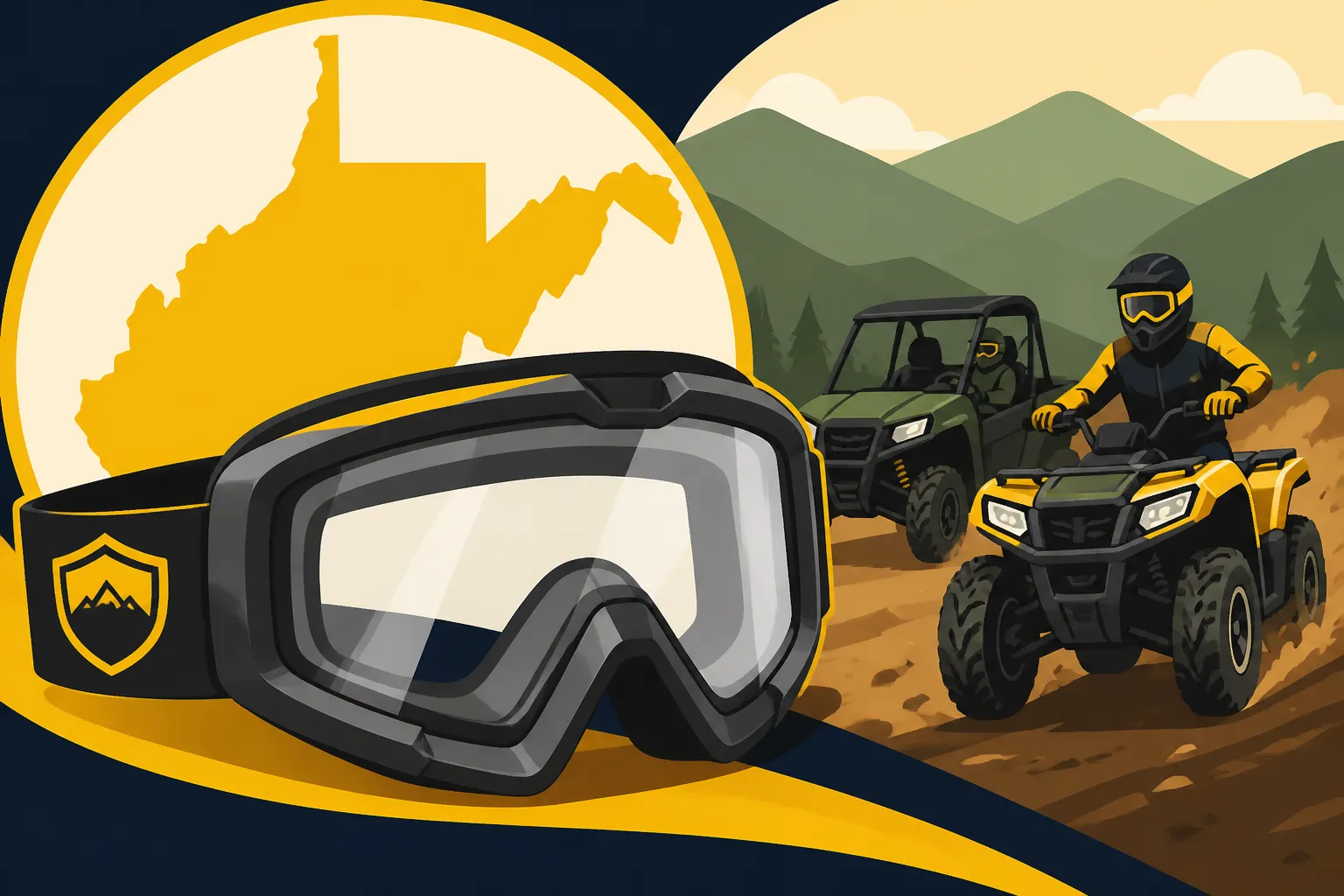
On the other hand, goggles, often paired with an open-face or motocross-style helmet, are the workhorse of serious off-road riding. Quality goggles feature a robust frame, a wide, distortion-free lens, and a thick foam liner that creates a tight seal around your eye sockets, preventing dust and debris from entering. The elastic strap ensures a secure fit, even over rough terrain. Goggles often offer superior ventilation compared to many face shields, which can be a huge advantage for anti-fog performance during strenuous riding or in varying temperatures. Many riders find goggles offer a wider peripheral view, which is crucial for dynamic off-road environments. Brands like SuperATV offer a range of well-designed goggles and accessories that emphasize durability and rider comfort, perfect for the demanding West Virginia trails. For a deeper dive, you might want to read [Goggles Versus a Face Shield on the Trail].
The Importance of Impact Resistance and Clarity
Regardless of whether you choose a face shield or goggles, the materials and construction are paramount. The lenses should always be made of a high-impact resistant material, like polycarbonate, designed to withstand direct hits from flying debris. Imagine a rock, kicked up by a friend's tire, hitting your eye protection at speed. A cheap, flimsy lens could shatter or crack, offering little to no protection. Approved eye protection is engineered to absorb and dissipate that energy, keeping your eyes safe. Beyond impact resistance, optical clarity is non-negotiable. Distorted vision from a poorly made lens can be just as dangerous as no eye protection at all. You need to clearly see the terrain ahead, identify obstacles, and gauge distances accurately.
Anti-fog and anti-scratch coatings are also incredibly valuable features. Riding through a sudden fog bank or hitting a patch of humid air can cause standard lenses to quickly fog up, reducing your visibility to zero. Good anti-fog properties are critical for maintaining continuous clear vision. Similarly, while no lens is truly scratch-proof, effective anti-scratch coatings prolong the life of your eye protection and maintain clarity. A heavily scratched lens, while technically still protective, will significantly impair your vision, making it difficult to ride safely and identify hazards. This is particularly true in West Virginia, where varied terrain and weather can go from bright sun to dense fog in a short ride. Products from companies like SuperATV often integrate these advanced features, giving riders peace of mind.
Sunglasses and Prescription Glasses: Are They Enough?
This is a common question, and the answer is almost universally "no," not on their own. While your everyday sunglasses provide some UV protection and reduce glare, they are typically not designed for the rigors of ATV or UTV riding. They lack a secure seal against dust and wind, allowing particles to easily get behind the lenses. More importantly, most sunglasses are not rated for high-impact protection. A stray rock or a low-hanging branch could easily shatter the lenses, turning them into additional hazards rather than protective gear. They can also fly off your face easily on bumpy terrain, leaving your eyes completely exposed.
For riders who wear prescription glasses, the situation requires a bit more thought. You obviously need to see clearly to ride, but simply wearing your regular glasses is insufficient for the same reasons sunglasses are. The best solution is often a pair of "over-the-glasses" (OTG) goggles. These are specifically designed with extra space to comfortably fit over your prescription frames, providing the full seal and impact protection you need without sacrificing your vision correction. Alternatively, if you wear a full-face helmet, ensuring your prescription glasses fit comfortably within the helmet and behind the face shield can work, but you still lose the tight seal that goggles provide. Some riders also opt for prescription inserts for their goggles, offering a seamless solution. The key takeaway is that the protective element and a tight seal are essential, and regular eyeglasses or sunglasses alone rarely provide this.
Practical Advice for Choosing and Maintaining Your Eye Protection
Choosing the right eye protection is just the first step. To ensure it consistently performs its job and keeps you safe on every ride, you need to know what to look for when buying, how to care for it properly, and how it integrates with your other essential safety gear. Think of your eye protection not as an accessory, but as a critical piece of equipment that demands careful consideration.
Factors to Consider When Buying Goggles or a Face Shield
When you're ready to invest in eye protection, don't just grab the cheapest option. Think about the type of riding you do most often in West Virginia. If you spend a lot of time on dusty trails, a pair of goggles with excellent sealing foam and a wide field of view will be invaluable. Look for models with interchangeable lenses so you can swap out a clear lens for night riding or a tinted one for bright, sunny days on the [Hatfield-McCoy Trails]. Ventilation features, like strategically placed vents and anti-fog coatings, are crucial to prevent condensation buildup, especially if you're working hard or riding in humid conditions. Comfort is also key; the goggles should fit snugly without pinching or causing pressure points, especially when worn with your helmet.
If a full-face helmet with a shield is your preference, check for good peripheral vision and easy-to-operate visor mechanisms. Some helmets offer a "drop-down" internal sun visor in addition to the main shield, which is incredibly convenient for quickly adjusting to changing light conditions without needing to stop. When considering a helmet, remember the [Helmet Standards: DOT, Snell and ANSI] certifications ensure the entire helmet, including its face shield, meets rigorous safety tests. Again, look for good anti-fog and anti-scratch properties in the shield material. Manufacturers like SuperATV also offer aftermarket windshields for UTVs that can integrate with your existing setup, providing another layer of protection for those riding in open-cab machines.
Here's a quick comparison to help you weigh your options:
| Feature | Goggles (with open-face helmet) | Full-Face Helmet (with integrated shield) |
|---|---|---|
| Seal | Excellent, foam creates tight barrier against dust/wind | Good, but can have gaps around chin bar/helmet edge |
| Ventilation | Often superior, designed for airflow and anti-fog | Can be limited, potential for fogging |
| Impact Prot. | High (polycarbonate lens) | High (polycarbonate shield, part of helmet cert) |
| Field of View | Very wide, often better peripheral | Wide, but sometimes restricted by helmet design |
| Convenience | Separate pieces, can be cumbersome | All-in-one, quick to put on/take off |
| Adaptability | Easy lens swaps (tinted, clear, roll-offs) | Lens swaps possible, but less common; external visors |
| Cost | Varies, good quality sets are affordable | Helmets generally more expensive overall |
Keeping Your Vision Clear: Cleaning and Care
It might seem obvious, but proper care of your eye protection significantly extends its lifespan and, more importantly, maintains its effectiveness. Never wipe a dirty or muddy lens with a dry cloth or your glove. This is the quickest way to scratch the lens and permanently impair your vision. Instead, rinse off any mud or heavy dirt with clean water. Then, use a soft, microfiber cloth specifically designed for optics, along with a mild cleaning solution (some brands offer specialized lens cleaners, or a drop of dish soap in water works). Gently wipe the lens until it's clean and streak-free. Air dry or use a clean, dry microfiber cloth.
After each ride, take the time to inspect your goggles or face shield. Check the foam seal on goggles for any wear or deterioration; a compromised seal means dust and wind will get in. Look for deep scratches on the lens – if vision is significantly obscured, it's time for a replacement lens. Store your goggles in a dedicated goggle bag or a soft pouch to protect them from scratches when not in use. For helmets with face shields, keep the shield closed when storing to prevent accidental damage. Proper care isn't just about making your gear last; it's about ensuring that when you need it most, your eye protection provides crystal-clear vision and maximum safety. There's nothing worse than trying to navigate a challenging section of trail with a mud-splattered, scratched-up lens.
Integrating Eye Protection with Other Safety Gear
Your eye protection is a critical component of a larger safety system. It needs to work seamlessly with your helmet, and potentially a dust mask or communications device. When trying on goggles, always do so with the helmet you plan to wear. The goggle strap should sit comfortably around the helmet without pulling the goggles up too high or pushing them down into your nose. The goggles should fit snugly against your face and the helmet opening, preventing gaps that could let in dust or debris. Some helmets even have goggle-specific channels to ensure a perfect fit.
If you ride in dusty conditions, you might also wear a dust mask or bandana. Make sure your eye protection doesn't interfere with the fit or seal of your mask. Many riders prefer to put their dust mask on first, then their goggles, and finally their helmet. This layering helps ensure all components are working together to protect you. Remember, the goal is comprehensive protection, from your head to your eyes. For instance, [Equipment West Virginia Requires on a Road Ride] for SPVs includes not just headlights and taillights, but also safety gear like helmets and eye protection, reinforcing the idea that it's all part of one interconnected system. Always check for specific [Helmet Requirements on West Virginia Trails] to ensure you meet all legal guidelines for integrated safety gear.
Special Considerations for Different Riders
Safety isn't a one-size-fits-all solution, and eye protection is no exception. Different riders have unique needs, whether due to age, role on the machine, or the specific environmental challenges they face. West Virginia's riding landscape is diverse, from dense wooded trails to open roads, and your eye protection should be adaptable to these varying conditions and rider profiles.
Youth Riders and Specialized Eye Protection
When it comes to youth riders, safety takes on an even greater importance. Their developing vision needs maximum protection, and their smaller faces and head sizes require specialized gear. Adult-sized goggles or face shields simply won't fit a child properly; they'll either be too large, leaving gaps that allow dust and debris in, or they'll be uncomfortable and constantly slide around. Youth-specific goggles are designed with smaller frames, softer foam, and often come in vibrant colors that appeal to younger riders. It's crucial that these fit snugly, create a proper seal, and offer an unobstructed peripheral vision, as young riders are still developing their spatial awareness and reaction times.
West Virginia law often has stricter rules regarding safety gear for minors. While [Safety Course Requirements for a 17-Year-Old] and similar age-specific rules might focus on helmets, the implication is always a comprehensive approach to safety, which certainly includes eye protection. Ensuring your child has properly fitting, high-quality eye protection is not just about compliance; it's about giving them the best chance to ride safely and enjoyably without risking their precious eyesight. Never compromise on safety for a child; their future vision depends on it. Be sure to review [Helmet Rules for Riders Under 18 in West Virginia] for all the specifics.
Passengers and Their Eye Protection Needs
It's easy to focus on the driver's safety gear, but passengers face many of the same hazards and need the same level of protection. Whether they're riding on the back of an ATV or in the passenger seat of a UTV, dust, mud, flying debris, and wind can all impact their eyes. Even in a UTV with a full windshield (perhaps a robust SuperATV windshield), an open cab still leaves passengers exposed to side impacts, dust swirling in from the rear, or mud splashes from the front if the windshield isn't fully enclosed or has an open bottom. Passengers, especially those not actively steering, might be less aware of oncoming hazards and therefore even more vulnerable.
Therefore, every passenger should also be equipped with appropriate eye protection – be it goggles or a full-face helmet with a shield. Their gear needs to fit properly and comfortably, just like the operator's. Don't assume a quick ride means less risk; accidents can happen anytime, anywhere. Ensuring everyone on board, regardless of their role, has proper eye protection is a fundamental aspect of responsible riding. For more on this, check out [Do Passengers Need Eye Protection?] to ensure you're covering all your bases.
Riding in Varying West Virginia Weather Conditions
West Virginia's weather is famously unpredictable. One minute it's bright sunshine, the next a storm rolls in, or you dip into a foggy hollow. Your eye protection needs to be adaptable. For bright, sunny days, especially when riding open roads or exposed ridge lines, a good pair of tinted goggles or a helmet with a tinted face shield (or an integrated sun visor) will reduce glare and eye strain. However, you should always carry a clear lens for goggles or be prepared to swap to a clear shield if you plan on riding at dusk, night, or in heavily overcast or foggy conditions. Riding with a tinted lens after dark is extremely dangerous and compromises your ability to see hazards.
Cold or humid conditions bring the challenge of fogging. Look for goggles or shields with excellent anti-fog coatings and effective ventilation systems. Some high-end goggles even feature dual-pane lenses, similar to ski goggles, to create a thermal barrier that resists fogging. For UTV riders, a windshield wiper system can be a game-changer in rainy or muddy conditions, ensuring clear vision for the driver. When exploring companies like SuperATV, you'll find accessories designed specifically to combat these environmental challenges, from specialty lenses to full cab enclosures that help keep the elements out. Being prepared for West Virginia's diverse weather ensures your vision remains clear, and your ride remains safe and enjoyable.
Disclaimer
This article is for general informational purposes only and does not constitute professional advice. Laws, prices and regulations vary by location and change over time. Consult a qualified professional for guidance on your specific situation.