Sales Tax on an ATV Bought From Family in West Virginia
Buying an ATV from a family member in West Virginia often feels like it should be simpler, maybe even exempt from some of the usual hoops, especially when it comes to sales tax. Many folks assume a family transfer is just a handshake deal or a nominal exchange, only to be surprised when they visit the Department of Motor Vehicles (DMV) and discover there are still financial obligations. This guide is here to cut through that confusion, explaining West Virginia's sales tax rules for ATVs bought from family, and outlining exactly what you need to do to avoid any unwelcome surprises.
Understanding West Virginia's Sales Tax on Family ATV Transfers
It’s a common misconception that when you buy something like an ATV from a close family member—a parent, a sibling, or even a cousin—the state somehow makes an exception for sales tax. You might think, "We're just keeping it in the family," or "It's practically a gift, so why should I pay tax?" This line of thinking is entirely natural, born from the personal nature of family transactions. However, the reality in West Virginia, like most states, is that the sales tax laws generally apply to all transfers of tangible personal property, regardless of the relationship between the buyer and seller.
The state isn't specifically targeting family deals; rather, it’s designed to ensure that sales tax is collected on the change of ownership for most vehicles and machines, including ATVs and UTVs. The DMV acts as the collection point for this tax when you go to transfer the title into your name. They're not just there to process paperwork; they're also ensuring that the state receives its due revenue. If you show up expecting a pass, you'll likely find yourself scrambling to figure out the tax implications on the spot, which can certainly add stress to what should be a straightforward family exchange.
What this means in practice is that the West Virginia Division of Motor Vehicles (DMV) will expect sales tax to be paid on the purchase of an ATV from a family member, just as they would for a transaction with a stranger or a dealership. This consistent application of tax law helps maintain fairness across all sales and prevents individuals from intentionally avoiding tax responsibilities by claiming a familial relationship where a genuine sale occurred. It’s about the transaction itself, not necessarily the bond between the parties involved.
How West Virginia Calculates Sales Tax on a Family ATV Transfer
This is often where the most significant confusion arises when dealing with family ATV sales. If you're buying a machine from a relative, you might have paid a very low price, perhaps a token amount, or even received it as a genuine gift. So, how does West Virginia determine the sales tax in such situations? The state generally bases the sales tax calculation on the actual purchase price. However, there’s a crucial caveat: the DMV has mechanisms to prevent under-reporting of the sale price to avoid taxes.
If the declared purchase price on your bill of sale seems unusually low compared to the ATV's fair market value, the DMV might not accept it at face value. They have the discretion to assess the sales tax based on a "reasonable value" for the machine, rather than the nominal amount you might have listed. This is to prevent scenarios where an ATV worth several thousand dollars is "sold" for fifty bucks to skirt sales tax. Therefore, clearly documenting the agreed-upon price—even if it's a generous family discount—is absolutely critical. A formal bill of sale, perhaps drafted using a reliable template from a service like LawDepot, can lend significant credibility to your transaction, detailing the price and terms in a way that stands up to scrutiny. You'll want to ensure all the necessary information is included, as outlined in [West Virginia ATV Bill of Sale Template Requirements].
The idea behind this approach is to ensure equity. If everyone paid tax only on a declared minimal amount for family transfers, the system would quickly be open to abuse. So, while you might get a great deal from a family member, be prepared for the sales tax to potentially be calculated on something closer to the market value if your stated price is exceptionally low. To determine a reasonable value, the DMV might consult resources like the NADA Guide, Kelley Blue Book, or compare it to recent sales of similar ATVs. This is why having a clear, well-prepared bill of sale is your best defense against having the value arbitrarily re-assessed.
| Aspect | Explanation for Family ATV Sales in WV |
|---|---|
| Tax Basis | Generally the agreed-upon sale price. |
| Low Price Scrutiny | If the price is significantly below fair market value, the DMV may assess tax based on a "reasonable value" (e.g., NADA Guide, comparable sales). |
| Gifts | A true gift (where no money or consideration changes hands) typically isn't subject to sales tax, but still requires proper documentation for title transfer. The state will want to confirm it's genuinely a gift and not a disguised sale. [Gifting an ATV in West Virginia and the Title That Follows] offers more details. |
| Documentation Need | A detailed bill of sale is essential, regardless of relationship, to clearly state the purchase price or gift status. |
| Payment Point | Sales tax is paid at the DMV when you apply for the new title. |
Essential Steps for a Smooth Family ATV Sale and Tax Payment
Navigating an ATV sale with family in West Virginia doesn't have to be a headache, especially when you understand the steps involved in handling the sales tax. The key is to approach it with the same level of formality and documentation you would any other vehicle purchase, even though it's with someone you know and trust. By being prepared, you can make the title transfer process at the DMV as smooth as possible.
First and foremost, you and your family member need to agree on a clear purchase price, or explicitly state that it is a gift. While this might seem obvious, many family transactions happen with vague terms like "just take it" or "whatever you think is fair." For the DMV, those don't cut it. Having a concrete figure, even if it's a deeply discounted one, provides a foundation for the sales tax calculation. If it truly is a gift with no monetary exchange whatsoever, that needs to be clearly communicated and documented as well.
Next, and this is truly non-negotiable, you must create a detailed bill of sale. Even if it's your sibling or parent, this document is your legal proof of the transaction and critical for the DMV. The bill of sale should include:
- The full names and addresses of both the buyer and the seller.
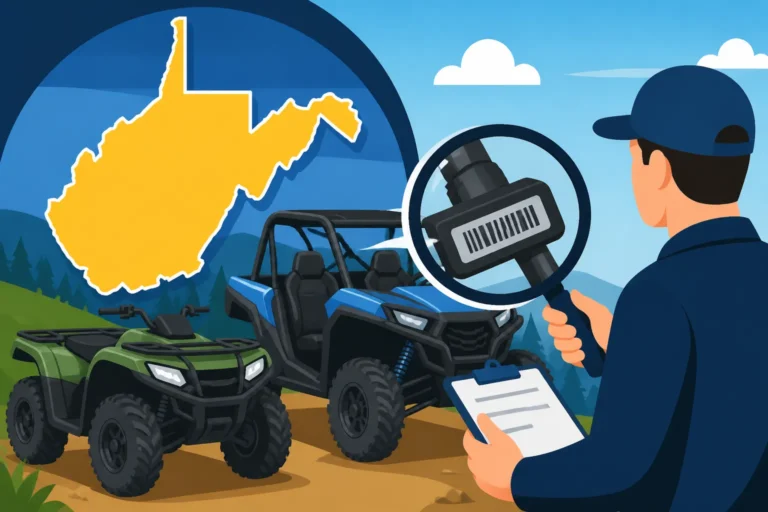
- The ATV's make, model, year, and its Vehicle Identification Number (VIN). You can find resources like [Finding the VIN Stamp on an ATV Frame] to help locate it.
- The date of the sale.
- The agreed-upon purchase price. If it's a gift, the document should clearly state "gift" and that no money changed hands.
- Signatures of both the buyer and the seller.
Using a template, perhaps from a reputable source like LawDepot, can ensure you don't miss any vital information. A professionally drafted bill of sale protects both parties and, crucially, provides the DMV with the necessary details to process the title and assess tax accurately. [West Virginia ATV Bill of Sale: What Belongs in It] can give you an even deeper dive into what to include.
Once the sale terms are clear and the bill of sale is complete, the seller needs to properly complete the existing ATV title. This involves signing it over to you in the designated fields. Accuracy is key here; any errors or missing information can cause delays at the DMV. Make sure the seller's signature matches the name on the title, and that all required fields for the transfer are filled out correctly. [Who Signs a West Virginia ATV Title] provides essential guidance on this step.
Finally, you will need to calculate and pay the sales tax when you apply for the new title at a West Virginia DMV office. The sales tax is generally a percentage of the purchase price listed on your bill of sale, or the assessed reasonable value if your stated price is too low. The DMV staff will guide you through the calculation, but it's wise to have an idea of the amount beforehand. Remember, this is usually paid at the time of title application, not necessarily at the point of sale. You'll need to bring all your documentation, including the signed-over title, the bill of sale, and proof of identification. For a comprehensive list of what to bring, check out [What the West Virginia DMV Needs to Title an ATV] and [West Virginia ATV Title Application at the DMV].
Avoiding Common Pitfalls and Ensuring Compliance
When dealing with family, it can be tempting to try and find shortcuts, especially when sales tax is involved. The thought might cross your mind to declare a ridiculously low sale price or even try to misrepresent a sale as a gift to save a few dollars. However, in West Virginia, taking these shortcuts can lead to significant headaches, delays, and even financial penalties. The DMV has seen it all, and they have protocols in place to identify suspicious transactions.
One of the most common pitfalls is under-reporting the sale price. While a family discount is perfectly legitimate, declaring an ATV worth thousands of dollars as sold for a couple of hundred will almost certainly raise a red flag. The DMV is equipped to compare your stated price to established valuation guides or recent sales data for similar models. If they determine the declared price is intentionally low to avoid sales tax, they have the authority to reassess the value and calculate the tax based on what they deem fair market value. This means you could end up paying more in tax than you anticipated, based on a value you didn't agree to.
Another common issue is misrepresenting a sale as a gift. While genuine gifts are typically not subject to sales tax, the DMV will scrutinize these claims carefully, especially if there's any indication of a cash exchange or other form of consideration. If you label it a gift but the DMV suspects a sale, you could be on the hook for back taxes, interest, and potentially even fines. It's always best to be transparent about the nature of the transaction. If it's a gift, make sure your [West Virginia ATV Bill of Sale Template Requirements] clearly states it as such and that no money or other exchange occurred.
The consequences for non-compliance can range from delays in receiving your title to financial penalties. Without a proper title in your name, you can't legally ride your ATV on designated trails that require proper registration, or conduct any future transactions. The DMV will simply hold up the title transfer until all sales tax obligations are met. Beyond that, you could face monetary fines for failure to pay sales tax, along with interest charges on the unpaid amount. In some cases, intentionally defrauding the state by misrepresenting a sale could even lead to more serious legal repercussions. [West Virginia Penalties for an Untitled ATV] further highlights the importance of getting these steps right.
To avoid these frustrations, the best strategy is always transparency and thorough documentation. Even for family transfers, using a formal bill of sale, like those you can customize through services such as LawDepot, provides a clear, defensible record of your transaction. This level of detail helps ensure that both you and the DMV are on the same page regarding the ATV's value and the nature of the transfer, making your entire experience much smoother.
Disclaimer
This article is for general informational purposes only and does not constitute professional advice. Laws, prices and regulations vary by location and change over time. Consult a qualified professional for guidance on your specific situation.