Eye Protection Requirements on West Virginia Trails
West Virginia trail riders face dust, grit, branches, bugs, and sudden changes in light. Eye protection is a basic safety requirement on managed riding routes, but it is easy to misunderstand what counts or assume a helmet, windshield, or pair of sunglasses is enough. Here’s how to choose suitable protection, keep passengers covered, and check the rules before you ride.
What eye protection is required on West Virginia trails?
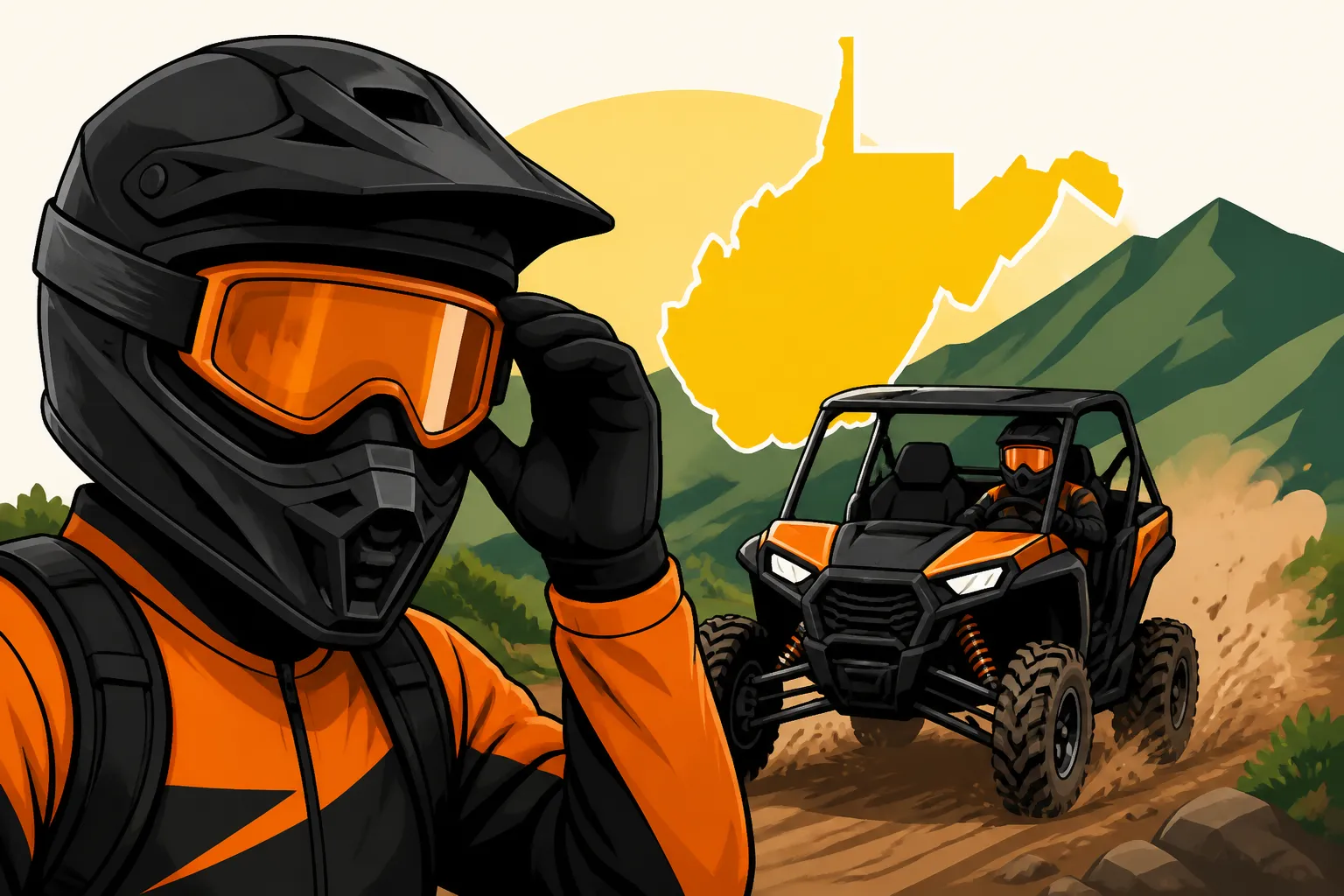
On managed trails in West Virginia, plan to wear eye protection whenever you ride. The rule is intended to protect the operator and passengers from flying debris and other hazards. It is not just a recommendation for fast riding or dusty days: a slow machine can still throw gravel, and a branch can reach eye level without warning.
The exact requirements can depend on the trail system and its current rules. Read posted signs and trail information before setting out, and ask the trail operator if a rule is unclear. A sensible approach is to wear secure, impact-resistant goggles or a suitable helmet face shield, even if you are unsure whether a particular style will meet a system’s definition of “eye protection.”
The trail permit does not replace protective gear
A permit gives you access to the trails covered by that permit. It does not mean you can skip safety equipment, and it does not automatically make you compliant with every other riding rule. Riders visiting from another state should not assume that home-state registration, a helmet rule, or familiar riding habits settle what’s required on a West Virginia trail.
Check the trail system’s rules as well as the permit details before leaving home. West Virginia’s Hatfield-McCoy Trail Permit Explained covers what a trail permit does and does not authorize, while Out-of-State Riders on West Virginia Trails is useful if you are bringing a machine from elsewhere. For managed trails, check the rules for the specific system you plan to ride; requirements can differ between a trail network, an off-road park, and a public road.
Operators and passengers should both be protected
Do not assume the driver’s eyewear covers everyone in a machine. Each rider should have suitable protection that fits and stays in place. A passenger in a side-by-side can encounter the same dust, grit, insects, and branches as the driver, particularly if the cab is open or the side openings are exposed.
For a closer look at this issue, see Do Passengers Need Eye Protection?. As a practical rule, equip every seat with its own properly fitting eye protection. Do not rely on sharing a pair or passing goggles back and forth during a ride.
Eye protection is separate from helmet protection
A helmet protects the head; it does not necessarily protect the eyes. Some helmets have a face shield, while others are designed for goggles. If your helmet has a shield, make sure it closes securely and does not leave a large opening around the eyes. If it does not, wear goggles designed to work with the helmet.
Helmet requirements are a separate issue from eye protection. Helmet Requirements on West Virginia Trails explains that topic, and Helmet Rules for Riders Over 18 is relevant if you are checking the rules for adult riders. Treat each item as its own part of your safety setup rather than assuming that one piece of equipment covers all requirements.
Choosing goggles, glasses, or a face shield
The best option is the one that offers dependable coverage, fits your helmet and face, and stays clear enough for you to see the trail. Protection that is loose, scratched, poorly fitted, or constantly fogging can be a problem even if you brought it along.
Goggles
Goggles usually offer the most secure coverage for dusty, muddy, or brushy trails. A strap helps hold them in place, and a flexible frame can fit closely around the face. Look for lenses that provide a clear field of vision and fit comfortably with your helmet. The foam or seal should sit evenly without creating painful pressure.
Ventilation matters. Goggles with too little airflow may fog, while large openings can let in dust or debris. If you often ride in changing conditions, consider whether the design can handle both airflow and a close seal. A good fit is more important than choosing a highly styled frame that does not sit properly against your face.
Face shields
A face shield attached to a helmet can be a convenient option, especially if it covers the eyes and remains closed while riding. Check that the shield is designed for the helmet, locks or stays in position, and does not create a distracting gap. A scratched or cloudy shield can impair vision, so replace it when damage makes it difficult to see clearly.
A shield may be less effective if it is left raised, does not fit the helmet properly, or leaves the eyes exposed around the sides. Dust can also enter from below or around an open cab. If the shield does not provide reliable coverage in the conditions you expect, use goggles or another suitable option instead.
Glasses and sunglasses
Ordinary prescription glasses and fashion sunglasses should not be treated as a dependable substitute for riding protection. They may leave open gaps around the sides and top, and they may not be designed to withstand the impact of trail debris. Tinted lenses can also make it harder to see in deep shade, wooded sections, or changing light.
If you need vision correction, look for goggles designed to fit over prescription glasses, or ask an eye-care professional about suitable protective eyewear. Some riding goggles can accommodate prescription inserts. Check that the combination fits with your helmet and does not press painfully on the frames.
Quick comparison
| Option | Useful features | Common limitations |
|---|---|---|
| Riding goggles | Close fit, broad coverage, secure strap | Can fog or feel warm if ventilation is poor |
| Helmet face shield | Convenient coverage when closed; stays attached to helmet | Scratches can reduce visibility; fit and coverage vary |
| Ordinary glasses | Correct vision for some riders | Often leave gaps and may not be impact-rated |
| Sunglasses | Reduce glare in bright conditions | Tint can impair vision in shade; usually provide limited side coverage |
| Goggles over prescription glasses | Combines vision correction with added coverage | Fit can be bulky; check for pressure and fogging |
No item in the table is automatically acceptable under every trail system’s rules. If you are unsure whether a specific design counts as eye protection, check with the operator rather than guessing at the trailhead.
Fit, lens choice, and changing trail conditions
Eye protection needs to work for the ride you are actually doing. A pair of clear goggles that fits well may be a safer choice than tinted eyewear that makes it hard to see under trees. A face shield that is comfortable in a parking area may fog once you start climbing slowly through humid air.
Start with fit and impact protection
Try your eyewear on with the helmet you plan to wear. The strap should hold the goggles in place without excessive pressure, and the frame should not leave obvious gaps around the eyes. The helmet should sit normally, without the eyewear forcing it out of position. If you use a face shield, check its range of movement and make sure it stays closed when you ride.
When comparing products, look for clear information about intended use and impact protection. An impact-rated marking, such as an ANSI Z87.1 rating, can be a useful selection benchmark, but it does not by itself establish that an item meets a particular West Virginia trail operator’s rule. Confirm the trail’s requirements separately.
If you shop through Amazon or another retailer, read the product specifications carefully rather than relying on a product title or a general claim such as “protective.” Check the lens type, fit, ventilation, intended activity, and whether the item is designed to work with your helmet. A low price is no bargain if the gear does not stay in place or makes it difficult to see.
Match the lens to the light
Clear lenses are often a practical choice for wooded trails, overcast conditions, or rides that continue as daylight changes. Tinted lenses may help with glare in bright, open areas, but very dark lenses can make shaded sections harder to read. If your ride includes both direct sun and heavy shade, choose a lens that preserves clear vision through both.
Color alone does not tell you how protective a lens is. Focus first on coverage, impact protection, fit, and a clear view. Keep a clean spare lens or a second pair available if your ride is long enough for light or weather to change.
Prevent fogging and keep the view clear
Fog often forms when warm, moist air inside the eyewear meets a cooler lens. Slow climbs, stops, rain, and high humidity can make the problem worse. Anti-fog treatments and ventilated designs may help, but their effectiveness varies. Follow the maker’s cleaning and care instructions, since harsh cleaners or rough wiping can damage lens coatings.
Before riding, remove dust and fingerprints with a clean microfiber cloth. During a break, clean lenses only when you can see well enough to stop safely and keep your machine out of the trail. Avoid rubbing gritty mud across the lens; rinse or gently remove loose debris first when possible. If a lens is badly scratched, cracked, or coated in mud you cannot clear, replace it or switch to a clean spare.
Adjust for dust, rain, and branches
Dry trails can send fine dust into open spaces, while mud and gravel may be thrown by the machine ahead. In wet weather, water droplets can blur a shield, and brush can snag loose eyewear. Secure straps, close shields when appropriate, and keep a cleaning cloth accessible. On a group ride, leave enough space to reduce the amount of dust and debris coming from the machine ahead.
Protection also needs to suit the machine. An open ATV, an open-cab UTV, and a side-by-side with doors or a windshield expose riders differently. More enclosure may reduce some debris, but it does not guarantee that a rider’s eyes are protected. If you are deciding what else to wear, What to Wear on a West Virginia Trail Ride covers the wider clothing and gear setup.
Passengers, youth riders, and common mistakes
A rider’s gear needs to work for the person wearing it. Goggles that fit an adult may not fit a child, and a loose strap can slip during the ride. Do a fit check for each rider rather than assuming that one size or one eyewear style works for the whole group.
Fit protection to the person
For children, check that the frame sits comfortably and covers the eyes without blocking peripheral vision. Make sure the strap is snug enough to hold the goggles in place, but not so tight that it causes pain. A child who cannot see clearly or keeps pushing the eyewear out of position needs a different fit before riding.
Youth age and supervision rules are separate from eye protection. Before taking young riders out, review West Virginia Age Rules on the Trails and Direct Supervision Rules for West Virginia Riders Under 16. The safest setup combines compliance with a machine and route appropriate for the rider’s age and ability.
Passengers need their own gear too. A UTV passenger should not assume the windshield or the driver’s eyewear is enough. Confirm that every passenger has suitable protection, knows how to put it on correctly, and can see clearly before the machine moves.
Mistakes that can leave eyes exposed
A few familiar shortcuts can undermine otherwise good preparation:
- Wearing sunglasses with open sides and assuming they provide full protection.
- Carrying goggles but leaving them on a seat or in a storage compartment.
- Riding with a face shield raised because it fogged or felt inconvenient.
- Using scratched, cracked, dirty, or poorly fitted eyewear.
- Assuming a windshield makes individual eye protection unnecessary.
- Giving passengers protection that does not fit them.
- Choosing very dark lenses for a route that includes long stretches of shade.
- Waiting until dust or rain becomes a problem before checking the gear.
Fix these issues before moving. If eyewear fogs, stop in a safe place off the riding line, clear it according to the product instructions, and make the fit or ventilation adjustment needed. Do not continue through a trail section with vision so impaired that you cannot read the surface or see other riders.
A simple pre-ride check
Make eye protection part of the same routine you use to check helmets, permits, and machine condition. A short check at the staging area is easier than discovering a problem after the group is already on the trail.
- Check the rules for the trail system you are entering, including posted instructions at the trailhead.
- Give each operator and passenger suitable eye protection that fits and stays in place.
- Put the eyewear on with the helmet and confirm that the combination is comfortable and secure.
- Check the lens for cracks, heavy scratches, dirt, or a coating that blocks clear vision.
- Confirm that the lens is appropriate for the expected light and that you can see clearly in shade.
- Carry a cleaning cloth and, if practical, spare eyewear or a clear lens.
- Make sure passengers understand when to keep goggles on or a shield closed.
- Recheck visibility after a stop, rain shower, or change in trail conditions.
If you are unsure whether a particular face shield, goggle, or pair of protective glasses meets the trail’s rule, ask the trail operator before riding. Also check the complete set of requirements, not just eye protection. Trail Rules Every West Virginia Rider Signs Up To is a useful reminder that gear is only one part of riding responsibly.
Frequently Asked Questions
Do riders need eye protection on West Virginia trails?
Plan to wear it. Managed trail systems can set protective-equipment rules, and riders should follow the current requirements posted by the system they are using. Goggles or a suitable face shield offer a practical option for covering the eyes.
Can sunglasses count as eye protection?
Ordinary sunglasses can leave gaps and may not be designed to withstand trail debris. Do not assume they satisfy a trail rule. Choose secure protective eyewear and confirm with the trail operator if you are unsure about a specific design.
Does a UTV windshield replace goggles or a face shield?
Do not assume that it does. A windshield may reduce some exposure, but dust, grit, and debris can still reach occupants. Check the trail rules and equip every operator and passenger with appropriate eye protection.
Do passengers need their own eye protection?
Yes, passengers should have protection that fits them individually. The driver’s eyewear does not protect another person, and a passenger should not rely on the windshield alone.
What should I do if my goggles fog during a ride?
Stop in a safe place, away from the trail’s riding line, and clear or adjust the eyewear before continuing. If the problem persists, switch to suitable gear that lets you see clearly. Do not ride with vision obstructed.
Disclaimer
This article is for general informational purposes only and does not constitute professional advice. Laws, prices and regulations vary by location and change over time. Consult a qualified professional for guidance on your specific situation.