Where West Virginia Trail Permit Money Goes
A Hatfield-McCoy trail permit is easy to think of as a ticket to ride, but riders often want to know what the money actually supports. The answer is broader than trail grooming: permit revenue helps sustain the system, while other funding and local businesses also shape the experience. Here’s how to understand the likely uses, what not to assume, and where to look for more detail.
What trail permit money helps pay for
The Hatfield-McCoy Trails are a managed system, not simply a collection of routes that stays open without ongoing work. The Hatfield-McCoy Regional Recreation Authority operates the system, and permits help support the costs of making authorized trails available and maintaining the network.
That does not mean every dollar from a permit can be traced to one particular trail or job. A permit contributes to the larger operating effort: keeping a trail system functioning, providing rider services and addressing maintenance needs across a network that crosses multiple communities and land parcels.
Trail maintenance and safety
Trails need regular attention. Weather, erosion, heavy use and natural changes in the terrain can affect the surface, drainage, signs and access points. Maintenance may involve inspecting routes, addressing damage, clearing or repairing sections, and managing closures when a trail is not safe or usable.
Trail conditions vary, so maintenance is not necessarily the same everywhere. A rocky climb, a wet section and a busy connector can need different kinds of work. Nor does purchasing a permit mean that every route will be repaired immediately or stay open in all conditions. Work must be prioritized, and temporary closures may be necessary.
Signs and wayfinding are another practical part of maintaining a managed trail network. Riders need to identify routes, understand markings and recognize boundaries. Keeping that information useful takes planning and upkeep, especially when a route changes or a section closes. For help interpreting the markers, see West Virginia Trail Marker Colors and What They Mean and Reading a Hatfield-McCoy Trailhead Kiosk.
Safety also depends on the wider trail system: clear information, usable access points and communication about conditions or restrictions. A permit supports the system that provides managed access, but it is not a promise of rescue, a guarantee that every trail is suitable for every machine, or a substitute for carrying appropriate supplies. Riders should check current conditions and plan for limited connectivity. What to Carry on a Remote West Virginia Ride covers practical preparation for that kind of trip.
Access and trail system operations
A managed trail system requires more than a route on a map. The authority must coordinate access, provide information, administer permits and respond to operational issues. There may also be costs associated with securing or maintaining access agreements, depending on the land and arrangements involved.
This matters because parts of a trail network can cross land that is not owned by the authority. Access depends on permission and on continued compliance with the terms that make riding possible. A rider’s permit does not grant permission to leave the marked trail, cross a closed area or enter adjoining land. Staying on authorized routes protects access for other riders as well. Read Landowner Agreements Behind West Virginia’s Trails and Staying on Marked Trails in West Virginia for more on those boundaries.
Operational work can include coordinating trail access, managing trail information, handling rider questions and administering the permit program. These functions may not be as visible as a freshly repaired trail, but they are part of keeping a large system open and organized.
Signs, trail information and rider support
Trail information helps riders choose routes, understand conditions and avoid riding into an unsuitable or closed area. Maps, kiosks, signs and notices are all part of that experience. They also help communicate rules and boundaries, which can reduce confusion and support responsible use.
Information has to be maintained as conditions change. A map or sign can become outdated if a route is rerouted, a connection closes or access changes. Riders should not assume that an old screenshot or a map saved months earlier is the final word. Check official trail status before travelling, and review Checking West Virginia Trail Status Before You Drive and West Virginia Trail Maps and Signage.
Customer support and permit administration can also be part of the operating picture. A rider may buy a permit online or through an authorized vendor, but those sales channels are only one part of a system that must make permits available and help riders understand the requirements. For the practical details, see Where to Buy a Hatfield-McCoy Trail Permit and What a Hatfield-McCoy Permit Does Not Cover.
Development and long-term upkeep
Trail systems need to plan for more than the next maintenance task. Route changes, access improvements and new or improved facilities may require planning, coordination and funding over time. Whether a particular project is paid for by permit revenue, another source or a combination depends on the project and the authority’s budget.
It is therefore more accurate to say that permit revenue helps sustain the system than to say that every permit directly pays for a specific trail expansion. A permit is a contribution to system operations; it is not a personal allocation to the route a rider chooses that day.
| Area of spending | Why it matters to riders | What not to assume |
|---|---|---|
| Trail maintenance | Helps keep authorized routes usable and addresses wear or damage | Every trail is maintained at the same time or to the same standard |
| Signs and information | Helps riders navigate, recognize closures and follow boundaries | An old map or sign always reflects current conditions |
| Access coordination | Supports the permissions and arrangements needed to ride on a managed network | A permit authorizes riding beyond marked routes |
| Permit administration and rider support | Makes the permit system and related information available | The permit itself includes every service a rider might need |
| Planning and improvements | Helps the system address future needs and changing conditions | All new projects are funded only by permit sales |
The categories above describe the kinds of work a managed trail network may need. They are not a published percentage breakdown of each permit payment.
How permit revenue fits into the wider funding picture
A common question is whether a permit payment goes directly to the town where a rider buys it, the trailhead where the ride begins or the trail being used. In general, it is better to understand the permit as supporting the managed system rather than as a payment earmarked for one particular location.
The authority’s operating needs can span trail systems and communities. A rider might purchase a permit in one town and ride somewhere else, or use several systems during a trip. The administrative and maintenance work behind the network does not necessarily follow the same boundaries as an individual ride.
A permit purchase is not a local sales tax
A permit purchase may take place at a vendor, welcome center or other authorized sales point. The location where a rider completes the purchase does not, by itself, show where the proceeds ultimately go. A vendor may handle the sale, while the trail authority manages the permit program and the wider system.
That is different from the broader spending a visitor may do during a trip. Lodging, fuel, meals, machine rentals and supplies are separate purchases. They can benefit local businesses, but they are not the same thing as the permit payment. Someone buying a machine from a local shop or staying in a cabin may add to local economic activity, while the permit contributes to managed trail access.
This distinction is useful when reading claims about how trail riding supports the region. A permit can help support trail operations; spending at a restaurant or lodging business is a separate flow of money. Neither should be described as though it automatically goes to the other.
Permit revenue may not be the only source of support
A trail system’s total budget and a permit’s price are not necessarily the same thing. The operating budget may account for multiple revenues, expenses and funding sources. A specific maintenance or development project might receive support from more than one source, and the mix can vary.
For that reason, avoid treating the whole permit price as if it were a direct payment for one service, such as trail repair. The system may need to cover ongoing and less visible costs as well as physical work on the ground. Conversely, the existence of other possible funding sources does not mean permit revenue is unimportant. It is one part of supporting access and operations.
If you want to know the current funding mix, the useful documents are the authority’s budget, annual financial statements, meeting materials and project information. Those records can answer more than a general description, although the level of detail may differ from one document to another.
What a permit does and does not purchase
A permit gives a rider permission to use the designated trail system subject to its rules. It does not give ownership of the route, guarantee that a particular trail will be open, or remove the rider’s responsibility to follow posted restrictions.
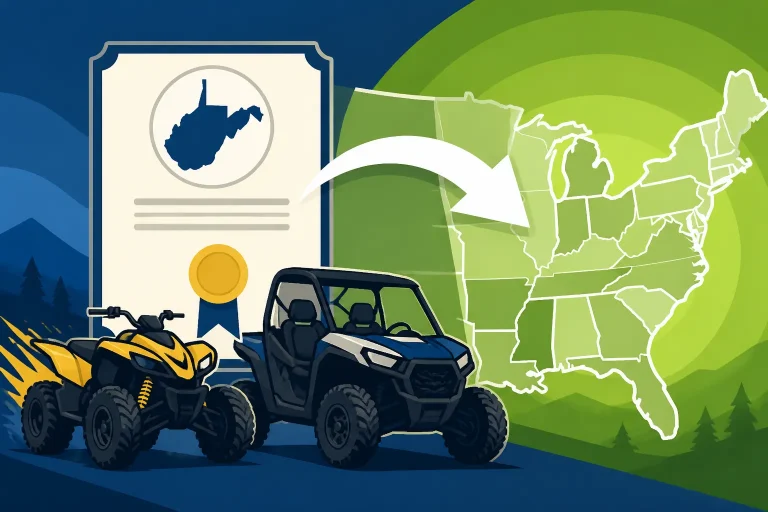
It also should not be confused with a machine title, registration, insurance or a safety credential. Those are separate matters. Riders travelling from another state should not assume that an out-of-state title or registration replaces the required trail permit. See Do Other States’ Registrations Work in West Virginia? for the distinction.
If riding with a rental, ask the rental provider whether the permit is included, what machines it covers and who is responsible for any remaining paperwork. A permit purchase is tied to the applicable program rules, so riders should confirm the current requirements rather than relying on assumptions about a cabin package or rental agreement. Does a West Virginia Rental Include the Trail Permit? explains what to check.
How permit spending can benefit trail towns
Permit revenue and local economic benefits are related, but they are not interchangeable. Trail spending can support the operation of the system, while visitors also bring customers to nearby businesses. Both effects matter, but they happen through different channels.
A rider may pay for a permit, stay in a local cabin, buy fuel and eat at a restaurant. The permit payment supports the managed trail system according to its operating arrangements. The other purchases go to the businesses providing those services. Those businesses may hire workers, buy supplies or make investments locally, but that is a separate economic pathway.
Direct support versus wider economic activity
When someone says that a trail permit “supports the local economy,” it is worth asking what they mean. The statement could refer to permit-funded trail operations, visitor spending in trail towns, employment connected to tourism or some combination. Without that distinction, it can sound as if all permit money goes directly to a town government or business, which should not be assumed.
A clearer way to describe the relationship is:
- Permit revenue helps support the trail system and the work needed to operate it.
- Visitor spending can provide income to local lodging, food, fuel, retail and rental businesses.
- The trail system can attract visitors, but the authority’s permit revenue and a business’s sales are separate sources of money.
- The extent of local economic benefit can differ by town, season, business type and rider itinerary.
This also explains why a trail town’s commercial activity cannot be read directly from permit sales alone. A visitor may buy a permit before arriving, book lodging elsewhere or bring supplies from home. Another visitor may spend heavily in the community. The permit record does not capture all of that.
For riders planning where to stay, West Virginia Trail Towns With Direct Trail Access and Fuel and Food Along West Virginia Trails can help connect the permit question with the practical choices that affect a trip.
Why maintaining local access matters
Trail access depends on a network of working relationships. The route may pass through different kinds of land, and access can depend on agreements, rules and responsible rider behaviour. If riders leave marked trails, ignore closures or damage property, the consequences can extend beyond one machine or one ride.
This is one reason permit revenue should not be viewed as a simple fee for a recreational product alone. The operating model has to preserve access and address the needs of a network that people use in real places. Poorly managed use can put those arrangements under pressure. Following trail restrictions helps protect the resource that riders are paying to access.
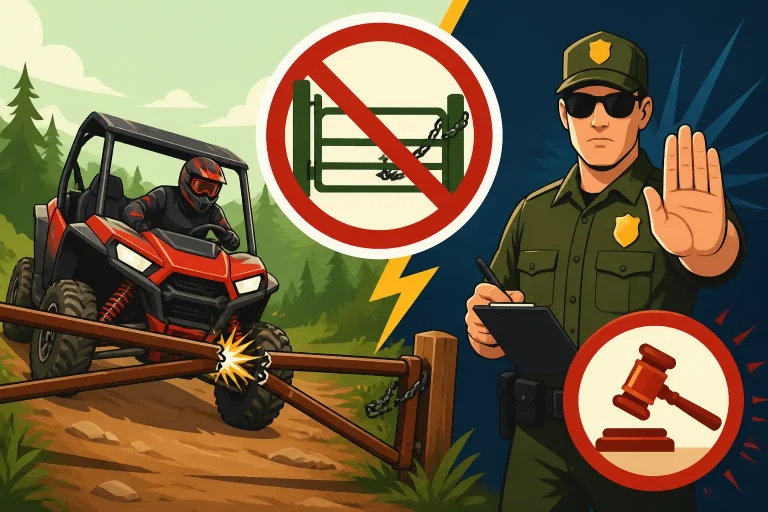
It also helps to remember that a permit does not give riders unrestricted access to surrounding land. If a route ends, is closed or passes near a boundary, the right response is to follow the signs and current instructions—not to improvise a shortcut. Gates, Signs and Barriers on the Trails and Trespass Beyond the Trail Boundary explain why those limits matter.
How to find out where the money goes in more detail
A general explanation can tell you what permit revenue helps support, but it cannot show the exact share spent on each category. For a detailed answer, look for current financial and governance documents from the Hatfield-McCoy Regional Recreation Authority.
Look for budget and financial documents
A budget can show expected income and planned expenses. Financial statements may show actual revenue and costs over a reporting period. Meeting materials can explain major projects, decisions or changes that do not make sense when viewed as a single line in a table.
When reviewing a document, check:
- The reporting period. A budget is a plan; a financial statement reports what happened over a defined period.
- The scope. A system-wide budget may combine several trail areas or functions rather than report one trail at a time.
- The labels. An expense category such as maintenance, operations or administration may include several kinds of work.
- The funding source. A project may involve permits, grants, contributions or other revenue. Do not assume the source from the project description alone.
- Whether figures are actual or projected. Planned amounts are not proof that the money was spent in exactly that way.
- The timing of large projects. A major repair or development cost may appear in a different period from the permit sales that helped make it possible.
A budget category rarely tells the full story by itself. For example, a maintenance line may include work that riders do not see during a visit, while a visible sign or trail improvement might be recorded under a different heading. If a report does not break down a category, it is better to say the allocation is not specified there than to guess.
Ask a precise question
If public documents do not answer what you want to know, a focused question is more useful than asking whether “all the money goes to trails.” You might ask whether the authority publishes permit revenue separately, whether it reports the share used for operations or maintenance, or whether a particular project received support from permit revenue.
It can also help to identify the period and trail system you mean. A question about the current operating budget may have a different answer from one about the lifetime cost of building a particular connection. Avoid assuming that a general total answers a project-specific question.
Good questions include:
- Does the authority publish permit revenue separately from other income?
- Are expenses reported by trail system or only across the network?
- Which document shows actual spending rather than planned spending?
- Does a named improvement have a published funding source?
- Are access agreements or land-related costs reported as their own category?
- Where are notices posted when revenue or access policies change?
These questions keep the conversation grounded in records rather than rumours or a single social media post.
Check current permit information before planning
Even if the purpose of a permit is the main question, riders should verify the current purchase rules, duration, machine requirements and access conditions before a trip. Requirements and sales arrangements can change. Use the authority’s official information and authorized vendors for current details rather than relying on an old receipt, forum post or copied price.
The permit is only one part of a trip plan. Check that the machine is appropriate for the routes you intend to ride, confirm trail openings and restrictions, and make sure the group understands the system’s rules. If a ride crosses multiple permitted networks or involves a second machine, confirm what is required for each. One Permit for Every Trail System and West Virginia Trail Permits for a Second Machine address common questions riders raise about permit coverage.
Frequently Asked Questions
Does all Hatfield-McCoy permit money go directly to trail maintenance?
It should not be assumed that every dollar is assigned directly to physical trail work. Permit revenue helps support the managed system, which can include maintenance, access coordination, permit administration, rider information and other operating needs. For an exact allocation, check the authority’s current financial records.
Does the town where I buy a permit receive the money?
The place where a permit is sold does not, by itself, establish where the proceeds are spent. A vendor may process the sale, while the authority manages the permit program and trail system. Local businesses can benefit separately when visitors spend money in town.
Does buying a permit guarantee every trail will be open?
No. Conditions, maintenance needs, access arrangements and safety concerns can lead to restrictions or closures. Check official trail status before leaving and follow posted notices.
Is the permit a machine registration or insurance?
No. A trail permit concerns access to the designated trail system. It is separate from title, registration, insurance and any applicable safety requirements. Confirm each requirement that applies to your machine and trip.
Disclaimer
This article is for general informational purposes only and does not constitute professional advice. Laws, prices and regulations vary by location and change over time. Consult a qualified professional for guidance on your specific situation.