The Helmet Sticker West Virginia Issues
West Virginia’s ATV helmet sticker can be confusing: riders may mistake it for a trail permit, a helmet approval label, or proof that a machine is legal. The key is to understand its connection to the state’s ATV safety course, what it does—and does not—show, and what to do if it is missing or damaged.
What the West Virginia helmet sticker means
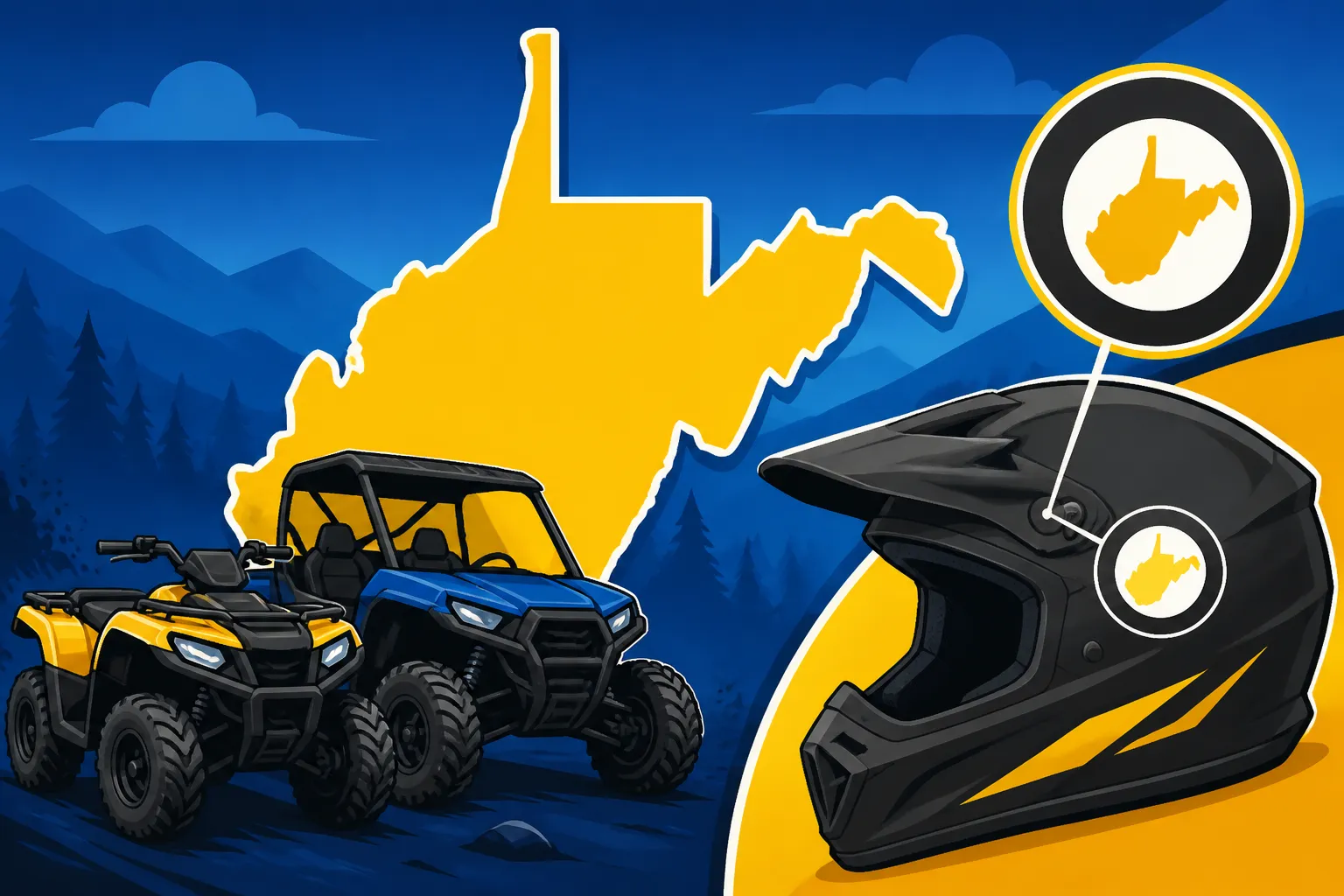
The helmet sticker is associated with West Virginia’s ATV safety-awareness course. It serves as a visible indication connected to course completion, while the course record or safety card provides the underlying proof. Follow the instructions provided when the course is completed, since the sticker and card are related but not interchangeable.
A sticker is not a general license to ride. It does not title or register an ATV, authorize riding on a particular road or trail, or replace any trail permit that may be required. It also does not certify that a helmet meets the safety standard required for a specific ride. Those are separate questions with separate requirements.
| Item | What it generally relates to | What it does not replace |
|---|---|---|
| Helmet sticker | The West Virginia ATV safety-awareness course process | A trail permit, machine title, or required riding equipment |
| Safety card or course record | Evidence associated with course completion | A trail permit or proof of machine ownership |
| Helmet label | The helmet’s own certification or safety information | The West Virginia course sticker |
| Trail permit | Permission to ride on a particular managed trail system, when required | A safety card, helmet, or title |
That distinction matters most when several decals appear on the same helmet or machine. A trail permit sticker is tied to trail access; the course-related helmet sticker is tied to safety education. Neither one does the other’s job. For the trail rules that apply to protective equipment, see Helmet Requirements on West Virginia Trails.
The sticker also does not prove that a rider has met every age, supervision, or equipment rule. A young rider may still need to follow restrictions based on age, machine size, supervision, and where the ride takes place. The course and sticker address only one part of the overall picture.
If you are trying to confirm what the safety card represents, Getting an ATV Safety Card at the DMV explains the related paperwork. For the course requirement itself, see Who Needs the West Virginia Safety Course. Those details can help distinguish a course credential from a trail system’s separate entry requirements.
Who may need the course and sticker
Whether a rider needs the course depends on the applicable West Virginia rules and the place where the ATV will be used. Requirements can differ between managed trails, public roads, private property, and other locations. A rider should not assume that receiving a sticker settles every question about where they may ride.
West Virginia’s safety course is particularly relevant to younger riders. Age-based rules can apply even when a child has completed the course, and course completion does not automatically make a rider eligible to operate every size or type of machine. Parents and guardians should check the rules for the rider’s age and the machine, along with any supervision requirements. West Virginia Age Rules on the Trails provides related information for managed trails.
Managed trail systems may have a specific exception to the general course requirement. That does not necessarily mean the course is pointless or that the rider is exempt everywhere in the state. An exception for a particular managed trail system should not be treated as a statewide exemption for roads, other public land, or a different trail network. See Why Managed Trails Are Exempt From the Course for the distinction.
Before riding, work through these questions in order:
- Where will the ATV be used? Identify whether the ride is on a managed trail, a public road, private land, or another type of property.
- Does that location require the safety course? Check the rules for the specific place rather than relying on what applies somewhere else.
- Does the rider’s age trigger additional requirements? Course completion does not remove age, supervision, or machine-size restrictions.
- Is the helmet suitable for the ride? The course sticker is not a helmet certification label.
- Is there a separate permit or access requirement? A course sticker does not provide permission to enter a trail system.
If the rider has not taken the course and needs to find an approved option, Where to Take the ATV Course in West Virginia covers course access. Confirm current instructions with the appropriate state office or trail authority before setting out, especially if the trip includes more than one type of riding location.
Adults should not assume that the sticker is a universal requirement for every rider, or that they can ignore the course simply because they are adults. The rules depend on the riding context. The practical approach is to check the applicable course rule for the rider and location, then keep any course documentation available in the way the issuing agency recommends.
Where to put it and what to carry
Use the placement instructions that came with the sticker or that were provided when the course was completed. Avoid guessing about a required position based on another rider’s helmet. Helmet designs vary, and decals should not cover important helmet labels, interfere with the helmet’s fit, or obscure damage that needs inspection.
If you have not received clear placement instructions, ask the agency or course provider that issued the sticker. A visible, securely attached sticker is easier to identify than one tucked under equipment or applied where it is likely to peel off. But visibility does not change what the sticker proves: it remains connected to the course process, not to trail access or helmet certification.
Keep the safety card or other course record as directed, even if the sticker is attached to the helmet. A decal can become scratched, peel away, or be damaged when the helmet is stored or cleaned. Having the associated documentation helps if you need to verify course completion or ask about a replacement.
For a ride, it is useful to think of your paperwork in separate groups:
- Rider documentation: the safety card or other course record, if applicable.
- Machine paperwork: ownership or title documents where relevant.
- Trail access: any permit required by the trail system.
- Safety equipment: a suitable helmet and any other gear required for that location.
The exact documents you should carry can depend on the ride and the authority managing the land. A helmet sticker is not a reason to leave other required documents at home. For managed trail requirements, Permits West Virginia Riders Actually Need explains why a course credential and a trail permit should be treated separately.
If the sticker is provided as part of completing the course, do not try to reproduce it yourself. A decorative or reflective decal purchased from Amazon—or any other retailer—is not an official course sticker and cannot establish course completion. Reflective tape or other visibility aids may have a separate safety purpose, but they do not substitute for an issued credential.
Lost, damaged, or unclear stickers
A missing sticker does not automatically tell you whether the rider completed the course. The record and sticker are related, but a decal can be lost or damaged independently of the course record. If the sticker is gone, check the rider’s documentation and contact the issuing agency or course provider to ask what proof is accepted and how to request a replacement.
Do not rely on a photo of a sticker or a handwritten substitute unless the responsible agency says it is acceptable. Likewise, do not assume that a safety card alone resolves every requirement at every riding location. The trail operator or relevant authority may have specific procedures for checking credentials.
A sticker that is peeling can sometimes be secured only if the issuing instructions allow it and the sticker remains legible. If it is torn, unreadable, or no longer attached, ask whether the original can be replaced rather than covering it with tape or placing a new decal over it. Keeping the sticker legible and the course record together avoids confusion during a check.
If the card is missing too, start with the agency that issued it. Replacing a Lost ATV Safety Card covers the related recovery question, while Does a West Virginia Safety Card Expire? can help with concerns about whether an older credential remains current. Ask the issuing office directly if the rider’s name, course date, or record cannot be located.
A few common misunderstandings are worth avoiding:
- “The sticker means I have a trail permit.” It does not. Check the trail system’s permit rules separately.
- “The sticker proves my helmet is approved.” It does not. Check the helmet’s own certification information and the riding location’s equipment rules.
- “The sticker makes the ATV street legal.” It does not. A course sticker does not change the machine’s title, equipment, insurance, or road-use status.
- “If I have the sticker, age limits no longer apply.” They do not disappear. Age, supervision, and machine-size rules remain separate.
- “A generic decal can replace a lost one.” It cannot establish official course completion.
When in doubt, verify the course record and the requirements for the exact ride before leaving. The safest way to avoid a frustrating stop is to treat the sticker as one piece of a larger set of requirements—not as an all-purpose pass.
Disclaimer
This article is for general informational purposes only and does not constitute professional advice. Laws, prices and regulations vary by location and change over time. Consult a qualified professional for guidance on your specific situation.