Do Passengers Need Eye Protection?
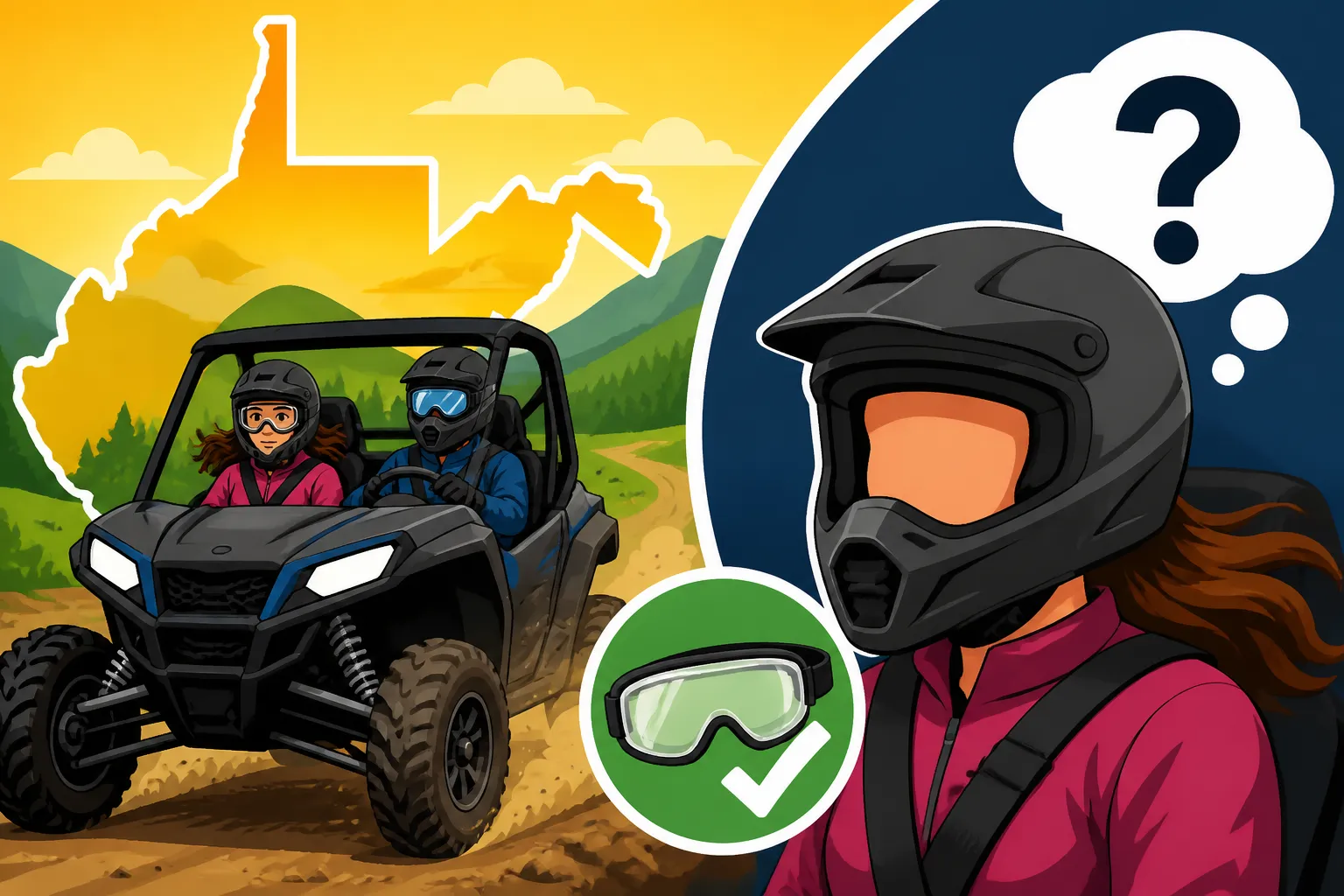
Passengers on a West Virginia ATV or UTV ride face the same dust, grit, branches, and debris as the driver. On managed trails, the safest practical answer is yes: everyone aboard should wear eye protection. The details can depend on where you ride and what protection your helmet provides, so plan ahead rather than relying on a windshield.
Do passengers need eye protection on West Virginia trails?
For a ride on the Hatfield-McCoy Trails, plan for every rider—including passengers—to wear eye protection. A passenger is exposed to trail hazards even when seated inside a side-by-side, and a windshield or roof does not necessarily keep dust and debris out. Trail rules and enforcement details can change, so check current official requirements before heading out. The overview of Eye Protection Requirements on West Virginia Trails can help you understand what to expect.
This is also the sensible choice on other riding routes. Dust can rise from the machine ahead, branches can reach into the passenger area, and small stones or insects can strike unexpectedly. On a rough trail, a passenger may move around more than expected. A sudden bump can shift goggles or expose an eye if the fit is loose.
Eye protection is a separate issue from a trail permit. A passenger may have permit obligations of their own, but having the required permit does not replace protective gear. See Do Passengers Need a West Virginia Trail Permit? for that separate question.
Why a side-by-side windshield may not be enough
A windshield can reduce wind and flying debris, but it may leave gaps at the sides or top. Open-cab machines offer even less protection. Dust can swirl around a cab, and a passenger’s eyes may still be exposed when the machine turns, travels over uneven ground, or follows another vehicle closely.
Do not assume that a windshield counts as eye protection unless the applicable rule or trail authority clearly says it does. Goggles or a suitable face shield provide a more dependable barrier because they stay with the rider as the machine moves. For a passenger, that means choosing gear that fits their face and helmet rather than relying solely on the vehicle’s equipment.
A passenger should also be able to keep the protection in place throughout the ride. If goggles repeatedly fog, slip, or press uncomfortably against the face, the rider may lift or remove them at the very moment they are most useful. Test the fit before setting out.
Road sections and trail rules are not interchangeable
Some West Virginia rides include a short public-road connection between trail sections or a route into a trail town. Rules for riding on a public road may differ from rules on a managed trail, and they may depend on the machine, location, and circumstances. Do not assume that permission to ride a particular road means the same equipment requirements apply everywhere along the trip.
If the ride includes public roads, review the rules for that part of the route as well as the trail requirements. Helmet and Eye Protection Rules in West Virginia provides broader context, while Riding With a Child in a Side-by-Side is useful when a young passenger is involved. When requirements are unclear, check with the responsible trail operator or the appropriate official source before riding.
| Riding situation | Practical approach to eye protection |
|---|---|
| Managed off-road trail | Equip the driver and every passenger with secure eye protection. Check the current trail rules before departure. |
| Side-by-side with a windshield | Do not assume the windshield is enough; use goggles or a suitable face shield unless official rules clearly say otherwise. |
| Open-cab ATV or UTV | Treat eye protection as essential for everyone aboard because dust and debris can reach the passenger area easily. |
| Public-road connection | Check the requirements for the road portion separately from the managed-trail rules. |
| Child passenger | Make sure the protection fits securely and can be worn comfortably for the whole ride. |
Choosing eye protection a passenger can keep on
Eye protection only helps when it fits, stays in place, and gives the passenger a clear view. The right choice depends on the helmet, machine, weather, and rider’s comfort. Goggles are a common option for off-road riding, while some helmets can accept a compatible face shield. Neither option is automatically right for every rider.
Goggles
Goggles can provide a close-fitting barrier around the eyes, which is useful when dust is blowing or the machine is traveling behind other riders. They should sit comfortably against the face without leaving large gaps or interfering with the helmet. A strap should hold them securely without being so tight that the passenger cannot tolerate wearing them.
Check that the lenses are clear and free of deep scratches. A scratched lens can make it harder to see rocks, ruts, and other hazards, especially when light is changing. If the passenger wears prescription glasses, check that the goggles fit over them or look for an option designed for that use. Do not assume ordinary glasses provide the same coverage as riding eye protection.
Face shields
A face shield can be convenient when it is designed to fit the passenger’s helmet. Confirm that it stays in place, offers an unobstructed view, and does not interfere with the helmet’s fit or operation. A shield that can be raised easily may be convenient during a stop, but it should be down when the machine is moving through dusty or debris-prone areas.
A shield and goggles do not always provide identical coverage. If there is a gap between the shield and the rider’s face, dust may still reach the eyes. The passenger should test the setup while stationary and make sure they can see clearly in the position they will use on the ride.
For a comparison of these options, see Goggles Versus a Face Shield on the Trail. The best choice is the one that works with the helmet and remains comfortable enough to wear for the whole trip.
Fit and visibility matter as much as the style
Before leaving the parking area, have the passenger put on their helmet and eye protection together. Check that the strap does not pull the helmet out of position and that the protection does not press painfully on the nose or face. Ask the passenger to look in several directions and make sure their view is not blocked.
Consider how the lens will work in the conditions expected. A dark lens may be uncomfortable in shade or late in the day, while a scratched or fogged lens can blur the trail. Keep a clean spare lens or another suitable option available if the ride is long. A microfiber cloth stored where it will stay clean is more useful than wiping a lens with a dusty sleeve.
If you are shopping for goggles, compare fit, lens clarity, ventilation, compatibility with the passenger’s helmet, and the maker’s safety information. Amazon may offer a wide selection, but a listing alone does not confirm that a particular product meets a trail rule or fits a specific helmet. Check the product details and return policy, and do not buy solely on appearance.
Prepare the passenger before the ride
Eye protection is part of preparing the passenger, not a last-minute accessory. A passenger should know how to hold on, how to communicate with the driver, and what to do if the goggles shift or the machine stops. This matters particularly for children, who may not tell the driver that their gear is uncomfortable until they have already removed it.
- Check the route and rules. Confirm the current requirements for the managed trail and any planned public-road section. Review Helmet and Eye Protection Rules in West Virginia if you need broader context.
- Fit the helmet and eye protection together. A comfortable fit makes it more likely that the passenger will keep both in place.
- Check visibility before moving. Make sure the passenger can see clearly through the lens and that it is clean, secure, and not fogged.
- Explain what to do if the gear shifts. The passenger should tell the driver and wait until the machine is stopped safely before adjusting or removing protection.
- Pack a backup. Bring a clean replacement or spare protection if the ride is long, especially when more than one passenger may use the machine.
For a child, comfort and fit deserve extra attention. Adult-sized goggles that leave gaps or slide down are not a reliable substitute for properly fitting gear. The machine itself must also be appropriate for the child and passenger arrangement. Riding With a Child in a Side-by-Side covers additional considerations for family rides.
Passengers should not lean out to avoid dust or lift their goggles while the machine is moving. If visibility becomes poor, the driver should slow down or stop in a safe place. The passenger can then clear or adjust the gear without the added risk of doing so over uneven ground.
A simple pre-ride check prevents many avoidable problems: helmet secure, eye protection in place, lens clean, passenger comfortable, and route rules reviewed. When the rules are uncertain, use properly fitted eye protection for every occupant and confirm the requirement with the relevant trail operator before the ride.
Disclaimer
This article is for general informational purposes only and does not constitute professional advice. Laws, prices and regulations vary by location and change over time. Consult a qualified professional for guidance on your specific situation.