Riding With a Child in a Side-by-Side
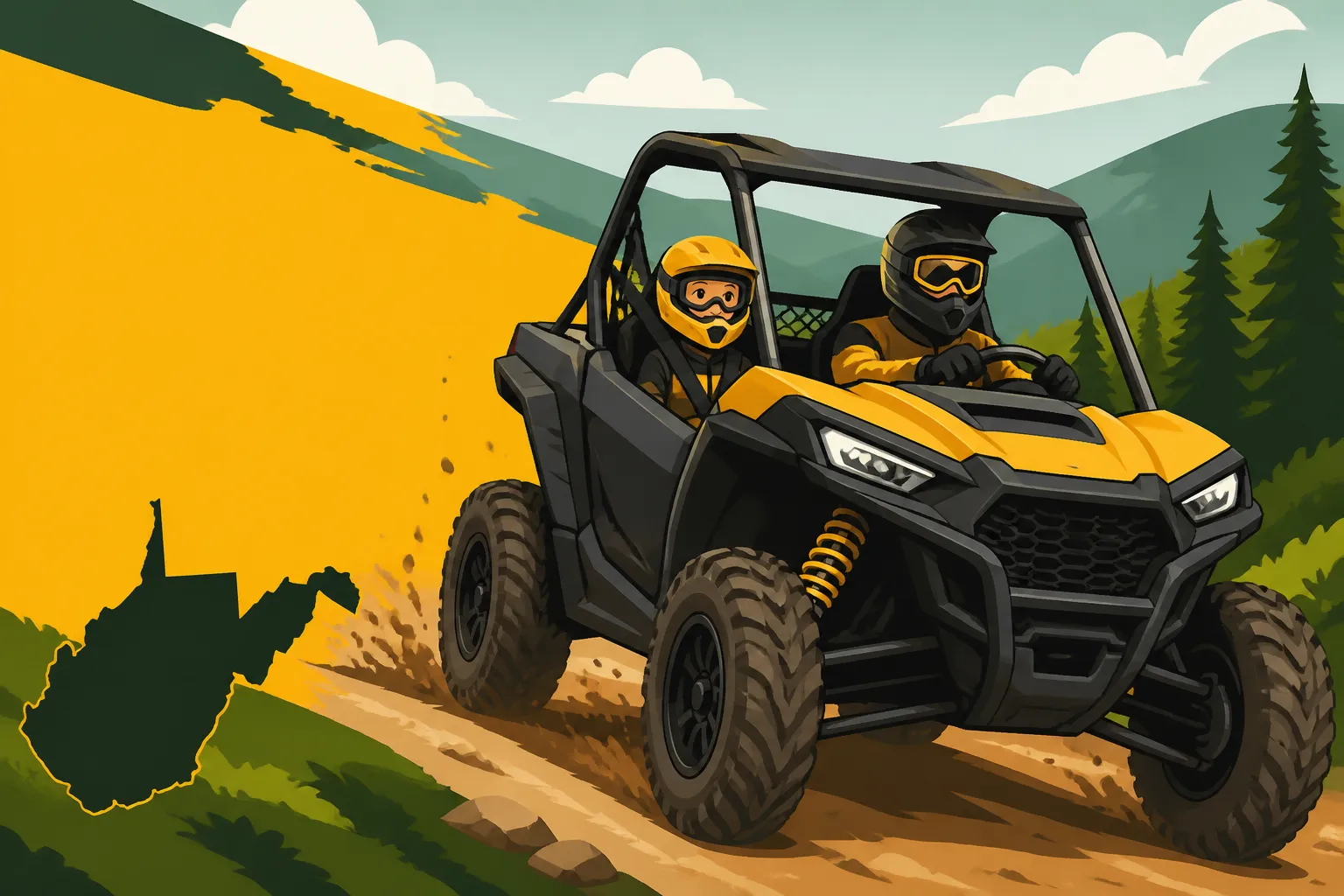
A child’s first side-by-side ride can be exciting, but the trip only works if the child is old enough under the rules, can sit securely in the machine, and has the right protection. West Virginia’s trail access and permit requirements add another layer. Here’s how to check eligibility, prepare the vehicle, and plan a ride that’s safe and legal.
Check the child’s age, size, and seating position
Age is a starting point, not the whole safety test. West Virginia trail systems and riding settings may have specific age rules, and a child who meets a minimum age may still be too small to ride safely in a particular side-by-side. Check the rules for the exact trail system before setting out. For Hatfield-McCoy, start with Can a 6-Year-Old Ride at Hatfield-McCoy? and Age Rules for Passengers at Hatfield-McCoy.
A child should have a designated passenger seat. Never carry a child on someone’s lap, between the driver and a passenger, or in a cargo area. A side-by-side’s rear bench is not automatically suitable for a child just because it has a seat belt. The child needs to be able to sit upright with their back against the seat, stay within the seating area, and use the restraint as designed.
Before the ride, check the owner’s manual for the machine’s seating capacity, passenger requirements, and child-related instructions. A two-seat machine is for the driver and one passenger, not for an adult and two children squeezed onto one bench. Overloading can affect handling and leave a passenger without a properly positioned belt.
A practical fit check can help you decide whether the child is ready:
- Can the child sit upright without slouching or leaning out?
- Does the seat belt fit snugly as intended, rather than crossing the neck or riding over the abdomen?
- Can the child keep their feet on the floorboard or footrests?
- Can the child hold a handhold or remain stable without gripping the driver?
- Can the child follow simple instructions to keep arms and legs inside the vehicle?
If the child cannot meet these basic checks, wait. A short ride is not a safe exception to a poor fit.
Use the restraint system as designed
Side-by-sides are built with passenger restraints, but belts only help when they fit and are used correctly. Buckle every occupant before moving, and check that the belt is not twisted, loose, or trapped under clothing. Do not use a belt extender or modify the restraint unless the manufacturer specifically approves it for that model.
A standard car seat is not automatically safe or compatible in an off-road vehicle. Do not install one unless the vehicle and child-seat manufacturers say the specific setup is suitable and provide instructions for securing it. Improvised straps, cushions, or seat modifications can create new hazards.
For more on age and supervision, see Riding With Kids Under 16 on the Trails and What Direct Supervision Means on the Trails. Keep the child within sight and close enough to communicate with them. Explain before starting that they must stay seated, keep their hands and feet inside, and tell the driver if they feel uncomfortable.
Choose protective gear that fits the child
A helmet that fits is essential. For trail riding, the helmet must meet the applicable requirements and be the right size for the child, not an adult helmet tightened as far as it will go. A loose helmet can shift or come off during a sudden stop or impact. Check Helmet and Eye Protection Rules in West Virginia and Helmet Requirements on West Virginia Trails before the ride.
Eye protection matters even in an enclosed or partly enclosed side-by-side. Dust, gravel, insects, branches, and debris can enter through an open side or windshield gap. Use protective eyewear that fits with the helmet and stays in place. Ordinary sunglasses do not provide the same coverage as goggles or a suitable face shield. The vehicle’s windshield is not a substitute for personal eye protection where rules require it.
Dress for the trail, not just the weather at the parking area. Long sleeves, long pants, sturdy footwear, and gloves can reduce exposure to dust, branches, and hot surfaces. Avoid loose clothing, dangling drawstrings, or anything that could catch on controls or moving parts. Bring an extra layer for a child; wind and shade can make a ride feel colder than expected.
| Item | What to check before leaving |
|---|---|
| Helmet | Proper fit, secure chin strap, and compliance with applicable rules |
| Eye protection | Fits with the helmet and shields the eyes from debris |
| Seat and belt | Child has a dedicated seat and can use its restraint correctly |
| Clothing | Covers arms and legs; no loose or dangling items |
| Footwear | Stays on securely and protects the feet |
| Communication | Child knows how to signal discomfort or ask to stop |
Do not assume that a child’s helmet or gear from another activity is suitable. Check the product’s intended use and fit, and replace damaged equipment. A helmet that has been involved in a significant impact may need replacement even if damage is not obvious.
Understand permits and trail rules before riding
A child riding as a passenger does not usually need a separate permit sticker for their own body; trail permits are generally tied to the machine. The vehicle still needs the correct permit for the trail system, and the permit must be displayed as required. Confirm current requirements with the trail authority before travel, especially if you are visiting from another state or riding a system you have not used before.
Start with One Permit for Every Trail System and Does a Passenger Need a West Virginia Trail Permit? to understand how permits apply to machines and riders. A permit for one vehicle should not be assumed to cover another side-by-side in your group. If you are bringing more than one machine, check whether each needs its own permit and follow the instructions for displaying each sticker. Mounting a Hatfield-McCoy Permit Sticker covers placement.
Out-of-state registration or paperwork does not automatically replace a West Virginia trail permit. Reciprocity questions can depend on the kind of machine, where it is being ridden, and the rules of the specific trail network. Check Do Other States’ Registrations Work in West Virginia? before relying on a home-state registration. A road plate, title, or registration and an off-road trail permit serve different purposes.
Do not treat a child’s age or passenger status as an exemption from other riding requirements. Helmet and eye-protection rules, machine restrictions, trail boundaries, and operating conditions still matter. Check posted signs and the current trail rules, and make sure the machine is allowed on the routes you plan to use. Youth Machines Allowed on the Trails can help if the child will ride a separate youth machine rather than sit as a passenger.
Trail access can change, so check for closures and notices before driving to the trailhead. A permit does not authorize riding beyond marked routes, through a closed gate, or onto private land. Explain to children that the driver must follow signs even if a route looks open or another rider leaves the marked trail.
Plan a first ride around the child
A child who feels secure and rested is more likely to enjoy the ride and follow instructions. Choose a manageable route, keep the first outing short, and plan stops. Avoid making a child’s first trip a long day of rough terrain, steep climbs, or repeated creek crossings. Trail color ratings and conditions can help, but a rating does not guarantee that every stretch will feel easy to a young passenger.
Before starting the engine, walk the child through what to expect: engine noise, bumps, turns, dust, and stops. Agree on a simple signal the child can use to ask for a break. Make clear that the driver will stop in a safe place before anyone adjusts gear, gets out, or changes seats. Never let a child unbuckle while the vehicle is moving.
A pre-ride check should include the machine as well as the child:
- Confirm the child meets the current age and passenger rules for the trail system.
- Check the owner’s manual and make sure the machine has an available passenger seat.
- Fit the helmet and eye protection, then buckle and check the restraint.
- Confirm that the vehicle has the required permit and that it is displayed correctly.
- Review the route, current trail notices, and the limits of your machine.
- Pack water, basic first aid supplies, and any needed extra clothing.
- Tell the child the rules for staying seated, keeping limbs inside, and asking to stop.
If you plan to rent, ask the outfitter about child passenger rules before booking. Rental operators may set requirements based on machine design, restraint fit, or insurance conditions. Do not assume that a child can ride in every model in a rental fleet. Ask whether the machine has a passenger seat and belt suitable for your child, whether helmets and eye protection are included, and whether the permit is included or must be obtained separately. Renting With Children in West Virginia and Does a West Virginia Rental Include the Trail Permit? are useful starting points.
A rental’s general passenger allowance is not proof that a particular child fits safely. Share the child’s age and approximate size with the outfitter, then verify the seat and restraint before the ride begins. If the answer is uncertain, ask for a different machine or choose another activity.
On the trail, drive smoothly and leave room to stop. Sudden acceleration, sharp turns, and high speed can unsettle a young passenger even when the terrain seems familiar to the driver. If the child becomes frightened, cold, tired, or uncomfortable, stop in a safe place and reassess. Turning back is a sensible choice, not a failed outing.
Disclaimer
This article is for general informational purposes only and does not constitute professional advice. Laws, prices and regulations vary by location and change over time. Consult a qualified professional for guidance on your specific situation.