Carrying Beer in a Side-by-Side
Carrying beer in a side-by-side raises more than a storage question: the answer can depend on whether the container is open, where you ride, and the rules attached to the trail. In West Virginia, the safest plan is to keep alcohol out of the ride, confirm the current rules before departure, and never let anyone who has been drinking operate a machine.
Carrying Beer Is Not the Same as Drinking While Riding
People may mean different things when they ask whether they can carry beer in a side-by-side. They might mean transporting sealed cans to a cabin, keeping an open cooler in the cargo area, or drinking during a trail ride. Those situations can raise different legal and trail-rule questions.
A sealed container is not automatically allowed everywhere, and an open container is not automatically treated the same as a sealed one. The rules may depend on the road or trail you are on, the land manager’s requirements, and the terms of your permit. A side-by-side’s enclosed or cargo area does not create a blanket exception.
The clearest safety rule is simple: do not drink while operating, and do not ride with an operator who has been drinking. Alcohol can affect judgment, balance, reaction time, and decision-making. Those effects matter on narrow routes, steep grades, blind turns, and uneven ground. A passenger’s drinking can also make a ride less safe if it distracts the driver or affects the passenger’s ability to stay seated and use restraints.
West Virginia alcohol and vehicle rules may apply differently depending on the circumstances, including whether a ride involves a public road. Do not assume an off-road route is exempt from laws or trail requirements. For more context, see Alcohol Rules on West Virginia Trails and West Virginia ATV Alcohol Limit.
| Situation | What to consider | Safer approach |
|---|---|---|
| Sealed beer transported to a destination | Trail, road, and property rules may still apply | Check the rules for the entire route and destination |
| Open cooler or open container during a ride | Open-container restrictions and trail conditions may matter | Keep alcohol out of the passenger area and do not consume it during the ride |
| Operator has consumed alcohol | Impairment can put riders at risk and lead to legal consequences | Do not let that person operate; arrange a sober driver or stop riding |
| Rental machine | The rental agreement may set stricter conditions than general law | Read the agreement and ask the rental shop before departure |
| Riding on a public-road connector | Road laws and equipment or operating rules may apply | Treat the connector as a road, not as a loophole |
This table is a planning aid, not a legal determination. If you cannot confirm that carrying alcohol is permitted under the rules that apply to your specific trip, leave it behind until after the ride.
Check Trail Rules, Permit Terms, and Road Connectors
A trail permit gives access under specified conditions; it does not grant permission to ignore other rules. Trail systems can have their own operating requirements, and an individual route may pass through land with additional restrictions. Rules can also differ between a managed trail, a public road, private property, and a town street.
Before packing beer, check the current rules from the trail authority and the terms that apply to your permit. Look for language about alcohol, open containers, litter, conduct, and riding while impaired. If the rule is unclear, contact the authority or the permit seller and ask directly whether sealed alcohol may be transported on the machine and whether open containers are allowed. Don’t rely on a friend’s past experience or an assumption that a cooler is treated as ordinary cargo.
This check is especially important on a ride that uses a road connector. A route may shift between trail and roadway, and the rules for operating on a public road can differ from the rules for riding on a managed off-road trail. Review Trail Rules Every West Virginia Rider Signs Up To and What a Trail Permit Does Not Cover when planning your route. If you expect to use town streets or public roads, check those requirements separately as well.
A useful pre-ride checklist is:
- Identify every trail system, road, and town route on the planned trip.
- Review current permit terms and trail-system rules for alcohol and open containers.
- Check the rental agreement if the machine is not yours.
- Ask the relevant authority about sealed alcohol if the written rules do not answer the question.
- Make a plan for alcohol to stay at the lodging or another permitted destination until the ride is over.
If you ride on a Hatfield-McCoy trail, check the rules that apply to that system rather than assuming a rule from another park or state carries over. A permit or a machine’s title does not settle whether alcohol can be carried on a particular route. Permits and reciprocity concern access and authorization; they are not a substitute for checking conduct rules.
Open Containers, Passengers, and Impaired Operation
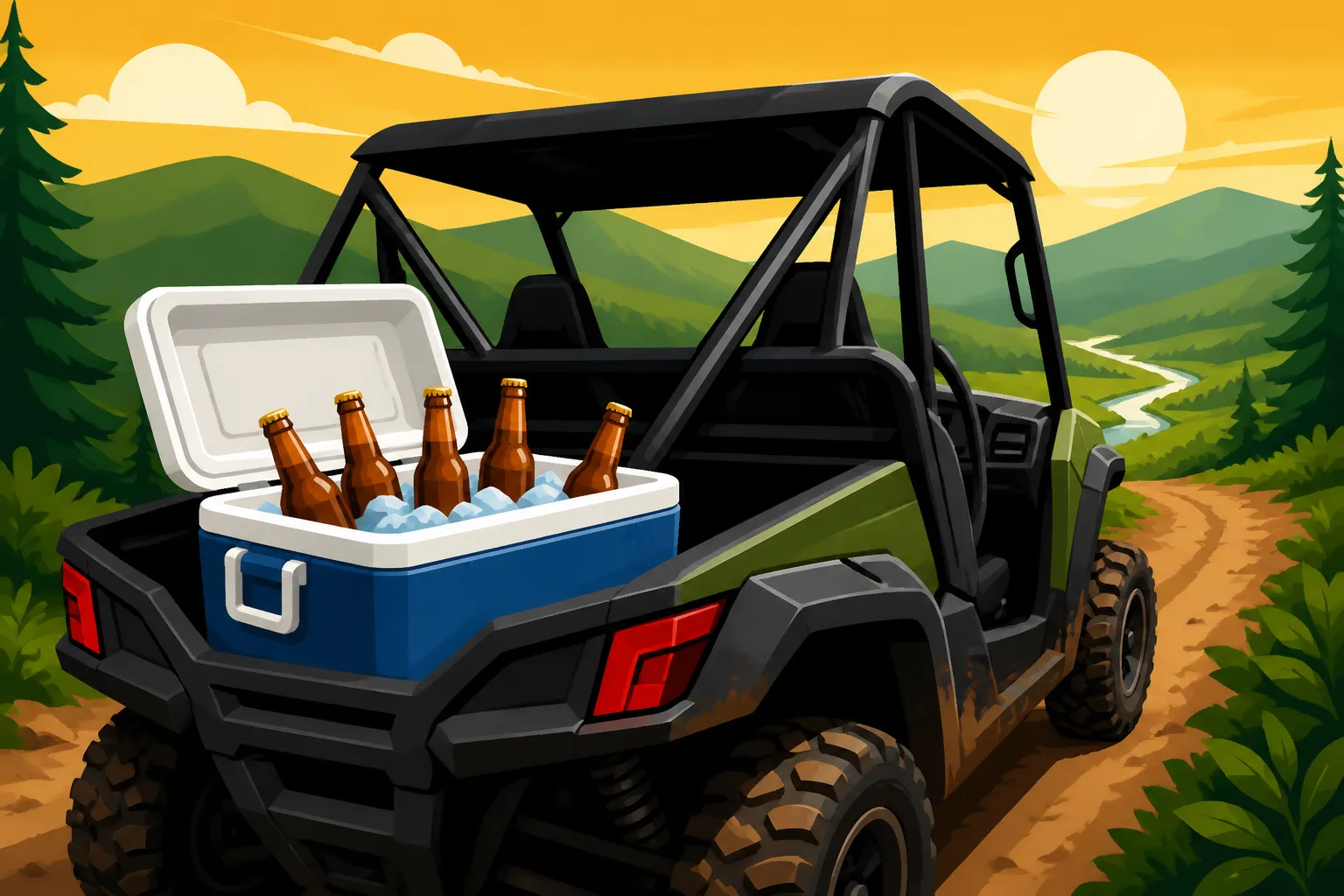
A cooler in a side-by-side can make it hard to tell whether alcohol is simply being transported or is available for use during the ride. That practical ambiguity is one reason not to bring beer along. An open can, an opened bottle, or a cooler that passengers can access may raise questions that a sealed package stored separately would not. The exact legal treatment depends on the applicable rule and circumstances, so do not treat one container arrangement as a guaranteed workaround.
If alcohol is being taken to a permitted destination, keep the trip clearly separate from drinking. Pack it securely, prevent spills, and leave it unopened until the machine is parked and the ride is finished. Do not serve alcohol to the operator during a stop if that operator will continue driving. A break in the ride does not make it safe to resume operating after drinking.
Passengers have responsibilities, too. A passenger should not pressure the operator to drink, interfere with driving, or distract the driver on a technical section. In a side-by-side, passengers should stay seated, use the restraints provided, and follow the operator’s instructions. Alcohol can make it harder to react appropriately if the machine tips, stops suddenly, or encounters an obstacle.
If anyone has been drinking, the practical choice is not to debate whether they appear impaired or whether the route is technically off-road. Have a sober person operate, arrange a ride back, or leave the machine parked and contact the appropriate help. Operating after drinking can expose the driver to serious consequences, and it can put passengers and other trail users in danger. For related issues, read Alcohol Penalties on the Hatfield-McCoy Trails, Open Container Rules on a West Virginia Quad, and A DUI on an ATV in West Virginia.
Trail authorities or law enforcement may respond to unsafe conduct, rule violations, or complaints. A permit does not protect a rider from enforcement, and a machine’s off-road design does not make impaired operation safe or consequence-free. If you want to understand how a particular rule is enforced, ask the trail authority or a qualified West Virginia attorney rather than relying on an informal explanation at a trailhead.
A Practical Plan for Riders and Rental Groups
For most groups, the simplest plan is to leave beer at the cabin, campsite, or other destination and enjoy it after the machines are parked for the day. That avoids uncertainty about open containers, trail conditions, and whether alcohol is accessible during the ride. It also makes it easier to keep the operator sober and focused from the start of the trip to the final return.
If you intend to transport sealed beer, confirm the rules before loading it. Check the entire route, not just the trailhead, and secure any permitted cargo so it cannot shift or spill. Keep beverages separate from the operator’s controls and avoid opening anything while the machine is in use. If the rules do not clearly permit carrying it, the prudent choice is to leave it behind.
Rental groups should take an extra step. Rental terms may prohibit alcohol in or around the machine, set rules about passenger behavior, or assign responsibility for damage and cleanup. Ask the rental shop before booking or before departure, and follow the written agreement. A verbal assumption that “people do it all the time” is not a substitute for understanding the contract. See [Renting a Side-by-Side in West Virginia] for broader rental planning.
For a group ride, decide in advance who will operate each machine and make a clear no-drinking-while-riding rule. If a driver drinks after the ride, that person should not drive the side-by-side again. Keep a sober transportation option available, particularly if the group is staying away from the trailhead or riding in a remote area.
The best answer to “Can I carry beer in a side-by-side?” is therefore not a universal yes or no. It depends on the current rules for the trail, road, property, and rental. Since the consequences of getting it wrong can extend beyond a spoiled drink, check the applicable rules before you go. When the answer is uncertain, leave the beer at the destination and keep the ride alcohol-free.
Disclaimer
This article is for general informational purposes only and does not constitute professional advice. Laws, prices and regulations vary by location and change over time. Consult a qualified professional for guidance on your specific situation.