Helmet Rules for a 17-Year-Old in West Virginia
Navigating the ins and outs of West Virginia's ATV and UTV laws can feel like a ride through a particularly rocky creek bed – full of unexpected twists and turns. For parents and young riders nearing adulthood, the question of helmet requirements for a 17-year-old is a common source of confusion, often leaving folks scratching their heads and wondering if they're truly compliant. This guide will cut through the fog, explaining exactly what the law says, what safety demands, and how to ensure your 17-year-old rider is both legal and protected on West Virginia's trails and roads.
The Baseline: Helmet Laws for Young Riders in West Virginia
Let's start with the fundamental truth: West Virginia takes the safety of its younger riders very seriously. While many states have a patchwork of rules, the Mountain State generally maintains a clear stance when it comes to head protection for those under a certain age. This isn't just about adhering to regulations; it's about safeguarding precious lives and preventing devastating injuries that can quickly turn a fun day out into a lifelong tragedy.
Why Age 17 is a Specific Point of Confusion
It's easy to see why age 17 creates a bit of a gray area for many people. In so many aspects of life, 18 is the recognized age of adulthood. You can vote, sign contracts, and often make many independent decisions. So, it's natural to think that someone almost 18 might fall into the adult category for certain recreational activities. However, when it comes to ATV and UTV safety, the law doesn't always align with these broader perceptions of maturity. The state's focus remains squarely on the potential for serious injury, and from a legal perspective, a 17-year-old is still considered a minor. This distinction means they often remain subject to safety mandates designed for younger individuals, even if they possess a driver's license for a car or feel perfectly capable of making their own safety choices. It's a source of frustration for many independent-minded teens, but the intent behind the law is purely protective.
The Mandate: Who Needs a Helmet on West Virginia Trails and Roads
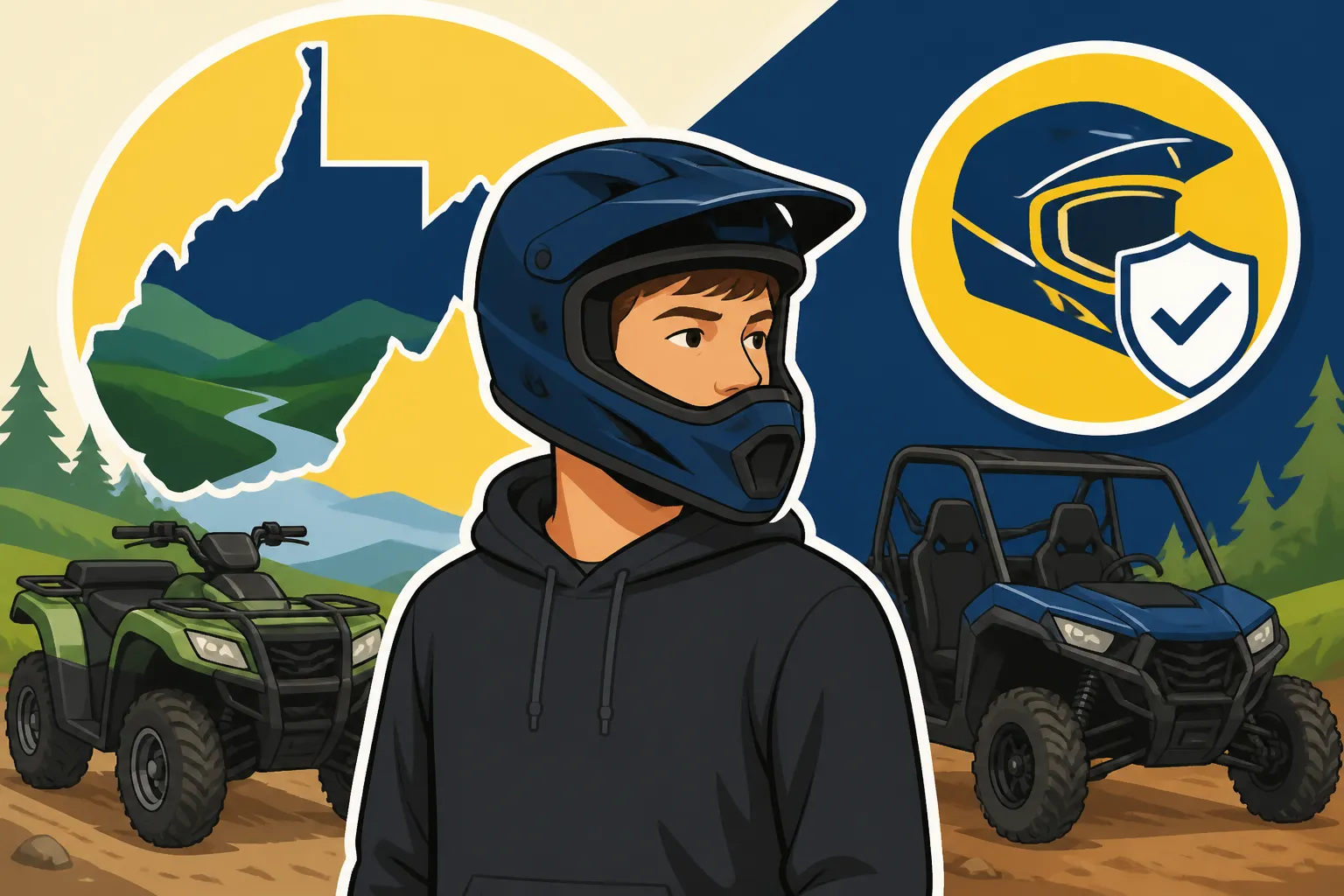
So, what's the actual mandate? In West Virginia, the law is quite clear: any person under the age of 18 operating or riding as a passenger on an ATV or UTV in publicly accessible areas must wear a safety helmet. This requirement applies whether they are riding on one of the state's incredible trail systems, like the renowned Hatfield-McCoy Trails, or legally navigating a designated road section. It doesn't matter if they're an experienced rider with years of seat time or a newcomer; the "under 18" rule is a hard line.
This broad requirement also ties into other youth riding rules, such as the [Direct Supervision Rules for West Virginia Riders Under 16]. While a 17-year-old might not need direct supervision in the same way a younger child does, the helmet law ensures that even these older minors are afforded the highest level of head protection. The thinking is simple: ATVs and UTVs present inherent risks, and a helmet is the single most effective piece of gear to mitigate severe head trauma in the event of an accident, a rollover, or an unexpected impact. Ignoring this rule isn't just a minor infraction; it's a gamble with a young person's future.
Specific Scenarios for a 17-Year-Old Rider
Understanding the general rule is one thing, but how does it play out in the various places a 17-year-old might choose to ride in West Virginia? The context of the ride can sometimes add layers of interpretation, but the core helmet requirement for minors remains steadfast. Let's break down a few common scenarios.
Riding on Designated Trail Systems (e.g., Hatfield-McCoy)
West Virginia is famous for its extensive and well-maintained trail systems, none more so than the Hatfield-McCoy Trails. These networks draw riders from all over the country, and they operate under a specific set of rules designed to ensure safety and preserve access. For a 17-year-old riding on a designated system like Hatfield-McCoy, the helmet rule is not only a state law but often explicitly reinforced by the trail system's own regulations.
When you purchase a [Hatfield-McCoy Trail Permit Explained], you implicitly agree to abide by these rules, which include mandates for helmet and eye protection for all riders under 18. These trail systems frequently have rangers or staff patrolling who are diligent about enforcing safety regulations. They understand that a helmet can be the difference between a bump on the head and a critical injury, and they won't hesitate to enforce the rules. Trying to argue that your 17-year-old is "almost 18" or "a really good rider" won't fly with a ranger who prioritizes safety above all else. Always assume that if you are on a public, managed trail system, any rider under 18 absolutely must wear a helmet. This applies whether they are driving their own machine or riding as a passenger in a side-by-side.
Riding on Public Roads or Road Sections
The idea of riding an ATV or UTV on a public road in West Virginia can be a bit confusing, as the rules are very specific. However, if your 17-year-old is legally operating an ATV or UTV on a designated public road section—perhaps using [West Virginia's 10-Mile, 25 mph Road Rule] to connect trail sections or access a trail-friendly town—the helmet requirement for minors still holds true.
Even if they possess a valid driver's license for a car, and even if the vehicle is equipped with street-legal accessories, the fact that they are under 18 means a helmet is mandatory. Remember, these machines handle differently on pavement than a car, and shared road environments with other traffic introduce additional hazards. The law is designed to provide maximum protection in these potentially more dangerous settings. Beyond the helmet, for road riding, you should also be ensuring your machine is equipped with proper lighting, mirrors, and turn signals. Companies like SuperATV offer a variety of aftermarket parts and accessories that can help in making your UTV or ATV more visible and compliant for those brief road sections, though the helmet remains the first line of defense for the rider.
Riding on Private Property
This is often where the waters get murky. "It's our land, we can do what we want!" is a common sentiment. While state enforcement for helmet laws on strictly private property (like your own farm or a friend's hunting lease) can be less direct, it absolutely does not negate the importance of wearing a helmet for a 17-year-old. From a legal standpoint, if an accident were to occur, the question of whether a helmet was worn could significantly impact liability, especially for the property owner or the parent.
More importantly than legalities, the laws exist for a reason: safety. A severe head injury can happen just as easily in your back forty as it can on a crowded trail. There are no "safe" places to ride without a helmet when you're dealing with the speeds, uneven terrain, and potential for rollovers that ATVs and UTVs present. As responsible adults, we owe it to our younger riders to instill good safety habits that protect them regardless of where they are riding. Don't let the lack of immediate oversight on private land lull you into a false sense of security; insist on helmet use for your 17-year-old every single time they get on a machine.
Choosing the Right Helmet and Other Essential Gear
It's not enough to just wear any helmet; it needs to be the right helmet. Just like you wouldn't send your child out to ride a bicycle with a toy helmet, an ATV or UTV demands a helmet designed specifically for the rigors and potential impacts of off-road riding.
Helmet Standards: What to Look For (DOT, Snell, ECE)
When you're shopping for a helmet for your 17-year-old, look for certifications that indicate it meets stringent safety standards. The most common certifications you'll encounter are:
- DOT (Department of Transportation): This is the minimum legal standard for helmets in the United States. A DOT-certified helmet has passed a series of tests to ensure it provides a certain level of impact protection and penetration resistance. You should always see a DOT sticker on the back of any legal helmet.
- Snell: The Snell Memorial Foundation is a private, non-profit organization that performs even more rigorous testing than DOT. A Snell-certified helmet offers a higher level of protection and is often favored by serious riders and racers. If you're looking for extra peace of mind, a Snell-certified helmet is an excellent choice. [Buying a Helmet That Meets DOT or Snell] can guide you further.
- ECE (Economic Commission for Europe): This is a European standard, similar in rigor to Snell, and is accepted in many parts of the world. Helmets with ECE certification are also considered very safe.
Avoid novelty helmets that don't carry any of these certifications. They might look cool, but they offer virtually no real protection in a crash. Investing in a certified helmet is non-negotiable for a 17-year-old, or any rider for that matter.
Sizing and Fit: A Critical Safety Factor
A helmet, no matter how highly rated, is only effective if it fits correctly. A helmet that's too loose can shift during an impact, compromising its protective ability, while one that's too tight can be uncomfortable and distracting. Here's how to ensure a proper fit:
- Measure the Head: Use a cloth tape measure to measure around the largest part of the head, just above the eyebrows and ears. This will give you a starting point for the helmet size (e.g., Small, Medium, Large).
- Try It On: Have your 17-year-old try on the helmet. It should feel snug all around the head, cheeks, and crown without causing painful pressure points.
- Check for Movement: With the chin strap fastened, try to move the helmet from side to side and up and down. The skin on the head should move with the helmet, not independently. If the helmet slides around easily, it's too big.
- Field of Vision: Ensure the helmet allows for an adequate field of vision, both peripheral and forward.
- Chin Strap: The chin strap should be securely fastened so that no more than two fingers can fit underneath it. It should not be uncomfortably tight, but it needs to keep the helmet firmly in place.
Many riders, especially younger ones, will often go for something that feels immediately comfortable, which often means it's too loose. Take the time to ensure a truly snug, safe fit. Remember, a poorly fitting helmet is a liability, not an asset. Companies like SuperATV, while known for parts, also understand the importance of comprehensive rider safety, and the proper fit of all gear, including helmets, is paramount.
Beyond the Helmet: Eye Protection and Other Gear
While the helmet is paramount, it's just one piece of the safety puzzle. West Virginia law also mandates [Eye Protection on a West Virginia Road Ride] for anyone operating an ATV or UTV. This means goggles or a face shield. Dust, debris, branches, and even insects can cause serious eye injuries and compromise a rider's ability to see and react safely.
But don't stop there. Encourage your 17-year-old to wear:
- Gloves: To protect hands from abrasions and improve grip.
- Long Sleeves and Pants: Durable fabrics like denim or specialized riding gear can prevent scrapes, cuts, and burns from exhaust pipes.
- Over-the-Ankle Boots: To protect feet and ankles from impacts, twists, and hot components.
- Chest Protector/Knee Pads: For more aggressive riding or particular types of terrain, these can offer additional impact protection to vital areas.
Think of it as preparing for battle; you wouldn't go to war with just a helmet, would you? The same applies to riding. Reputable brands that often work with aftermarket accessories like SuperATV also emphasize the importance of a full range of protective gear. It's about building a comprehensive safety strategy, not just ticking boxes on a legal requirement list.
Consequences and Compliance
Knowing the rules is one thing, but understanding the consequences of not following them, and embracing the underlying "why," is crucial for true compliance and lasting safety.
Penalties for Non-Compliance
Ignoring West Virginia's helmet laws for a 17-year-old isn't a trivial matter. Law enforcement officers, whether local sheriff's deputies or trail rangers, can issue citations. The penalties often involve fines for the rider or, more commonly, for the parent or legal guardian who permitted the minor to ride without proper gear. These fines can add up, and frankly, they're a cheap lesson compared to the cost of a medical emergency.
Beyond monetary penalties, there can be other repercussions. A citation could lead to:
- Loss of Trail Privileges: Especially on managed systems like Hatfield-McCoy, repeated infractions or severe safety violations could result in temporary or permanent bans from the trails.
- Insurance Implications: In the event of an accident, if a helmet was not worn as required by law, it could complicate insurance claims for injuries or damages.
- Record on Driving History: Depending on how the citation is issued, it could potentially show up on a young person's driving record, though this varies by the specific violation and local jurisdiction.
- Mandatory Safety Courses: Sometimes, an officer might also require the individual or parent to complete the [West Virginia ATV Safety Awareness Course] as part of the penalty.
It's important to understand that law enforcement doesn't enforce these rules to be difficult. They do it because they've seen firsthand the devastating impact of ATV/UTV accidents, and they know a helmet is a proven life-saver.
The "Why": Beyond the Law, It's About Safety
Let's strip away the legal jargon for a moment and talk about the real reason these laws exist: preventing injury and saving lives. The human brain is incredibly delicate, and an ATV or UTV accident can subject it to immense forces. A severe head injury can lead to:
- Permanent Brain Damage: Affecting cognitive function, memory, personality, and physical abilities.
- Long-Term Medical Care: Requiring extensive rehabilitation and potentially lifelong support.
- Devastating Impact on Family: Emotionally, financially, and logistically.
As a veteran lifestyle blogger who's seen a lot of miles and met a lot of riders, I can tell you that every seasoned rider has a story (or knows someone with a story) about a close call or a crash where a helmet made all the difference. It's not about being invincible; it's about being prepared for the unexpected. When we validate the frustration a 17-year-old might feel about being treated "like a kid," we also have to gently, but firmly, remind them of the fragility of life and the irreversible consequences of a head injury. Wearing a helmet isn't just about following the law; it's an act of self-preservation and respect for those who care about them.
West Virginia ATV Safety Awareness Course
While not always strictly mandatory for a 17-year-old just for helmet compliance, taking the [West Virginia ATV Safety Awareness Course] is an incredibly valuable step. This course, often available through the DMV, teaches critical riding skills, reinforces safety principles, and educates riders on West Virginia-specific laws.
Even if your 17-year-old feels like an expert, this structured training can:
- Introduce Advanced Techniques: Teaching proper braking, turning, hill climbing, and emergency maneuvers.
- Highlight Hidden Dangers: Making riders aware of risks they might not have considered.
- Reinforce Good Habits: Solidifying the importance of pre-ride inspections, appropriate gear, and responsible riding practices.
- Promote a Culture of Safety: Encouraging a mindset where safety is prioritized, not just seen as a legal obligation.
For younger riders, completing such a course can even offer exemptions from certain supervision requirements on managed trails. For a 17-year-old, it simply builds a stronger foundation for a lifetime of safe and enjoyable riding.
Helmet Rules at a Glance for West Virginia ATV/UTV Riding
| Age Group | Riding Location | Helmet Required? | Additional Considerations |
|---|---|---|---|
| Under 18 | Designated Trail Systems | YES | Also requires eye protection. Trail system rules may be stricter. |
| Under 18 | Public Roads/Road Sections | YES | Also requires eye protection. Other road-legal equipment needed for machine. |
| Under 18 | Private Property | Highly Recommended | Not directly state-enforced, but crucial for safety & liability. |
| 18 and Over | Designated Trail Systems | Recommended | Trail system rules may still recommend or require. |
| 18 and Over | Public Roads/Road Sections | Recommended | State law does not mandate for adults, but extremely high risk without. |
| 18 and Over | Private Property | Recommended | No state mandate, but common sense dictates. |
Remember, "Recommended" often means "you'd be crazy not to." Even if the law doesn't explicitly mandate it for adults, a helmet is the smartest piece of gear you can wear.
Disclaimer
This article is for general informational purposes only and does not constitute professional advice. Laws, prices and regulations vary by location and change over time. Consult a qualified professional for guidance on your specific situation.