Group Ride Etiquette in a West Virginia Trail Town
Riding the stunning trails of West Virginia with your crew is an absolute blast, but that sense of freedom can sometimes clash with the realities of navigating the charming, tight-knit trail towns that welcome us. It's frustrating when one rider's oversight or an entire group's rowdiness can give everyone a bad name, potentially threatening future access. This guide is all about mastering the art of group riding respectfully and responsibly when you roll off the dirt and into town.
Understanding the Unique Atmosphere of West Virginia Trail Towns
West Virginia's trail towns are more than just convenient stops for gas and grub; they're the heart of the riding experience for many of us. These are typically small, historic communities that have embraced ATV and UTV tourism, often revitalizing their local economies in the process. When a large group of off-road enthusiasts descends upon them, it creates a unique dynamic that requires a mindful approach from riders.
Why Trail Towns Are Different
Unlike the wide-open trails where roaring engines and big speeds are part of the fun, a trail town is a residential and commercial area. People live here, work here, and their kids play here. The streets are often narrower, parking can be scarce, and local businesses rely on a peaceful, welcoming atmosphere for all their customers, not just those on four wheels. Imagine a quiet Sunday morning in Matewan or Gilbert, and then picture a dozen loud side-by-sides rumbling past someone's open window – it's easy to see how quickly the "fun" can become an annoyance if we're not careful. These towns open their arms to us, so we owe it to them to blend in as much as possible, respecting their space and their peace.
The Importance of Community Relations
The relationship between riders and trail towns is a delicate balance, built on mutual respect and economic benefit. Local shop owners and residents often go out of their way to make riders feel welcome, setting up special parking, offering discounts, and even putting out maps. In return, they expect us to be good guests. Negative experiences – excessive noise, reckless driving, or blocking traffic – can quickly sour public opinion and lead to increased regulations, or even restrictions on ATV access, impacting everyone. We've all heard stories about towns that once welcomed riders, only to pull back due to bad behavior. Being a good ambassador for the sport means ensuring that every group ride reinforces the positive impact riders have, rather than contributing to negative stereotypes. It's about preserving that access for ourselves and for future generations of riders.
Essential Etiquette Rules for Group Riding in Town
When you're rolling into a West Virginia trail town with your group, it’s not just about knowing the local laws; it’s about showing common courtesy and respect. These towns are our hosts, and we want to leave them with a positive impression.
Speed Limits and Safe Driving Practices
First and foremost, slow down. Way down. Trail towns typically have speed limits ranging from 15 to 25 mph, and adhering to them is non-negotiable. It's not just about avoiding a ticket; it's about safety. Kids might dart out from between parked cars, or someone might back out of a driveway unexpectedly. Riding in a group amplifies the perceived speed, even if you're technically within limits. Maintain a safe following distance within your group, too, so everyone has time to react. Imagine a car cutting off the lead rider – if you're too close, a chain reaction could be disastrous. Avoid sudden accelerations or braking, which can be startling to pedestrians and other drivers. Remember, the goal is to be seen as responsible, not as a nuisance. [West Virginia's 10-Mile, 25 mph Road Rule] applies to sections of road connecting trails, but in town, assume much stricter adherence to posted limits.
Noise Control and Respect for Residents
One of the biggest complaints from town residents is noise. Your machine might sound fantastic out on the trail, but the amplified acoustics of a town street, especially with multiple machines, can be overwhelming. Avoid revving your engines unnecessarily, particularly when idling at intersections, waiting for your group, or pulling up to a business. Be mindful of residential areas and try to keep engine noise to a minimum, especially early in the morning or late at night. If you've got an aftermarket exhaust, especially one that tends to be louder, consider how it sounds in a quiet street. Ensuring your machine is well-maintained and free of rattles, perhaps with aftermarket exhaust components designed for quieter operation from companies like SuperATV, can make a huge difference.
Parking and Congestion Management
Parking in a small town can be tricky, even for cars, so a convoy of ATVs and UTVs presents an even greater challenge. Before you roll in, have a plan. Many trail towns have designated ATV parking areas; use them! If you must park on a street, do so courteously. Don't block storefronts, driveways, or fire hydrants. Park compactly, taking up as little space as possible. If your group is large, consider splitting up or staging at different locations to avoid overwhelming one area. A little planning goes a long way in preventing congestion and frustration for both your group and the locals. Finding [Parking an ATV on a West Virginia Main Street] can sometimes be a puzzle, but respecting the rules is key.
Fueling Up and Shopping Responsibly
Fueling up is a common stop, and it can be a bottleneck. Pull into gas stations efficiently, and try not to hog multiple pumps if you can help it. If your group is very large, consider having a few riders fuel up at a time while others wait nearby, safely off to the side, perhaps even outside town limits if possible. When visiting stores or restaurants, remember you're coming straight from the trails. This often means you're dusty, dirty, or muddy. Try to wipe off excessive mud before entering establishments. Be mindful of tracking dirt indoors, and leave your helmets outside if possible. Businesses appreciate your patronage, but they also have to maintain a clean environment for all customers. Many shops are now well-versed in catering to riders, offering convenient outdoor seating or places to store gear. Don't forget to visit the local shops and grab a souvenir – your spending directly supports these communities. [Fueling Up in a West Virginia ATV-Friendly Town] is part of the experience, just do it politely.
Communicating and Coordinating Within Your Group
A smooth group ride through a trail town isn't just about individual behavior; it's heavily reliant on clear communication and coordination among all riders. Disorganization can lead to frustration, lost riders, and unintentional etiquette breaches.
Pre-Ride Briefings and Staging
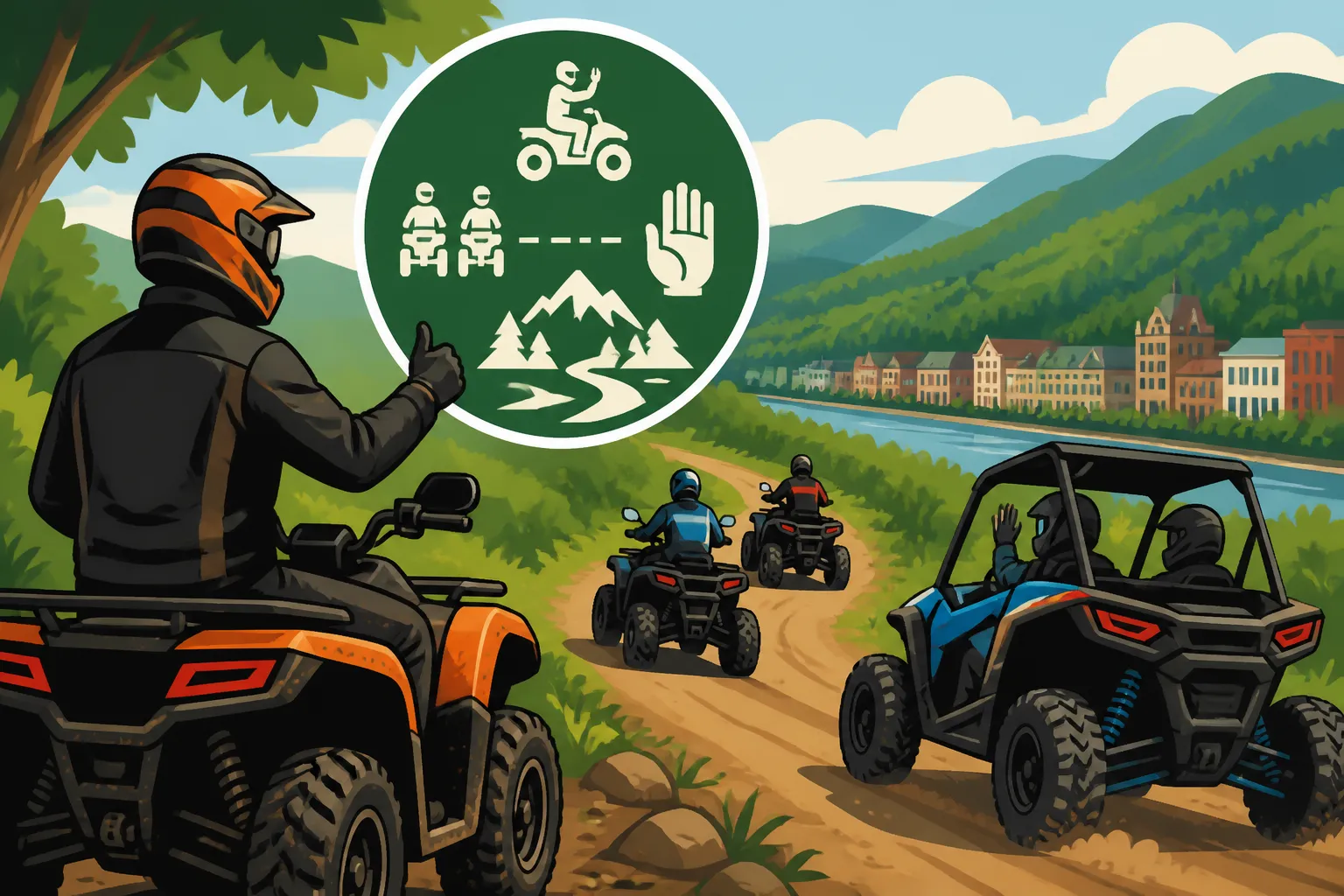
Before your group even leaves the trailhead for town, hold a brief huddle. Discuss the plan: which town you're heading to, where you'll park, where you'll eat, and what the expectations are for in-town riding. Designate a lead rider and a tail rider, and ensure everyone knows who they are. Review hand signals or radio protocols for communicating stops, turns, or hazards. It's also a great time to reiterate the importance of slowing down, staying single file if needed, and being extra courteous to pedestrians and other vehicles. Having a clear plan minimizes confusion and helps keep the entire group together and respectful. For larger groups, consider having a smaller "scout" group go ahead to secure parking or check conditions.
On-Trail and In-Town Communication
While out on the trail, radios (like those many riders mount using SuperATV hardware), helmet comms, or even simple hand signals are essential. This becomes even more critical once you hit the pavement. The lead rider should communicate upcoming turns, stops, or potential hazards like heavy traffic. The tail rider can alert the group to any stragglers or issues at the back. When you're in town, the ambient noise from traffic and pedestrians can make verbal communication difficult, so established non-verbal cues or reliable radio systems are invaluable. Quick, concise communication helps the entire group move as a cohesive unit, preventing gaps that might encourage other vehicles to cut in, or riders from getting separated at busy intersections.
Handling Breakdowns or Separations
Even with the best planning, things can go wrong. A machine might break down, or a rider might get separated from the group. Have a designated meeting point in town in case of separation, like a specific gas station or landmark. If a breakdown occurs, the entire group doesn't need to stop and block traffic. The lead rider should be notified, and perhaps one or two support riders can stay behind while the rest of the group proceeds to the pre-determined meeting point. Having a basic toolkit and some spare parts, perhaps even some robust recovery gear that you might find from manufacturers like SuperATV, can often get a minor issue fixed quickly without needing external help. Always make sure everyone has a way to contact each other by phone if radios aren't working, and carry a paper map or a downloaded digital map with key waypoints marked.
Being a Good Ambassador for the Sport
Ultimately, our behavior in West Virginia trail towns reflects on the entire ATV and UTV community. Every interaction is an opportunity to strengthen the bond between riders and residents, or unfortunately, to damage it.
Interacting with Locals and Other Riders
A simple wave, a friendly "hello," or a thank you can go a long way. When you stop at a local diner or shop, be polite and respectful. Ask about local favorites, thank them for their hospitality, and engage positively. Remember that many locals work hard to make their towns welcoming for riders. Similarly, be courteous to other riders you encounter. We're all out there for a good time, and a little camaraderie can enhance the experience for everyone. If you see another group struggling, offer a hand. If you observe someone else breaking rules, a polite, friendly word can often be more effective than a scolding. We should strive to project an image of responsible, friendly adventurers who appreciate the unique access West Virginia offers. This positive engagement is vital for [How a West Virginia Town Becomes ATV-Friendly] and staying that way.
Leaving No Trace and Trail Preservation
"Leave No Trace" isn't just for the backcountry; it applies to trail towns too. Don't litter, whether it's on the street or in a parking lot. Dispose of your trash properly. If you brought it in, take it out. This also extends to how you ride on connector trails leading into and out of town. Stick to marked routes, avoid riding on private property, and respect all signage. The maintenance of the trails themselves and the goodwill of landowners are crucial to our sport. [Hatfield-McCoy Trail Etiquette on Shared Routes] starts even before you hit the main trail system, extending to the communities that support it. By consistently demonstrating respect for the environment and the community, we ensure that West Virginia's welcoming spirit towards off-road enthusiasts continues for years to come.
Here's a quick summary of essential dos and don'ts for group riding in West Virginia trail towns:
| Good Group Riding Practices In Town | Bad Group Riding Practices In Town |
|---|---|
| Adhere strictly to posted speed limits | Speeding or aggressive driving |
| Maintain safe following distances | Tailgating or riding bumper-to-bumper |
| Keep engine noise to a minimum | Unnecessary revving or loud aftermarket exhausts |
| Use designated ATV parking areas | Blocking storefronts, driveways, or fire hydrants |
| Wipe off excessive mud before entering shops | Tracking mud and dirt indoors |
| Plan fuel stops to avoid congestion | Hogging multiple pumps at gas stations |
| Communicate clearly within your group | Dispersed, uncoordinated riding |
| Offer a friendly wave or "thank you" to locals | Ignoring or being rude to residents |
| Carry out all trash | Littering on streets or in parking lots |
| Designate a lead and tail rider | No clear leadership or organization |
| Have a meeting point for separations | No plan for lost or broken-down riders |
| Support local businesses | Bringing all your own supplies from outside town |
Disclaimer
This article is for general informational purposes only and does not constitute professional advice. Laws, prices and regulations vary by location and change over time. Consult a qualified professional for guidance on your specific situation.