Where West Virginia Trail Connectors Cross a Public Road
Riding the incredible network of trails in West Virginia offers some of the most exhilarating experiences an ATV or UTV enthusiast could ask for. But let's be honest, navigating the rules for when those fantastic trail systems meet up with public roads can feel like trying to solve a puzzle with half the pieces missing. You're out there for adventure, not to worry about accidentally breaking the law or putting yourself and others in a risky situation just trying to get from one epic trail section to another. This guide is here to clear up all that confusion about West Virginia's trail connectors, helping you understand exactly where, when, and how you can legally and safely cross or ride public roads, ensuring your rides are nothing but smooth and thrilling.
Understanding West Virginia's Core ATV Road Rules
West Virginia has carved out a unique space for off-road enthusiasts, but with that freedom comes a very specific set of rules, especially when your knobby tires hit the pavement. It's not a free-for-all, and understanding these foundational guidelines is crucial for every rider, whether you're a local or visiting from out of state.
The Crucial 10-Mile, 25 MPH Limit
For most riders with standard ATVs and UTVs (meaning they aren't fully street-legal as a Special Purpose Vehicle), the most important rule to commit to memory is the "10-mile, 25 mph" limit. This isn't just a suggestion; it's the law that governs how far and how fast you can operate your machine on public roads to connect trail sections or access services. You're allowed to travel up to 10 miles, one way, on an otherwise permissible public road, and your speed cannot exceed 25 miles per hour. This rule is designed for convenience, allowing riders to bridge gaps between trails, grab a bite to eat in a trail town, or refuel their machines. It's not intended for joyriding on public highways. Exceeding this limit, even by a little, can quickly turn a fun day into a costly one, earning you a citation from a local deputy or State Trooper. Many riders, especially those new to the state, often overlook one part of this rule or the other, thinking they can go a bit further or faster if the road is clear, but that's a gamble you really don't want to take.
Designated Trail Connector Roads and Signage
Thankfully, West Virginia's trail systems, particularly the Hatfield-McCoy Trails, do a fantastic job of integrating public roads into their network through designated trail connectors. These aren't just random stretches of asphalt; they are specifically identified roads where ATV and UTV travel is permitted under certain conditions. You'll often see distinct signage, sometimes with the Hatfield-McCoy logo, indicating that you are entering or exiting a trail connector route. These signs are your best friend! They confirm that you're on a path where you should be, but remember, the 10-mile, 25 mph rule still applies unless otherwise posted or your machine has a specific [West Virginia's Street-Legal Special Purpose Vehicle Plate]. These roads typically weave through the small towns and rural areas of southern West Virginia, acting as arteries that link one trail system to another, or connect riders to gas stations, restaurants, and lodging. Always keep an eye out for these markers and respect any additional local speed limits or rules posted.
The Special Purpose Vehicle (SPV) Exception
While most ATVs and UTVs operate under the 10-mile, 25 mph rule on connectors, West Virginia also offers a path for making your machine truly "street legal" through a Special Purpose Vehicle (SPV) plate. An SPV is essentially an off-highway vehicle that has been modified with specific equipment to meet highway safety standards, allowing it to be registered and titled for more extensive public road use. This is a game-changer for some riders, as it removes the 10-mile distance restriction and allows for higher speeds on roads with a centerline limit up to 20-35 mph, subject to specific town ordinances. However, converting to an SPV involves a significant investment in parts—think DOT-approved tires, turn signals, mirrors, a horn, a windshield, and more—and a rigorous inspection process. It also requires specific insurance. If you're considering this route, you'll want to dive deep into the requirements, as it's a completely different category of road use than simply riding a connector. For many riders, the convenience of just connecting trails makes the SPV conversion unnecessary, but for those who want maximum flexibility, it's a viable option. You can find more details about what's involved in [Registering a Street-Legal Special Purpose Vehicle in West Virginia].
Navigating Common Trail Connector Scenarios
Understanding the rules in theory is one thing, but knowing how to apply them in real-world situations, especially when you're deep in the mountains and just trying to get to the next adventure, is where the rubber meets the road—literally. West Virginia's landscape presents a variety of scenarios for trail connectors, and each requires a bit of awareness.
Crossing Major Highways and Intersections
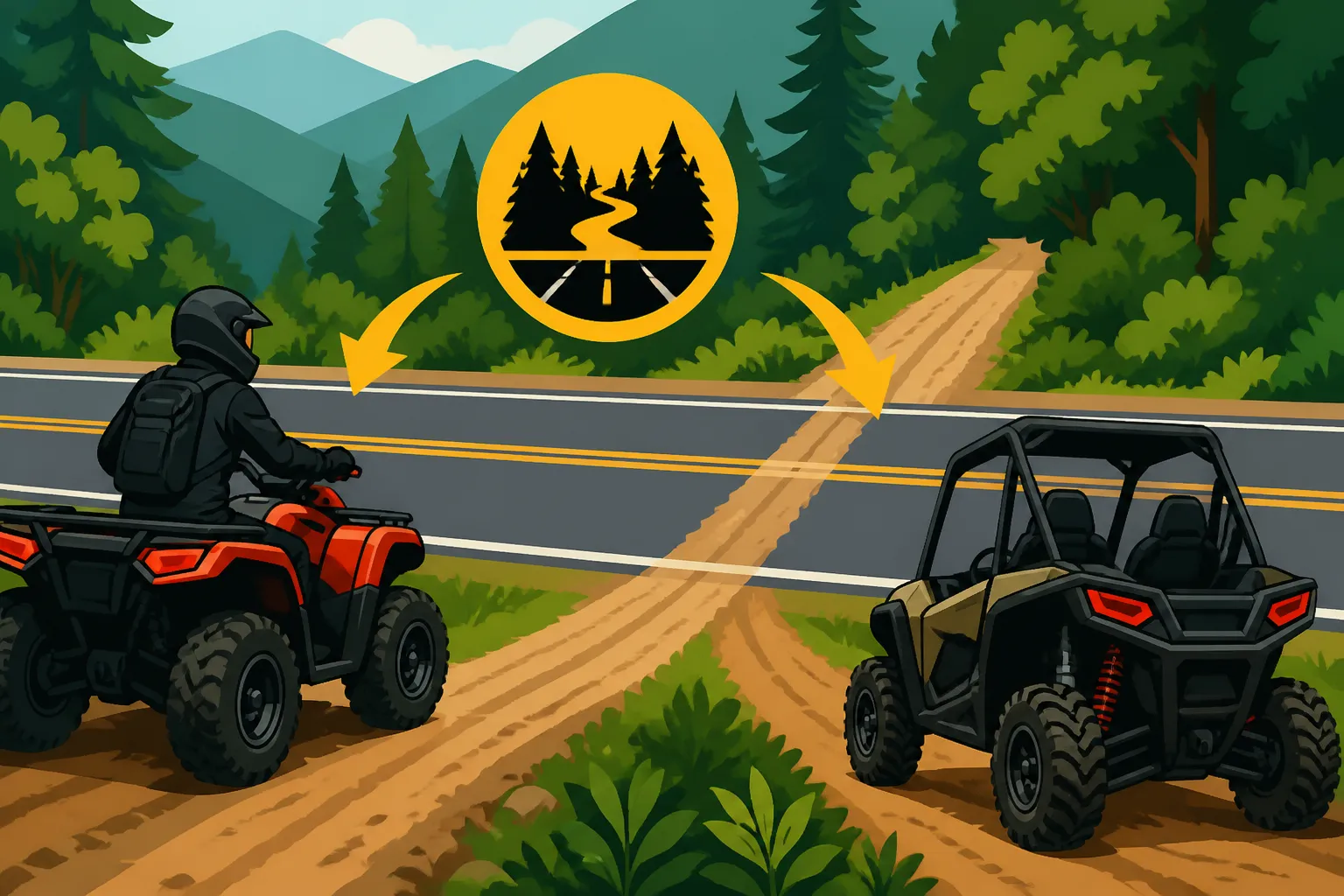
One of the most intimidating scenarios for ATV and UTV riders is encountering a major highway or a busy intersection. While the spirit of trail connectors is to minimize your time on high-traffic roads, sometimes a crossing is unavoidable. When you approach such a crossing, treat it with the utmost respect and caution. Always come to a complete stop, look both ways multiple times, and yield to all vehicular traffic. Remember, you are operating a machine that is much less visible to larger vehicles, and your reaction time might be different. Many of these intersections will be clearly marked as crossing points for off-road vehicles. Never attempt to cross a multi-lane highway or a particularly dangerous intersection if you don't feel it's safe. It's always better to wait for a clear opening, even if it takes a few extra minutes. When riding in a group, it’s a good practice to have the lead rider ensure the intersection is clear before the entire group proceeds, and to cross in an orderly fashion without creating a traffic hazard.
Riding Through West Virginia's Trail Towns
The charm of West Virginia's trail towns is that they welcome ATV and UTV riders with open arms, often allowing you to ride your machine directly on their main streets to access local businesses. Towns like Gilbert, Man, and Matewan have become hubs where riders can seamlessly transition from rugged trails to paved roads for food, fuel, and lodging. This is where the 10-mile, 25 mph rule is most frequently applied. While you're on these town streets, you are expected to follow all traffic laws just like any other vehicle: obey stop signs, traffic lights, and posted speed limits (which are often lower than 25 mph in town).
For instance, if you're [Riding Through Gilbert on an ATV], you'll experience firsthand how the trails lead right into town. This access is a huge part of the Hatfield-McCoy experience, but it relies on riders being responsible. You'll see other vehicles, pedestrians, and even kids playing, so vigilance is key. It's a privilege to ride through these towns, and local law enforcement actively patrols to ensure everyone is adhering to the rules, both for safety and to maintain the good relationship between riders and residents.
Connecting Private Property to Public Trails
Many riders choose to stay in cabins, RV parks, or homes located just off the main trail system. This often means you'll need to use a short stretch of public road to get from your private property to the nearest trail access point. This is a perfectly legal use of a trail connector, falling under the same 10-mile, 25 mph guidelines. However, you'll need to be especially mindful of local residential traffic. Neighbors are used to seeing ATVs, but they also expect riders to be courteous and careful, especially in quieter areas.
Ensure your machine has appropriate lighting, even during the day, for visibility. If you're staying at a rental property, always confirm the best and safest route to the nearest trail entrance with the property owner or a local map. Some property owners might even have private roads that directly connect to the trails, bypassing public road use altogether, which is ideal. For those who do need to hit the pavement, keep your speed down, stay to the right, and be aware of driveways and mailboxes, as residents might not always expect an ATV right outside their home.
Safety and Equipment Requirements for Road Sections
Even for short stints on public roads, safety isn't just a good idea—it's paramount. The rules of the road apply, and your machine needs to be adequately equipped, even if it's not a full-blown SPV. Overlooking these details can lead to accidents or citations, quickly dampening your ride.
Essential Safety Gear for Public Road Use
When you're riding your ATV or UTV on any public road, even for a brief connector, the state's safety gear requirements don't magically disappear. While adults aren't strictly mandated to wear helmets on private lands or dedicated trails, the rules change when you hit the pavement. For all riders under the age of 18, a helmet is absolutely required, regardless of whether you're on a trail or a connector road. Beyond that, eye protection is crucial for everyone. Think about debris, dust, or even insects that can impair your vision, especially at speeds where you're exposed to traffic.
Many experienced riders choose to wear helmets on all public road sections, even as adults, simply because of the increased risk of interacting with other vehicles. A good, DOT-approved helmet and sturdy goggles or a face shield are minimal investments for your personal safety. Don't be the rider who thinks "it's just a short distance" and skips the gear. That short distance is often where unexpected incidents occur. It's always a smart move to be prepared, and you can find comprehensive information on rules like [West Virginia Helmet Rules for Riders Under 18].
Machine Equipment for Road Crossings
While your non-SPV ATV or UTV isn't expected to meet all highway standards for connectors, there are still some basic equipment expectations for visibility and signaling. Your machine must have working headlights and taillights, especially if there's any chance you'll be on a road during dusk, dawn, or bad weather. Think about it: a distracted driver might not see you without adequate illumination. A functioning brake light is also critical to signal your intentions to traffic behind you.
Many riders, even those not converting to full SPVs, proactively add accessories to enhance their visibility and safety on these road sections. For instance, aftermarket turn signal kits can be incredibly helpful for clearly indicating turns at intersections. A horn, while not explicitly required for standard ATVs on connectors, is an excellent safety addition to alert others to your presence. Reputable brands like SuperATV offer a wide range of lighting, mirror, and signaling solutions that are specifically designed for off-road machines but serve a vital safety purpose on shared roads. Investing in brighter LED headlights or more robust mirrors from SuperATV can make a significant difference in how well you see and are seen by other vehicles.
Group Ride Etiquette on Public Roads
Riding in a group is part of the fun, but when you transition to a public road connector, group etiquette becomes incredibly important for safety and traffic flow. The general rule is to ride in a single file line, as far to the right of the road as safely possible. Avoid riding two or three abreast, which can impede traffic and make your group appear larger and more intimidating to other drivers.
When crossing intersections or making turns, maintain staggered spacing, but ensure the whole group can cross safely without breaking apart in the middle of traffic. It's often helpful for the lead rider to clearly signal intentions, and for following riders to pass along those signals. Keep an eye on the rider behind you; if they fall back, slow down the pace so the group stays together. Remember, you're sharing the road with cars, trucks, and often large coal haulers. Courtesy and predictability are key to a smooth and safe experience for everyone. Never assume another driver sees you, and always be prepared to react defensively.
Avoiding Penalties and Misunderstandings
Even with the best intentions, it's easy to make a mistake when the rules feel like a patchwork quilt. But ignorance of the law is rarely an excuse, and West Virginia law enforcement takes ATV and UTV road safety seriously. Knowing the common pitfalls can help you avoid unwelcome interruptions to your ride.
Common Mistakes Riders Make
It’s surprising how many riders, even those who visit West Virginia frequently, get caught up by some common misunderstandings. The biggest one is often the 10-mile limit. It's not 10 miles "as the crow flies"; it's 10 road miles, one way. Many riders inadvertently exceed this limit by going a few miles into a town, running an errand, and then riding back, thinking the return trip resets the clock. It doesn't. Your round trip on public roads should really stay within that 10-mile one-way scope. Another common error is exceeding the 25 mph speed limit. It’s easy to let the throttle slip when the road is clear, but that’s a quick way to get pulled over.
Another mistake is assuming all public roads are fair game. While trail towns have open access, you can't just jump on any state highway or interstate. Connectors are usually secondary roads, clearly marked. Riding on unmarked or prohibited roads is a sure way to incur fines. Finally, failing to have a valid Hatfield-McCoy Trails permit (if riding on that system) or proper safety gear for minors on public roads are frequent issues. Don't let a small oversight turn into a big headache. For those looking to upgrade their machines for improved road handling and safety, many riders rely on aftermarket parts from companies like SuperATV to address things like better tires or stronger suspension for the varied terrain.
Penalties for Non-Compliance
The consequences of not adhering to West Virginia's ATV and UTV road rules can range from a simple warning to significant fines, impoundment of your machine, or even more severe legal repercussions depending on the infraction. A basic citation for exceeding the 25 mph speed limit or the 10-mile distance could set you back a few hundred dollars. If you're caught riding on a clearly prohibited road, or if your machine lacks required safety equipment, the penalties can escalate. Law enforcement officials in the trail towns and surrounding counties are well-versed in ATV laws, and they're not shy about enforcing them to maintain safety for both riders and local residents.
Beyond monetary fines, repeated violations or reckless behavior can lead to your trail permit being revoked, effectively ending your riding trip. Imagine having your machine impounded miles from home because you decided to push the limits – that's a logistical and financial nightmare. It’s far better to err on the side of caution and always follow the posted rules. You can learn more about general consequences in resources like [West Virginia Penalties for an Untitled ATV], though specific road-use penalties can vary.
Checking Local Ordinances
While West Virginia has overarching state laws governing ATV and UTV use on public roads, individual counties and municipalities have the authority to enact their own, more restrictive ordinances. What's perfectly legal in one trail town might have a slight variation or additional stipulation in another. For example, some towns might have specific hours during which ATV travel is permitted on main streets, or they might designate certain blocks as off-limits.
Before you plan your route through a new area, especially if it involves extensive road sections within a town, it's always a smart move to quickly check the local city or county website for any specific ATV ordinances. The Hatfield-McCoy Trails website often provides updates or links to local rules for their trail towns, but it's ultimately the rider's responsibility to know and abide by the local laws. A quick phone call to the local sheriff's department or city hall, or even a chat with your lodging provider, can save you a lot of trouble and ensure you have a smooth, enjoyable, and fully legal riding experience in the Mountain State.
| Feature | Standard ATV/UTV on Connector Road (Limited Use) | Street-Legal Special Purpose Vehicle (SPV) |
|---|---|---|
| Purpose | Connect trail sections, access services | Regular road travel, extended use |
| Speed Limit | 25 mph maximum | Posted road speed limits (up to 20-35 mph centerline roads, check local) |
| Distance Limit | 10 miles maximum (one way) | None (on approved roads) |
| Required Equipment (Min) | Helmet (under 18), Eye Protection, Head/Taillights, Spark Arrestor | Headlights, Taillights, Brake Lights, Turn Signals, Horn, Mirrors, DOT Tires, Windshield, Seatbelts |
| License/Permit | Hatfield-McCoy Trail Permit (if applicable) | DMV-issued SPV Plate & Registration, Driver's License |
| Insurance | Trail Permit rules may apply, highly recommended personal liability | Mandated liability insurance |
| Primary Use Location | Unmarked secondary roads, marked trail connectors | All public roads where legal, including some state routes |
Disclaimer
This article is for general informational purposes only and does not constitute professional advice. Laws, prices and regulations vary by location and change over time. Consult a qualified professional for guidance on your specific situation.