Fog and Visibility on a Mountain Road Ride
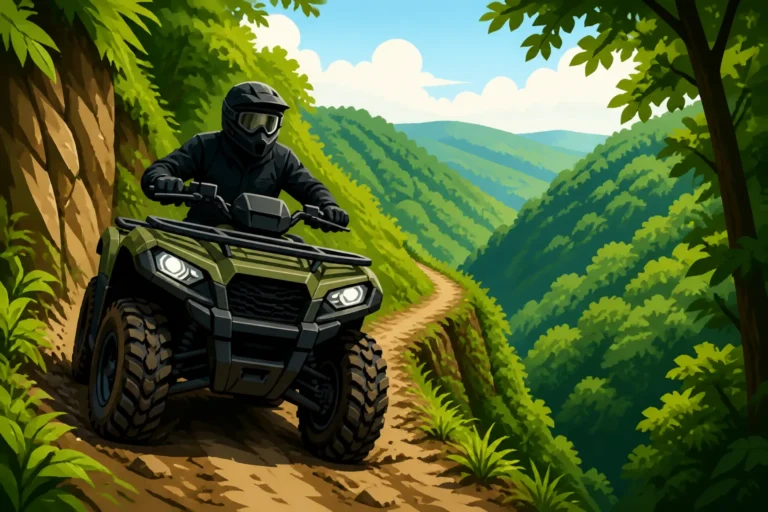
Riding your ATV or UTV through West Virginia's stunning mountain roads offers unparalleled freedom, but few things can turn a beautiful day into a white-knuckle experience faster than dense fog. Suddenly, those familiar winding paths become treacherous, and visibility vanishes. This guide will help you understand the unique challenges of fog in our mountains, how to prepare your machine and yourself, and essential strategies for staying safe when the 'soup' rolls in.
The Unique Challenges of Mountain Fog in West Virginia
West Virginia is famous for its majestic mountains, deep hollows, and winding roads. While beautiful, this geography creates a perfect environment for fog to develop quickly and unpredictably, posing significant risks for ATV and UTV riders who might be sharing the road or navigating trail connectors. You might start your day with clear skies, only to find yourself enveloped in a thick blanket of white just a few miles down the road. Understanding why this happens is the first step toward staying safe.
How West Virginia's Terrain Amplifies Fog Hazards
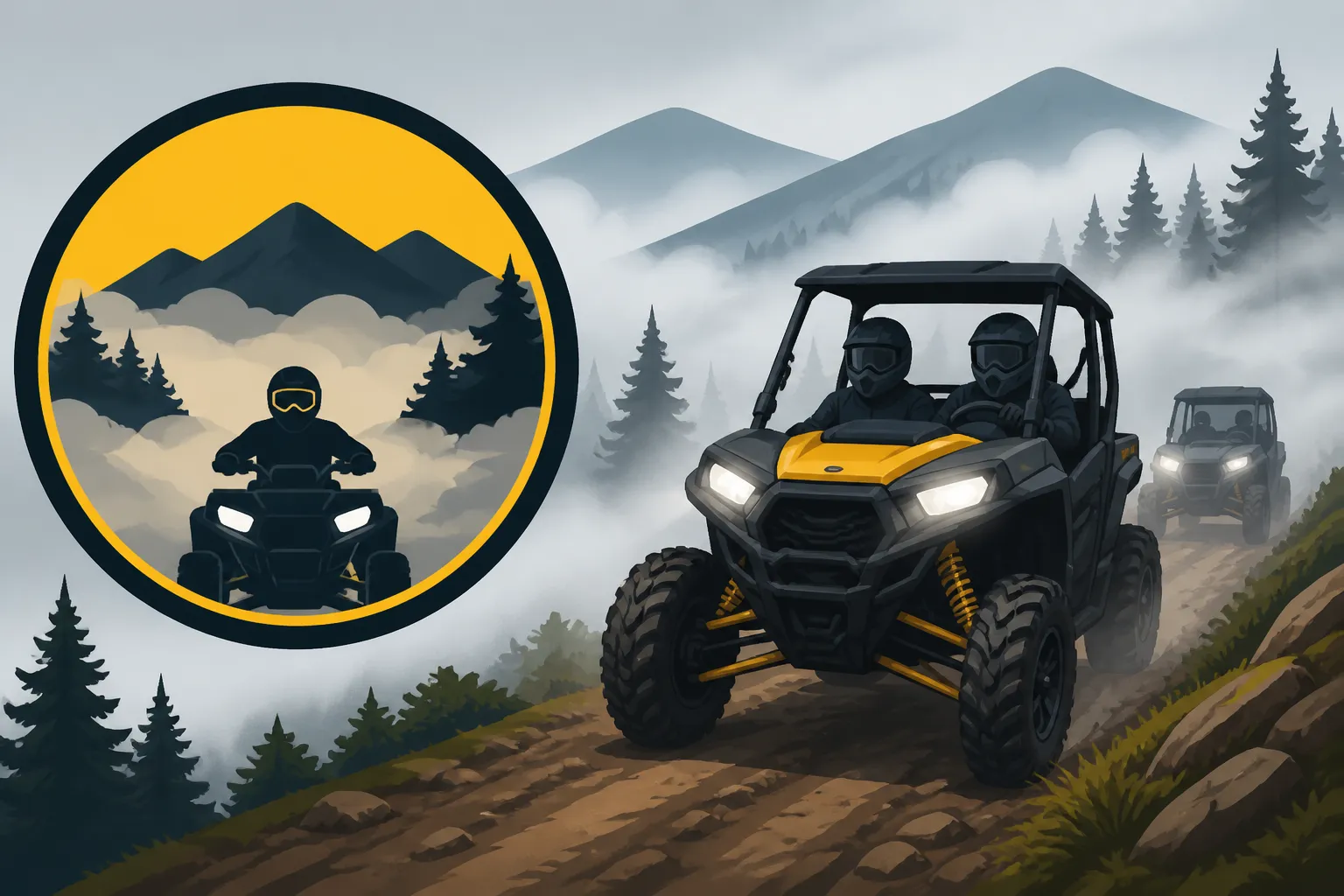
Our state's topography isn't just scenic; it's a prime generator of localized weather phenomena, especially fog. The constant undulations of mountains and valleys mean that cool, moist air can get trapped in lower elevations or along riverbeds. As you descend from a sun-drenched ridge into a deep hollow, the temperature can drop sharply, causing condensation to form rapidly. Imagine cresting a ridge near the [Rockhouse Trail System] and dropping into a deep hollow, expecting clear views, only to be met by a wall of white. This isn't just an inconvenience; it can be profoundly disorienting, making it difficult to judge distance, read turns, and even stay on your side of the road, particularly on narrow, unlined back roads.
Furthermore, our heavily forested areas can exacerbate the issue. Trees release moisture and reduce sunlight penetration, keeping ground temperatures cooler and humidity higher, which are ideal conditions for fog formation and persistence. This means that even on a generally clear day, pockets of dense fog can cling to shaded, low-lying sections of road for extended periods, surprising riders who might not be prepared for such an abrupt change in conditions. The visual cues you rely on – distant landmarks, the edge of the road, oncoming headlights – can simply vanish.
Types of Fog You'll Encounter
Not all fog is created equal, and understanding the common types you might encounter in West Virginia's mountains can help you anticipate conditions.
-
Radiation Fog: This is perhaps the most common type of fog in our region. It forms on clear, calm nights when the ground cools rapidly, chilling the air directly above it to its dew point. As a rider, you'll often encounter radiation fog in the early morning hours, particularly in valleys and low-lying areas. It tends to dissipate as the sun rises and warms the air. You might be riding along a county route one moment, enjoying the crisp morning air, only for a dense patch of ground fog to suddenly envelop you as you drop into a low area. This is a common sight in places like those back roads connecting to the [Pinnacle Creek Trail System].
-
Advection Fog: This type forms when warm, moist air moves horizontally over a cooler surface. While less common than radiation fog in the mountains, it can occur, especially if warm, humid air from lower elevations or river valleys pushes up into cooler mountain air. Advection fog can be very dense and widespread, often lasting longer than radiation fog. It’s the kind of fog that feels heavy and persistent, making even short distances feel like miles.
-
Upslope Fog: Unique to mountainous regions, upslope fog occurs when moist air is forced to rise up the side of a mountain or hill. As the air rises, it cools, and the moisture condenses into fog. This means you could be riding into the fog as you climb in elevation, even if the valleys below are clear. This type of fog can be particularly treacherous because it often covers vast sections of a mountainside, limiting visibility for extended periods and making it hard to see drops or sudden turns on steep grades.
The critical takeaway is that mountain fog in West Virginia is often localized and can change rapidly. What starts as a light mist can become a thick wall in minutes, demanding your full attention and preparedness.
Preparing Your ATV or UTV for Low Visibility
When you're planning a ride, especially one that takes you onto public roads or through areas known for varied terrain, preparing your machine for potential low-visibility conditions is just as important as packing your lunch. You can't control the weather, but you can control how ready you are for it.
Essential Lighting Upgrades and Maintenance
Your machine's lighting is your primary defense against invisibility in fog. Stock headlights and taillights are a good start, but for West Virginia's unpredictable mountain roads, they might not be enough.
-
Headlights and Taillights: First and foremost, ensure all your factory lights are functioning perfectly. Check your headlights (high and low beam), taillights, and brake lights. A burned-out bulb means a significant reduction in your visibility to others, and a huge risk to your safety. These are critical components of the [Lights Required After Dark in West Virginia].
-
Auxiliary Lighting: This is where you can make a real difference. Adding auxiliary LED light bars or cube lights can dramatically improve your ability to see and be seen. Unlike typical driving lights, which can reflect glare back at you in fog, some auxiliary lights are designed to cut through dense atmospheric conditions. For serious riders, investing in high-quality LED light bars or cube lights, perhaps from a brand like SuperATV, can make a world of difference. Their robust designs are built to cut through the darkest nights and, more importantly, the densest fog. Consider amber-tinted fog lights, which are often more effective in reducing glare and improving contrast in foggy conditions than white lights. Mount them low on your machine for the best effect.
-
Reflective Tape: Don't underestimate the power of passive visibility. Applying reflective tape to the front, sides, and rear of your ATV or UTV can significantly increase its profile when hit by another vehicle's headlights. Even a simple strip can make a critical difference. Think of it as an extra layer of protection, particularly if you are pulled over or traveling slowly on a road where [Reflectors on a Road-Ridden Quad] are a basic safety measure.
Visibility Aids for Riders and Machines
Beyond your machine's built-in lights, other aids can dramatically improve safety.
-
Flags: A tall, brightly colored flag is more than just a trail accessory; it's a critical visibility aid, especially if you're riding through dense fog on a public road where others might not expect to see you. The flag's height means it might be visible above low-lying fog, giving oncoming traffic a crucial heads-up.
-
Reflective Gear for Riders: Your riding gear should prioritize visibility. Brightly colored jackets, helmets, and even gloves are essential. Many modern riding jackets incorporate reflective panels, which are invaluable in low-light and foggy conditions. If your primary gear isn't high-visibility, consider a reflective vest to wear over it. This is particularly important if you ever need to dismount your machine on the side of a road in foggy conditions.
-
Horn: A working horn is not just for startling wildlife. In dense fog, sound can travel further than light. A quick tap of the horn before entering a blind curve or approaching an intersection can alert unseen drivers or riders to your presence. Ensure it's loud and easily accessible.
Gear for Your Machine and Yourself
Beyond the lights, a few other items can make your ride safer and more comfortable when fog descends.
-
Windshield/Goggles: Having a clear [Safety Glass Windshield or Goggles] is non-negotiable. Even a slight film of dust or a few smudges can become a major visibility obstruction when magnified by the diffuse light of fog. Carry a clean microfiber cloth and some non-streaking cleaner to ensure your windshield or goggle lenses are spotless. For those using goggles, anti-fog treatments can be a lifesaver. This falls under the general [Helmet and Eye Protection Rules in West Virginia] for trail and road riding.
-
GPS/Navigation Device: While you should never rely solely on a GPS for navigation in dense fog, a reliable device can help you maintain your bearings when visual cues disappear. Knowing your general direction or the upcoming turns can provide a much-needed sense of reassurance. SuperATV also offers sturdy mounts for navigation devices, ensuring your GPS stays secure even on rough terrain. Download offline maps beforehand, as cell service can be spotty in many of West Virginia's remote areas.
-
Communication Device: If riding with a group, two-way radios or helmet communication systems can be invaluable. Being able to verbally warn fellow riders about rapidly changing conditions, obstacles, or when you're slowing down can prevent accidents. Even a cell phone for emergency calls is crucial, but remember its limitations in areas without service.
Safe Riding Strategies When Fog Rolls In
Once the fog starts to roll in, no amount of preparation can replace smart, defensive riding. The key is to reduce your speed, maximize your awareness, and be prepared for the unexpected.
Adjusting Your Speed and Following Distance
This is arguably the most critical adjustment you'll make in foggy conditions. The old adage "only outrun your headlights" takes on a whole new meaning in thick fog. You need to be able to stop well within the distance you can see.
-
Slow Down Dramatically: Reduce your speed to a crawl if necessary. What feels slow in clear conditions might be too fast in dense fog. Focus on maintaining control and being able to react instantly to anything that appears in your limited field of vision. This directly impacts your adherence to the [West Virginia ATV Speed Limit on a Public Road], which demands even greater caution in adverse conditions.
-
Increase Following Distance: If you're riding with others, spread out much more than usual. The lead rider should be visible to the one behind, but not so close that a sudden stop by the front machine causes a pile-up. Give yourself ample braking room. In dense fog, the sound of an engine can be deceptive, making a machine seem closer or further away than it actually is.
-
Use Low Beams and Fog Lights: High beams will only reflect light back at you, creating a blinding wall of white. Use your low beams and any dedicated fog lights you have. If you have amber auxiliary lights, turn them on. The goal is to illuminate the road directly in front of you without creating excessive glare.
-
Stay Focused on the Road Edge: If you can see the white line or the shoulder of the road, use it as your guide. Resist the urge to stare directly into the fog, as this can lead to "white tunnel vision" and make it harder to react to objects in your immediate path.
Navigating Road Crossings and Intersections
Intersections, already a point of high risk in normal conditions, become exponentially more dangerous in fog.
-
Approach with Extreme Caution: Slow down well in advance of any intersection. If possible, listen for oncoming traffic before you can see it. Roll down your UTV windows if you have them, or pause your music to fully engage your sense of hearing. When approaching any intersection, especially those blind mountain curves you often find on a [West Virginia County Route], assume cross-traffic cannot see you.
-
Stop, Look, and Listen: Don't just slow down; come to a complete stop at stop signs or traffic lights if visibility is truly poor. Edge out slowly, looking as far as you possibly can in each direction before proceeding. Make eye contact with any drivers you see, or assume they haven't seen you. This heightened awareness is crucial when [Crossing a West Virginia Highway on an ATV].
-
Signal Clearly: Use your turn signals well in advance if you're making a turn. Even if others can't see your machine, the flashing light might catch their attention. If riding with a group, communicate your intentions verbally or through pre-arranged hand signals.
-
Avoid Unnecessary Stops in the Road: Try to avoid stopping in the middle of a lane, even briefly. If you need to pull over, find the safest possible spot completely off the road.
What to Do When Visibility Drops to Zero
There will be times when the fog becomes so thick that even the best lights feel useless. When you literally can't see your hand in front of your face, pushing forward is not an option.
-
Pull Over Safely: If you find yourself in a "whiteout" situation where you cannot see more than a few feet in front of your machine, the safest option is to pull completely off the road or trail, if possible, into a wide, safe area. If you're on a narrow [Riding a Narrow West Virginia Hollow Road on an ATV], this might mean finding the widest shoulder or even pulling into a driveway or parking area if one is immediately available.
-
Engage Hazard Lights: Turn on your hazard lights (four-way flashers) to make your machine as visible as possible to any traffic that might also be crawling through the fog. This creates a blinking signal that stands out more than steady taillights.
-
Wait It Out: Fog, especially radiation fog, often dissipates as the day progresses. It's frustrating to pause a ride, but trying to push through truly zero visibility is simply not worth the risk to yourself, your passengers, or your machine. Take a moment, check your maps, drink some water, and wait for conditions to improve.
-
Communicate with Your Group: If you're riding with others, ensure everyone knows the plan. If you pull over, make sure the rest of your group is aware and can safely join you. Maintain communication through radios or by carefully walking back to the next machine if necessary.
| Item | Purpose | Why It Matters in Fog |
|---|---|---|
| Bright LED Headlights | Illuminate path, make you visible to others | Cuts through fog better, extends visibility range |
| Taillights & Brake Lights | Alert following riders/vehicles | Prevents rear-end collisions, especially when slowing |
| Amber Auxiliary Lights | Enhance foreground visibility, reduce glare | Fog lights are often amber to reduce reflected glare |
| Reflective Tape/Decals | Increase machine's passive visibility | Reflects light from other vehicles' headlights |
| Brightly Colored Flag | High-mounted visual cue | Can be seen above low-lying fog by taller vehicles |
| Clean Windshield/Goggles | Unobstructed view for rider | Even a smudge can become a major obstruction in fog |
| Reflective Riding Gear | Makes rider more visible | Critical if you dismount or are separated from machine |
| GPS / Navigation Device | Route guidance | Helps maintain direction when visual cues are lost |
Disclaimer
This article is for general informational purposes only and does not constitute professional advice. Laws, prices and regulations vary by location and change over time. Consult a qualified professional for guidance on your specific situation.