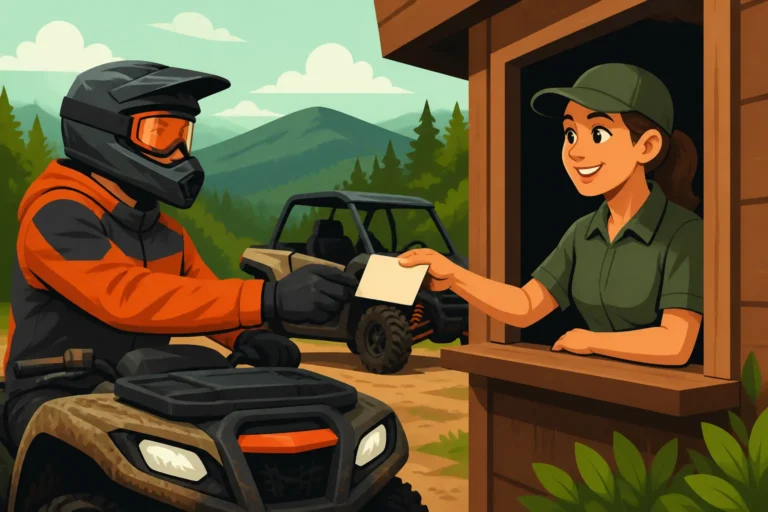
Riding Spearhead Trails and Hatfield-McCoy in One Trip
A trip that includes Spearhead Trails in Virginia and Hatfield-McCoy in West Virginia can deliver two distinct riding experiences, but the permits do not work as one shared pass. Plan for each trail system separately, confirm current access rules before you travel, and trailer your machine between the riding areas rather than assuming the trails connect.
Why one permit does not cover both trail systems
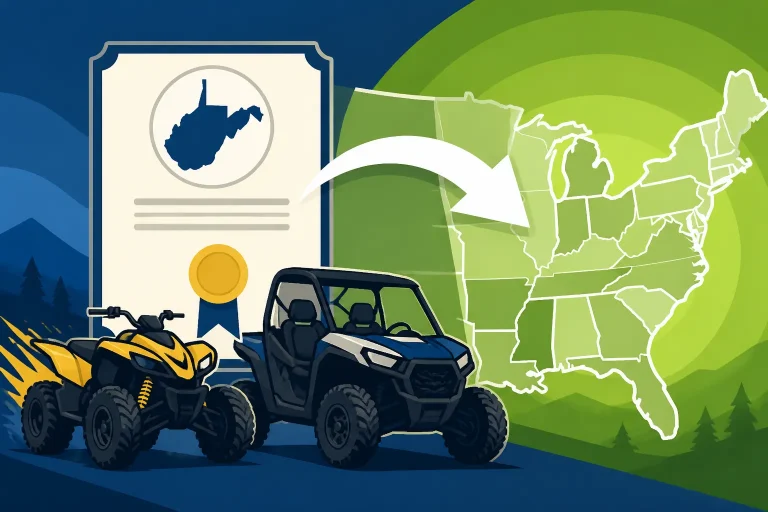
Spearhead Trails and Hatfield-McCoy are separate trail systems in different states. Each has its own access requirements and permit process. A permit for one system should not be treated as permission to ride the other, even if your trip includes both or you bought your permit online before leaving home.
That distinction is the heart of reciprocity: a state registration, out-of-state title, or permit from one trail operator does not automatically satisfy another operator’s requirements. For details on permit differences, see Spearhead Trails Versus Hatfield-McCoy Permits. If you are bringing a machine from another state, Do Other States’ Registrations Work in West Virginia? can help you separate vehicle paperwork from trail access.
| Trip question | Spearhead Trails | Hatfield-McCoy |
|---|---|---|
| Does a permit for the other system cover this one? | Do not assume so; check Spearhead’s current requirements | Do not assume so; check Hatfield-McCoy’s current requirements |
| Where should you confirm the rules? | With Spearhead’s official trail information or permit seller | With Hatfield-McCoy’s official trail information or permit seller |
| What else should you check? | Approved machines, riding rules, permit display, and trail status | Approved machines, riding rules, permit display, and trail status |
| Can you ride directly between the systems? | Plan to trailer between riding areas | Plan to trailer between riding areas |
A permit is access permission for a particular trail system, not a universal vehicle document. It does not by itself prove that your machine meets state titling, insurance, equipment, or road-use requirements. Those questions matter especially if you plan to ride on public roads between lodging, a trailhead, or a town. The trail permit and the machine’s legal status are separate issues.
If you are traveling from outside West Virginia, check Out-of-State Riders on West Virginia Trails before departure. It is also worth reading What a Trail Permit Does Not Cover so you do not mistake trail access for permission to ride wherever you like.
Plan the trip as two separate riding stops
The cleanest approach is to treat Spearhead and Hatfield-McCoy as two separate destinations within one vacation. Choose the systems and trailheads you want to visit, arrange lodging and transport for each stop, and confirm the permit requirements for each before setting out.
Do not plan on riding from one system to the other. The areas are not a continuous trail network, and a trail permit does not authorize travel over public roads, private property, or unmarked routes between them. Use a truck and trailer or another suitable transport method to move your machine. The drive between riding areas can take a meaningful part of the day, depending on your selected trailheads and road conditions, so allow for that in your itinerary.
A practical planning sequence is:
- Pick the trail systems and trailheads. Compare the routes, terrain, machine restrictions, and riding style you want for each stop. Confirm that your machine is allowed on your chosen routes.
- Check each system’s current access rules. Use the official trail information for both systems. Verify permit requirements, where permits can be bought, how they must be displayed, and any rules for riders or passengers in your group.
- Buy or arrange permits separately. A permit purchase for one system does not replace the other system’s permit. If you plan to buy in person, confirm the seller’s location and operating hours before relying on that option.
- Reserve lodging and trailer parking. Ask lodging providers whether they have space for your tow vehicle and trailer, and whether machines can be parked securely. Do not assume that every lodging property has suitable trailer access.
- Plan the transfer day. Allow enough time to load, secure, and transport the machine, check in, and get oriented at the next trailhead. Avoid scheduling a full ride at both ends of a long transfer day.
- Check trail status again before riding. Access can change because of maintenance, weather, closures, or other operating decisions. A permit does not guarantee that a particular route will be open.
For a broader trip framework, see Planning a West Virginia Riding Weekend. If your plan includes several systems within Hatfield-McCoy, One Permit for Every Trail System can help you understand what to verify before assuming a single permit covers all of your intended riding.
Give each permit its own checklist
Keep the two permit processes distinct. Write down the system name, permit instructions, purchase confirmation, display directions, and the contact or official page where you checked current rules. This prevents a common travel mistake: arriving at the second system with paperwork that is valid for the first but not the new destination.
Before leaving home, confirm:
- Whether every machine needs its own permit
- Whether passengers need any separate access authorization
- Whether a permit can be bought online, from a local seller, or at a trailhead
- How and where the permit must be displayed
- Whether the permit is valid for your planned riding dates
- Which machines and tire widths are allowed on the routes you selected
- What helmet, eye-protection, age, or supervision rules apply to your group
- Whether the planned trailhead and routes are open
Do not rely only on an old permit sticker, a previous trip’s paperwork, or a friend’s recollection. Permit instructions and operating details can change. Start with Buying a Permit Online Before You Drive and Where to Buy a Hatfield-McCoy Trail Permit, then confirm the details directly with the relevant trail authority if anything is unclear.
Prepare your machine and paperwork for both stops
Before the trip, make sure your machine is suitable for the routes you intend to ride and that you can identify it if staff ask for documentation. Bring the machine’s title or ownership information and any other paperwork relevant to your situation, but do not assume that showing vehicle documents replaces a trail permit.
A useful travel folder can include:
- Permit confirmations or receipts for each system
- Permit display instructions
- Machine identification and ownership documents
- Insurance information, if applicable
- Emergency contacts and lodging details
- Trail maps or downloaded navigation information
- Any required safety cards or rider documentation
Keep digital copies accessible, but do not rely on a phone as your only source of directions or records. Cell service can be unreliable in remote areas. Download maps before you leave coverage, and consider carrying a paper map as a backup. West Virginia Trail Maps and Signage offers useful context for preparing to navigate the West Virginia portion of the trip.
If you are hauling a machine across state lines, check that it is secured properly and that your trailer and tow vehicle are ready for the trip. Confirm that the machine’s VIN is readable and that its paperwork matches the machine. A mismatch, missing ownership document, or unresolved lien may not stop a trail ride by itself, but it can complicate a sale, insurance claim, or roadside question. For a West Virginia machine brought from elsewhere, West Virginia Title Rules for Out-of-State Machines is a relevant reference.
Treat road riding as a separate question
A trail permit is not a road-use permit. If you intend to ride on public streets or roads near either destination, check the applicable state and local rules separately. Road access can depend on the machine’s classification, equipment, insurance, rider eligibility, and the specific road or town. Do not infer that because a trailhead is near a road, you may ride the road to reach another trailhead or lodging.
For the West Virginia side, start with Riding an ATV on the Road in West Virginia and West Virginia’s Street-Legal Special Purpose Vehicle Plate. These topics concern road use, not permission to ride on Hatfield-McCoy trails. In Virginia, confirm road-use requirements with the appropriate local or state authority rather than relying on a West Virginia permit or trail rule.
The same separation applies to insurance. A trail permit does not establish that your policy covers trail riding, another state, passengers, or a rented machine. Ask your insurer what the policy covers and what exclusions apply. If you are renting, ask the rental provider what is included and what remains your responsibility.
Avoid the mistakes that derail a two-system trip
The most preventable problem is treating the trip as if a single permit, map, or set of rules covers both states. Build in separate checks for each stop, and keep the information easy to access when you arrive.
Common mistakes include:
- Buying only one permit. A permit for Spearhead should not be assumed to cover Hatfield-McCoy, or vice versa. Confirm both separately.
- Waiting until the trailhead to investigate. A seller may not be open when you arrive, or the permit process may require preparation. Check purchase options and hours in advance.
- Assuming the systems connect. Plan to transport your machine between areas. Do not use public roads, private land, or unmarked routes as an improvised trail connection.
- Confusing registration with access. A title or registration document does not replace the trail operator’s permit. A permit also does not resolve titling or road-use requirements.
- Relying on outdated information. Recheck permit details, trail status, display rules, and machine restrictions close to your ride date.
- Ignoring machine fit. Trail width limits and route difficulty can differ. Check that your ATV or UTV is allowed on the routes you intend to ride, particularly if it is a wide side-by-side.
- Overloading the schedule. A transfer day involves loading, towing, unloading, and orientation. Allow time for those tasks rather than planning back-to-back rides as if the trailheads were next door.
- Leaving paperwork behind. Keep confirmations and directions available offline, and follow each system’s instructions for displaying the permit.
A simple two-column checklist helps keep responsibilities straight. Use one column for Spearhead and one for Hatfield-McCoy, then fill in the permit, trailhead, route, lodging, parking, and current status for each. Check each item again before riding. If a rule is ambiguous, ask the relevant trail operator instead of guessing from the other system’s policy.
The best trip plan is usually straightforward: secure the correct permit for each system, transport the machine between destinations, and treat the trail rules as local to the place where you are riding. That approach avoids the false assumption that reciprocity exists and leaves more time for the ride itself.
Disclaimer
This article is for general informational purposes only and does not constitute professional advice. Laws, prices and regulations vary by location and change over time. Consult a qualified professional for guidance on your specific situation.