West Virginia Rules for Riding a County Route
Navigating West Virginia's winding backroads and scenic hollows on your ATV or UTV is a quintessential experience, but figuring out where you can legally ride on public county routes can feel like a confusing maze. Many riders just want to get from their cabin to the trailhead, or even head down to the local gas station, without worrying about breaking the law. This guide aims to cut through that confusion, giving you a clear, detailed understanding of the specific rules and requirements for operating your off-road machine on West Virginia's county roads.
Understanding West Virginia's Core Road Riding Rules for ATVs and UTVs
West Virginia's approach to ATVs and UTVs on public roads is often misunderstood, leading to a lot of frustration and sometimes, costly mistakes. It's not a blanket "yes" or "no" across the board, but rather a set of specific conditions that depend on your machine's setup and the type of road you're on.
The "No Center Line, 10-Mile, 25 MPH" Rule for Non-SPVs
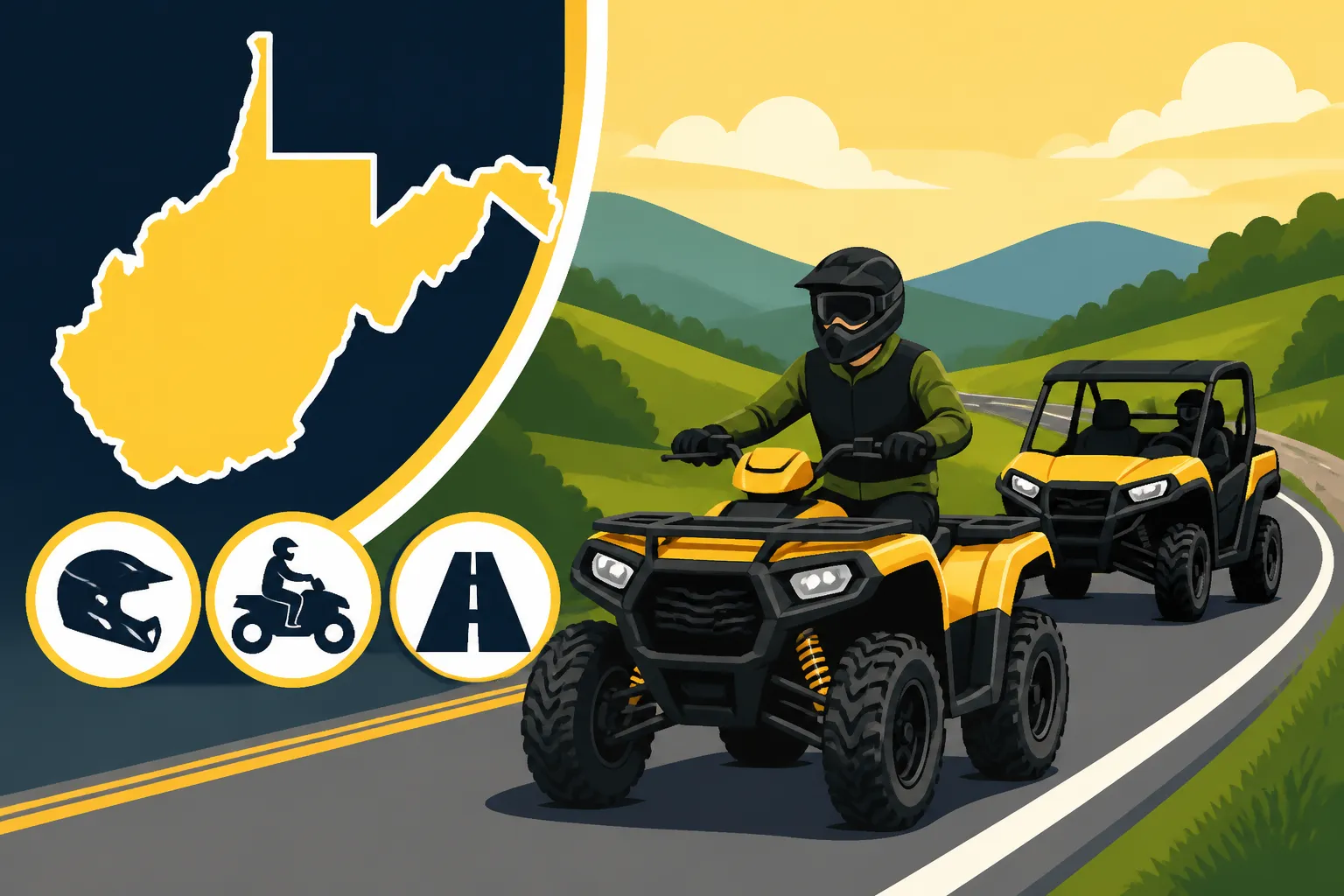
Let's talk about the most common scenario for many riders: that short hop down a quiet country road. West Virginia law allows ATVs and UTVs that are not licensed as Special Purpose Vehicles (SPVs) to operate on certain public roads, but with very strict limitations. The key here is the "no center line" rule. If a public road, including many county routes, does not have a painted center line separating opposing lanes of traffic, you might be able to ride your ATV or UTV on it.
However, this isn't a free pass. Even on these designated roads, there are significant restrictions. You're generally limited to traveling no more than ten miles on such a road, and your speed cannot exceed 25 miles per hour. This rule is truly designed for short transitions, like getting from your lodging directly to an accessible trail system, or crossing a small residential area to reach another section of private land. It's not intended for long-distance travel or commuting. Imagine you're staying at a small campground nestled off a county route with no painted center line. You need to get your machine just a few miles down the road to access the Rockhouse Trail System. Under this specific rule, you could technically make that short journey, as long as you adhere to the speed limit and the ten-mile maximum. It's a precise scenario, and one that often catches riders off guard if they assume all county roads are fair game. For more details on this, check out [West Virginia's 10-Mile, 25 mph Road Rule].
This "no center line" distinction is crucial. Many rural county routes fit this description, making them accessible under these limited conditions. But as soon as a road widens or traffic volume increases, you'll almost certainly encounter a painted center line, immediately making it off-limits for non-SPV machines under this rule. The intent is to keep slower-moving, less protected off-road vehicles off higher-traffic roads where they pose a greater risk to themselves and others. It's about safety and maintaining traffic flow, not about preventing you from enjoying your ride.
The Special Purpose Vehicle (SPV) Plate: The Path to Broader Road Access
For those who want more freedom to ride on West Virginia's public roads, including most county routes, the state offers a pathway: the Special Purpose Vehicle (SPV) plate. This is how you make your ATV or UTV truly "street legal" in West Virginia, opening up access to a wider range of roads, even those with painted center lines. Obtaining an SPV plate means your machine must meet specific equipment and registration requirements, essentially transforming it from a strictly off-road vehicle into one that can safely share the road with other traffic.
An SPV designation allows you to operate on almost any public road in West Virginia, with the notable exception of controlled-access highways (like interstates). This is a huge game-changer for riders who want to explore trail towns, grab supplies, or simply enjoy a scenic drive on paved roads. Without an SPV plate, those opportunities are largely off-limits. Think about the convenience of riding directly from your rental cabin in Gilbert to a restaurant for dinner, or taking a leisurely drive through the countryside to a local overlook, all while staying completely within the law. This is the promise of the SPV. You can learn more about the overall process by reading [West Virginia's Street-Legal Special Purpose Vehicle Plate].
The conversion to an SPV often requires installing a range of aftermarket parts to meet safety standards. You'll need proper headlights, taillights, brake lights, turn signals, mirrors, a windshield, a horn, and often DOT-approved tires. Companies like SuperATV offer a wide array of these components, from full street-legal kits to individual parts, making the conversion process more manageable. While the initial investment might seem significant, the flexibility and legal peace of mind it offers are invaluable for many riders.
Essential Equipment and Rider Requirements for County Route Riding
Whether you're making a short hop on a no-centerline county route or cruising with a full SPV plate, there are non-negotiable requirements for both your machine and yourself as the operator. Ignoring these can lead to serious fines or even worse, dangerous situations.
Mandatory Equipment for Limited Road Use and SPVs
Even for those brief, ten-mile, 25 mph excursions on county routes without a center line, your ATV or UTV isn't allowed to be completely stripped down. While the full list for a Special Purpose Vehicle is extensive, there are baseline safety items you absolutely must have. These include working headlights, taillights, and brake lights. These aren't just for riding after dark; they're crucial for visibility during the day, especially when sharing the road with other vehicles. A functioning horn is also a must, providing a way to signal your presence to pedestrians, cyclists, or other drivers in close quarters. And, of course, your machine must be equipped with a spark arrester to prevent trail fires, a common-sense measure in our beautiful, forested state.
Now, if you decide to go the full "street legal" route and obtain an SPV plate, the equipment list expands significantly. Beyond the basics, your machine will need turn signals for both front and rear, at least one rearview mirror (though many opt for two for better visibility), and often a DOT-approved windshield. These are the kinds of components that companies like SuperATV specialize in, providing robust and reliable options that meet state requirements. Imagine navigating a small trail town like Gilbert or Man; turn signals are absolutely essential for communicating your intentions to other drivers, and proper mirrors help you keep an eye on traffic approaching from behind. These additions make your off-road machine much safer and more predictable in a mixed-traffic environment. For a complete breakdown, consult [Equipment a West Virginia SPV Must Carry].
It's not just about having the equipment; it's about having working equipment. A burnt-out headlight or a non-functional brake light won't cut it. Before you even think about putting a tire on a county route, perform a quick pre-ride check. Test all your lights, honk your horn, and ensure your mirrors are properly adjusted. This simple habit can save you from a ticket and, more importantly, can prevent an accident. Remember, you're responsible for the safe operation of your vehicle, and that includes ensuring it meets all legal requirements.
Licensing, Helmets, and Age Restrictions on Public Roads
Operating any motor vehicle on a public road in West Virginia, even an ATV or UTV, comes with specific requirements for the operator. For starters, anyone driving an ATV or UTV on a public road, including county routes, must possess a valid driver's license. This isn't just a suggestion; it's the law. An off-road machine, when it touches public pavement, is subject to the same licensing rules as any car or truck. This means that while a younger rider might be able to operate an ATV on private property or designated trails without a driver's license, that privilege immediately ceases when they enter a public roadway. You can learn more about this by reviewing [Driver's License Rules for West Virginia Road Riding].
Helmet rules are another critical aspect, especially for younger riders. In West Virginia, all ATV and UTV operators and passengers under the age of 18 are required to wear a DOT-approved helmet when riding on any public road, trail, or public land. This rule is non-negotiable and designed for their safety. While adults over 18 might not be legally required to wear a helmet on certain roads, it's always the safest practice, especially on machines that offer less protection than a typical car. Many seasoned riders wouldn't dream of hitting a public road without a helmet, regardless of the law, simply due to the increased risks involved. For a closer look at these safety regulations, check out [West Virginia Helmet Rules for Riders Under 18].
Beyond helmets, there are also age restrictions for operating ATVs and UTVs, particularly when it comes to passengers and specific machine sizes. Generally, manufacturers' age recommendations are followed, and there are rules about supervising young riders. On public roads, these rules become even more stringent. Carrying a child as a passenger, for example, might have specific requirements about seating, restraint, and the child's age or size. It's vital for adults to understand these nuances, especially when planning family rides that might involve short stints on county routes. Ignorance of the law is never an excuse, and violating these rules can lead to citations and even endanger those you care about. If you're planning a ride with younger family members, be sure to read up on [West Virginia ATV Road Rules for Young Riders].
Navigating County Routes: Practical Tips and Avoiding Penalties
Riding on county routes, even when legal, demands a different mindset than trail riding. It requires heightened awareness, adherence to traffic laws, and a clear understanding of the consequences if rules are broken.
Safe Riding Practices and Awareness on County Roads
When you bring your ATV or UTV onto a West Virginia county route, even one without a center line, you're now sharing space with cars, trucks, and potentially even pedestrians. This requires a significant shift in your riding approach. Always assume that other drivers might not see you, especially if your machine is smaller or less conspicuous than a full-sized vehicle. Stay vigilant, scanning intersections and blind curves. Riding single file and hugging the right edge of the road, leaving plenty of room for passing vehicles, is not just polite; it's crucial for your safety and the safety of others.
Speed is another critical factor. Even if the posted speed limit on a county route is higher than 25 mph, if you're operating a non-SPV under the limited access rule, you must adhere to that 25 mph cap. For SPVs, while you can match the speed limit, common sense should prevail. Your ATV or UTV handles differently on pavement than it does on dirt, and sudden braking or steering can be much more precarious. Imagine you're riding around a blind curve on a narrow, hilly county road. A car could be coming around the corner fast. If you're going too quickly on your ATV, your reaction time will be limited, and the machine might not respond as predictably as you'd hope on the asphalt. Always ride defensively, maintaining a safe following distance and being prepared for unexpected obstacles or turns in the road.
Beyond just staying safe for yourself, think about the perception of ATV riders in general. Many West Virginia communities embrace off-road tourism, but that goodwill can quickly erode if riders are seen as reckless or disrespectful of local traffic laws. By riding responsibly, signaling your turns, and respecting speed limits, you contribute to a positive image for all ATV enthusiasts, helping to ensure continued access to these valuable road connections. Your actions reflect on the entire riding community, and responsible behavior helps maintain the balance between thrilling adventure and community harmony.
Consequences of Non-Compliance and Enforcement
West Virginia takes its road rules seriously, and operating an ATV or UTV illegally on county routes can lead to a range of unpleasant consequences. The most immediate is often a citation, which comes with fines that can quickly add up. These fines vary depending on the specific infraction—whether it's operating on a prohibited road, speeding, lacking required equipment, or not having a proper license. Getting pulled over for even a minor violation can put a serious damper on your riding trip.
Beyond just fines, repeated violations or more serious infractions, such as reckless riding or operating under the influence, can lead to more severe penalties. These might include impoundment of your machine, suspension of your driving privileges, or even criminal charges. Imagine trying to explain to your family or friends why your UTV is now sitting in a tow yard in a small West Virginia town, racking up daily storage fees, all because you decided to take a shortcut on a prohibited road. It's an expense and a hassle that no one wants. To understand how serious these consequences can be, you might want to read [West Virginia Penalties for Reckless Riding].
Local law enforcement, especially in trail towns and rural areas popular with riders, are often very familiar with ATV and UTV laws. They are on patrol specifically to ensure rider safety and compliance. It's not uncommon for deputies or state troopers to be positioned along key county routes or near trailheads, checking for proper registration, equipment, and rider credentials. Don't assume that because a road seems remote, you won't be caught. The best way to avoid these headaches is simply to know the rules, make sure your machine is legal for the road you're on (especially if you've invested in a SuperATV street-legal kit!), and always ride responsibly. It's a small price to pay for uninterrupted enjoyment of West Virginia's incredible riding opportunities. You also need to ensure you have proper insurance coverage; see [Insurance Required for a West Virginia SPV Plate] for more information.
Here's a quick comparison of the two main ways an ATV or UTV might legally touch a West Virginia county route:
| Feature | Limited Road Access (Non-SPV) | Special Purpose Vehicle (SPV) Plate |
|---|---|---|
| Road Type Allowed | Public roads without a painted center line. | Most public roads, including those with center lines (not interstates). |
| Maximum Distance | 10 miles. | No statutory distance limit (subject to other road rules). |
| Speed Limit | 25 MPH maximum. | Posted speed limits apply (within safe operating limits for ATV/UTV). |
| Required Equipment | Headlights, taillights, brake lights, horn, spark arrester. | All non-SPV requirements PLUS turn signals, rearview mirrors, windshield (often DOT-approved tires too). |
| Operator License | Valid driver's license required. | Valid driver's license required. |
| Helmets (Under 18) | Mandatory. | Mandatory. |
| Purpose | Short transitions between trails or properties. | General road use, connecting trails, accessing services, commuting. |
| Permit/Registration | Off-road permit/title (if applicable). | SPV plate and registration required. |
Disclaimer
This article is for general informational purposes only and does not constitute professional advice. Laws, prices and regulations vary by location and change over time. Consult a qualified professional for guidance on your specific situation.