West Virginia Headlight Rules After Sunset
Riding your ATV or UTV in West Virginia as the sun dips below the mountains can be an incredible experience, but it also brings a whole new set of responsibilities, especially when it comes to visibility. Many riders find themselves wondering exactly what kind of lighting they need to stay safe and legal once daylight fades, fearing a costly ticket or, worse, an accident. This guide will walk you through West Virginia's headlight rules after sunset, ensuring you're fully prepared for any evening or nighttime adventure on two or four wheels.
The Critical Role of Headlights After Sundown in West Virginia
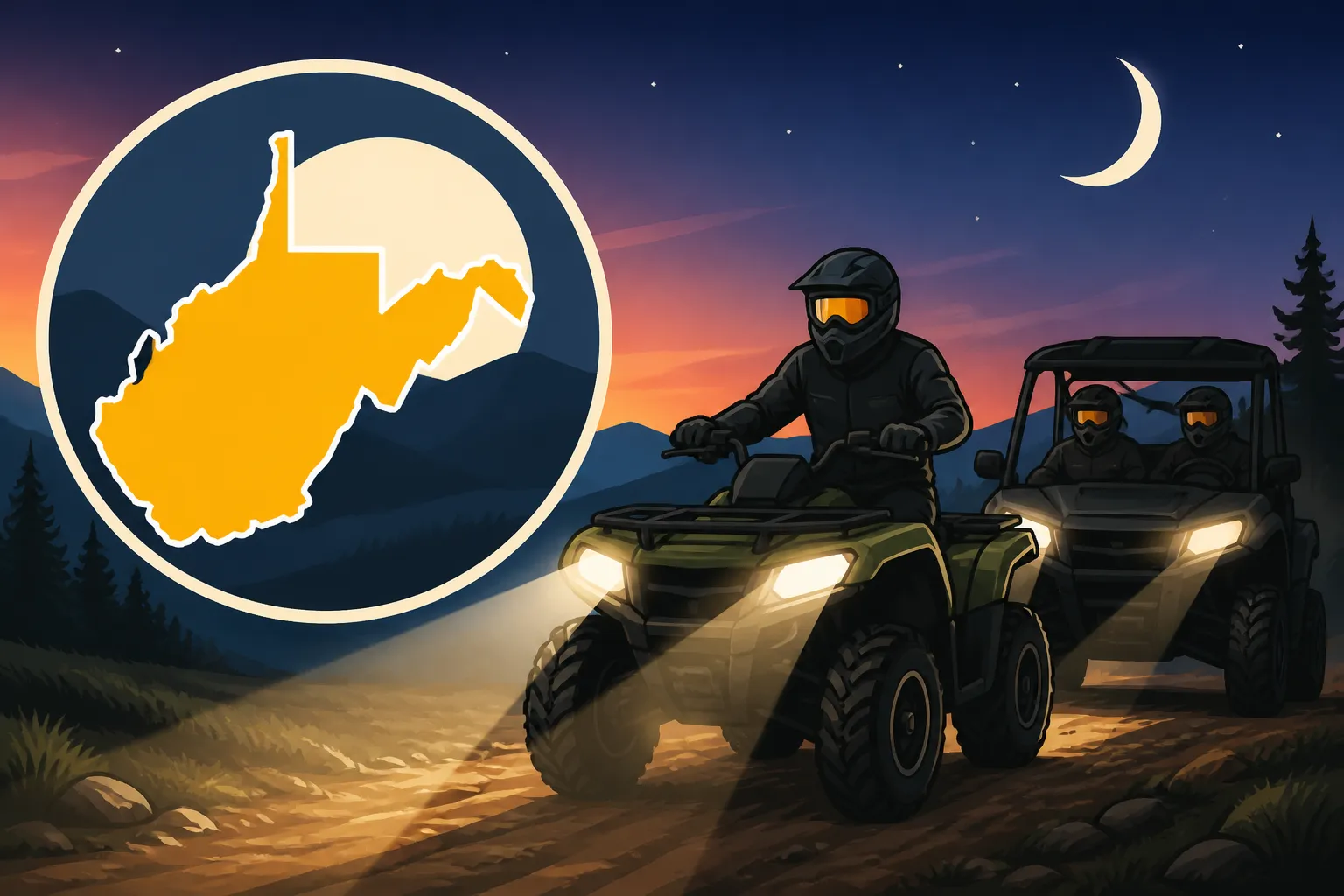
When the sun sets in the Mountain State, whether you're deep in a hollow or crossing a county road, visibility plummets much faster than you might expect. What seemed like plenty of daylight just moments ago can quickly turn into a dark, unforgiving environment. This isn't just about seeing where you're going; it's crucially about being seen by others, whether they're in another vehicle or on foot. Relying on inadequate or improperly configured lights after sunset is a gamble with serious stakes, both in terms of safety and legality.
Ensuring Your Own Visibility on Dark Roads and Trails
For us riders, good headlights are our eyes in the dark. On off-road trails, a powerful, wide beam helps reveal hidden roots, rocks, and unexpected dips that could quickly turn a fun ride into an emergency. When you're transitioning onto a public road section, even for a short stretch, your lights need to pierce the darkness to show you potholes, deer, or other hazards that appear out of nowhere. Without proper illumination, your reaction time is severely compromised, and that's a recipe for disaster. Think about those winding, unlit backroads in rural West Virginia – they demand the best possible lighting to navigate safely.
Making Sure Others See You
It’s easy to focus on what we can see, but just as important is what others can see of us. An ATV or UTV, even a larger side-by-side, can be surprisingly difficult to spot in the dark, especially if your lights aren't up to snuff. This becomes even more critical when you consider the mix of traffic you might encounter, from distracted drivers in cars to large coal trucks on shared routes. Your headlights, along with properly functioning taillights and brake lights, create a visual presence that alerts others to your location and movements. This mutual visibility is the bedrock of safe nighttime riding, preventing collisions and allowing everyone to share the road responsibly. This is particularly vital when you're making use of [West Virginia's 10-Mile, 25 mph Road Rule] to connect trails.
Legal Compliance to Avoid Fines and Hassles
Beyond safety, there's the very real consequence of law enforcement. West Virginia has specific requirements for vehicle lighting, and ATVs and UTVs are no exception, especially when operating on any public road. An officer isn't going to care if you "thought" your lights were bright enough; they'll be checking for compliance with the letter of the law. Getting pulled over for insufficient lighting can lead to fines, citations, and a delay in your ride. It's a hassle you can easily avoid by making sure your machine is properly equipped before you even think about heading out after sunset. Plus, repeated violations or serious safety issues could even impact your ability to enjoy [West Virginia Trail Access After a Citation].
Decoding West Virginia's Specific Headlight Regulations for ATVs and UTVs
West Virginia's laws are clear when it comes to what kind of lighting your ATV or UTV needs, particularly if you plan to be on any public road after sunset or during periods of low visibility. It's not just about having a light; it's about having the right lights, in the right place, functioning correctly. These rules are in place for everyone's safety, and understanding them is crucial for any rider in the Mountain State.
Required Number, Brightness, and Aim
When it comes to headlights, West Virginia law generally requires at least one, but usually two, functioning headlights on vehicles operated after dark or when visibility is limited. For ATVs and UTVs, it's common to see two headlights from the factory. These lights must be capable of illuminating objects at a certain distance – typically a minimum of 200 feet for low beams and 350 feet for high beams. What does this mean for you? It means those dim, yellowed stock headlights on an older machine might not cut it anymore.
More than just brightness, the aim of your headlights is incredibly important. Lights that are aimed too high can blind oncoming drivers, while lights aimed too low won't give you the range you need. Proper aiming ensures your beam is effective without causing a hazard to others. Many aftermarket options, like those from SuperATV, come with clear installation instructions to help ensure correct aim, but it's always wise to double-check. Getting the aim right is a key part of meeting the requirements for [Equipment West Virginia Requires on a Road Ride].
Color and Functionality: What's Allowed and What's Not
The color of your headlights is strictly regulated. In West Virginia, headlights must emit a white or amber light. You won't see blue, red, or any other color legally allowed for forward-facing illumination. While some off-road lights might offer different color filters for specific conditions, these are generally not street legal.
Beyond headlights, don't forget the full lighting system. You need working taillights that emit a red light visible from at least 500 feet to the rear. Crucially, you also need brake lights that illuminate when you apply the brakes, clearly signaling your deceleration to anyone behind you. Many riders also add turn signals if they plan to be on the road frequently, especially if they're converting their machine into a Special Purpose Vehicle (SPV) with a [West Virginia's Street-Legal Special Purpose Vehicle Plate]. While not always strictly mandated for brief road crossings, turn signals are a smart safety upgrade for any machine spending time on pavement after dark. You’ll want to review [Lights Required After Dark in West Virginia] for a comprehensive overview.
Inspection and Maintenance for Peak Performance
Even if your machine rolled off the factory floor with perfectly legal lights, time and trail riding can take their toll. Bulbs burn out, lenses get cracked or clouded with mud, and wiring can fray. Regular maintenance is essential. Before any night ride, do a quick walk-around:
- Are both headlights working?
- Are they bright and clear?
- Are your taillights and brake lights functioning?
- Are your turn signals, if installed, flashing correctly?
Some modifications to make your machine street legal, particularly if you're pursuing an SPV plate, might require a formal inspection. During such an inspection, proper headlight function and compliance will be a key checklist item. Keeping your lights clean and replacing any faulty components promptly not only keeps you compliant but, more importantly, keeps you safe.
Street-Legal Headlights vs. Off-Road Light Bars: Making the Right Choice for WV Roads
This is where a lot of confusion often creeps in for ATV and UTV owners. The world of off-road lighting is vast and exciting, with powerful light bars and pod lights designed to turn night into day on the trail. However, what makes a light fantastic for tearing through the woods often makes it illegal and dangerous for public roads. Understanding the distinction between off-road-only lights and truly street-legal headlights is paramount if you plan to ride your machine on any paved surface in West Virginia after sunset.
The Fundamental Differences in Design and Purpose
Off-road light bars, often seen emblazoned across the roof or front bumper of a UTV, are designed for maximum light output and a wide, flood-like beam pattern. Their purpose is to illuminate as much of the surrounding terrain as possible, without concern for blinding oncoming traffic. They typically lack a defined cutoff beam, meaning the light scatters broadly, projecting intense light upwards and outwards. This is fantastic when you’re alone on a remote trail system, like the Rockhouse Trail, but it’s a huge problem when you meet a car on a narrow county road.
Street-legal headlights, on the other hand, are engineered with a very specific beam pattern. They have a sharp horizontal cutoff that directs light downwards and forwards, illuminating the road surface effectively without casting excessive glare into the eyes of drivers in oncoming vehicles. They are designed to meet strict Department of Transportation (DOT) standards, which regulate brightness, color, and beam pattern to ensure safety for all road users. This is a crucial distinction that can often lead to fines if misunderstood.
Equipping Your Special Purpose Vehicle (SPV) for Road Use
If you're going through the process of getting a [West Virginia's Street-Legal Special Purpose Vehicle Plate] for your ATV or UTV, then this distinction becomes absolutely critical. An SPV must meet all the same lighting requirements as any other road-going vehicle. This means having DOT-approved headlights (and taillights, brake lights, turn signals, etc.) that comply with West Virginia law. Simply slapping a huge off-road light bar on your machine and thinking it's good to go for street use after dark is a common, and costly, mistake.
Many riders, especially those with UTVs, find themselves upgrading their stock lights to brighter, DOT-compliant options. Companies like SuperATV offer a range of street-legal conversion kits and individual lighting components that are designed to meet these rigorous standards. They understand that riders want both powerful illumination for the trail and legal compliance for road connections. When considering upgrades, always look for products explicitly marked as DOT-compliant if you intend to use them on public roads.
| Feature | Off-Road Light Bar | Street-Legal Headlight |
|---|---|---|
| Purpose | Maximum illumination for unpaved terrain | Safe illumination for public roads |
| Beam Pattern | Flood/Spot combination, broad, undefined | Precise cutoff, focused beam |
| Glare | Significant glare for oncoming traffic | Minimized glare for oncoming traffic |
| Certification | Not DOT-certified, off-road use only | DOT-certified for public road use |
| Legal Use | Trails, private land (after dark) | Public roads, trails (after dark) |
| Common Colors | White, amber, various for specific uses | White or amber only |
Making Aftermarket Choices: SuperATV and Beyond
When you're ready to upgrade or convert your machine for street legality, you'll find a wide array of aftermarket solutions. For UTVs, in particular, many riders opt for full street-legal kits that include DOT-approved headlights, turn signals, a horn, and mirrors. These kits are often designed to integrate seamlessly with popular models. SuperATV, for instance, is a well-known brand that offers a variety of lighting solutions, from replacement LED headlights that meet DOT requirements to complete street-legal packages.
When choosing aftermarket lighting, always verify that the product is DOT-compliant if you plan to use it on roads after sunset. Don't be fooled by products that simply claim to be "bright"; brightness alone doesn't equal street legality. Look for explicit DOT certification or statements that confirm compliance with federal and state regulations. While it might cost a little more upfront, investing in proper, compliant lighting saves you the headache of fines and the risk of accidents down the road. This also goes for components like [DOT Tires for a Street-Legal Side-by-Side], ensuring your entire machine is compliant with [West Virginia Inspection Rules for a Street-Legal Machine].
Avoiding Citations: Enforcement and Penalties for Insufficient Lighting
Ignorance of the law is never an excuse, and when it comes to riding your ATV or UTV after sunset in West Virginia, inadequate lighting can quickly lead to a confrontation with law enforcement. Officers in West Virginia's trail towns and rural areas are keenly aware of the safety implications of machines operating on public roads without proper illumination. They're looking out for everyone's safety, and if your lights don't meet the standards, you'll likely face a citation.
What Law Enforcement Looks For
West Virginia deputies and local police patrolling areas where ATVs and UTVs are common, especially in towns with [West Virginia's ATV-Friendly Towns and What You Can Ride] ordinances, are trained to spot violations. After dark, their focus often shifts to visible equipment. They'll be checking:
- Presence of Headlights: Do you have at least one, but typically two, forward-facing headlights?
- Functionality: Are they actually working? A burned-out bulb is a common culprit.
- Color: Are your headlights white or amber, as required? Any other color will draw immediate attention.
- Brightness/Aim: While harder to judge instantly, an officer will notice if your lights are excessively dim or clearly blinding oncoming traffic. If your off-road light bar is blazing on a public road, that's a clear red flag.
- Taillights and Brake Lights: These are just as crucial as headlights for rear visibility.
The goal of [West Virginia Sheriff Patrols in Trail Towns] isn't to ruin your fun, but to ensure that everyone, including pedestrians, cyclists, and drivers in other vehicles, can safely share the roads with ATVs and UTVs. Proper lighting is a fundamental part of that safety equation.
Potential Fines and Legal Consequences
If you're caught operating your ATV or UTV on a public road after sunset with insufficient or improper lighting, you're likely looking at a traffic citation. The specific penalties can vary, but typically involve a monetary fine. These fines can quickly add up, turning what should have been a fun evening ride into an expensive mistake.
Beyond the immediate fine, repeated violations could lead to more serious consequences, especially if an incident occurs due to your lack of proper lighting. Depending on the severity, you could face reckless endangerment charges if your lighting setup is deemed grossly negligent. While these are extreme cases, it highlights why taking headlight rules seriously is so important. These penalties are designed not just to punish, but to deter unsafe practices that put everyone at risk. Riding responsibly also means adhering to speed limits, as tickets for offenses like [Fines for Speeding on an ATV in West Virginia] can also quickly dampen your spirits.
The True Cost: Safety and Reputation
The financial cost of a ticket is one thing, but the true cost of inadequate lighting can be far greater. An accident, even a minor one, can lead to injuries, damage to your machine, and potential legal liabilities. Imagine hitting an unexpected obstacle or, worse, being involved in a collision with another vehicle simply because your lights weren't up to the task. That's a burden no one wants to carry.
Furthermore, a culture of disregard for road rules, including lighting regulations, can negatively impact the perception of ATV and UTV riders as a whole. As more towns in West Virginia embrace OHV access, maintaining a good reputation as responsible riders is paramount. Every time you ride responsibly and legally, you contribute to the continued acceptance and expansion of trail access. Making sure your lights are compliant after dark is a simple, yet powerful, way to do your part.
Disclaimer
This article is for general informational purposes only and does not constitute professional advice. Laws, prices and regulations vary by location and change over time. Consult a qualified professional for guidance on your specific situation.