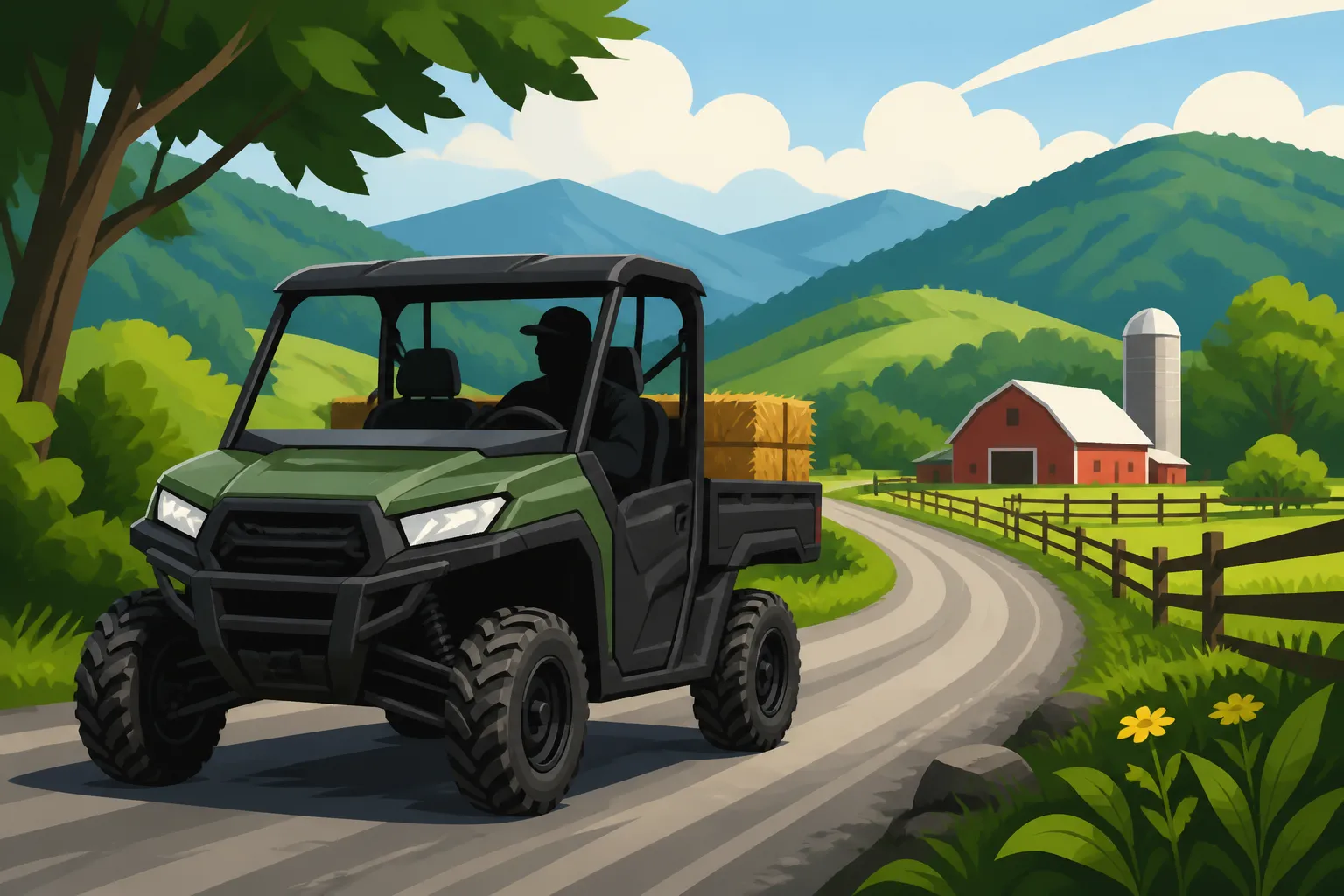
Using a UTV for Farm Work on a West Virginia Road
Running a farm in West Virginia means constantly needing to move gear, check fences, or haul supplies across your property, and often, that property is bisected by a public road. It's a common struggle: you’ve got your trusty UTV, perfect for the muddy fields, but using it on that short stretch of county road to get from the back forty to the barn can feel like navigating a legal minefield. This guide is here to untangle the complexities of using your UTV for legitimate farm work on West Virginia's public roads, helping you understand the exemptions and responsibilities involved so you can get your work done without unnecessary worry or fines.
Understanding West Virginia's Agricultural Road Exemptions
Let's face it, farming isn't a 9-to-5 desk job, and the tools you use, like your UTV, are essential to your livelihood. West Virginia law recognizes this unique need, offering specific exemptions for agricultural vehicles. These aren't blanket "ride anywhere" passes, though. They're carefully crafted to allow farmers to conduct necessary operations that sometimes spill over onto public roadways, all while maintaining a balance of safety and responsibility. It’s about being able to move a load of hay from one field to another across a small county road, or checking on livestock in a pasture that borders a less-trafficked route, without needing a full street-legal conversion for your workhorse machine.
What Qualifies as "Farm Work" for a UTV?
This is where many farmers get tripped up. "Farm work" isn't just a general term; it refers to specific activities directly related to agricultural production. Think about tasks like tending crops, checking fences for damage after a storm, transporting small tools or feed to a remote pasture, or moving livestock from one enclosure to another. If your UTV is actively engaged in these types of activities, and moving on a public road is the most direct or only practical way to accomplish the task, you’re likely falling within the spirit of the exemption.
For example, if you're out mending a broken fence line that runs along a back road, and you need to drive your UTV a few hundred yards on the paved surface to get from one section of fence to another, that's clearly farm work. The same goes for hauling a bucket of feed to cattle on an isolated parcel, or bringing a sprayer from your shed to a distant crop field. It’s about the purpose of the journey. If you're using your UTV to shuttle tools or supplies for tasks integral to your farm's operation, then it generally qualifies.
However, if you decide to take your UTV into town for groceries, or to visit a friend down the road, even if you just finished checking on the cows, that falls outside the agricultural exemption. The activity must be directly connected to the immediate demands of the farm. If you're questioning whether your specific use case qualifies, always lean towards caution and consider if a truck or tractor would be the more appropriate vehicle for that particular trip.
The Specific Exemptions for Farmers
West Virginia law offers farmers some breathing room when it comes to operating UTVs on roads. Generally, you're looking at exemptions from some of the stricter registration and equipment requirements that a fully [West Virginia's Street-Legal Special Purpose Vehicle Plate] would entail. These agricultural exemptions allow you to use your UTV on public roads for agricultural purposes without needing to title it as a motor vehicle or carry certain items required for street-legal machines, provided you meet certain criteria.
The primary goal of these exemptions is practicality. Imagine trying to title every single piece of farm equipment, from tractors to manure spreaders, that might briefly touch a public road. It would be an administrative nightmare. So, for a UTV used solely for farming purposes, the state understands that it needs to be able to move between fields, barns, and other parts of your operation that might be separated by a public thoroughfare. This means you might not need a standard motor vehicle license plate, or the full suite of DOT-approved lighting, turn signals, and safety glass, as long as your use adheres strictly to the agricultural context.
It's important to understand the limits, though. While you might not need a formal title or registration plate under the agricultural exemption, your machine should still have a valid [West Virginia Title Rules for Farm ATVs] if it was purchased after 1989. The exemption primarily pertains to road use and specific equipment mandates, not necessarily ownership proof. Always confirm the specific wording of the agricultural statutes to ensure your particular machine and use case falls under the allowed exceptions.
Distinguishing Farm Use from Recreational Riding
This distinction is perhaps the most critical for West Virginia farmers. The state's agricultural exemptions are not an excuse for casual joyrides or using your UTV as a personal passenger vehicle on public roads. Law enforcement officers are well-versed in the difference between a UTV hauling fence posts down a gravel road and one loaded with coolers and riders heading to a local swimming hole. The intent and the equipment on your UTV, as well as the path you're taking, all paint a picture.
If you're using your UTV for farm work, it's typically going to be moving slowly, often loaded with tools, feed, or other farm-related items. You're likely traveling a short distance between fields or barns, not cruising through a residential neighborhood or speeding down a highway. [West Virginia's 10-Mile, 25 mph Road Rule] does exist for other contexts, but agricultural use often implies even slower, more deliberate movement focused purely on the task at hand.
Consider the appearance of your UTV. If it's equipped with agricultural implements, a sprayer, or a bed full of hay, it looks like a work vehicle. If it's sporting a lift kit, loud exhaust, and LED light bars, it might raise questions about its primary purpose, even if you swear you're "going to check on the crops." Your UTV's setup, what you're carrying, and your behavior on the road should all clearly signal that you are engaged in legitimate farm operations, not recreational riding. Any deviation risks a fine or citation for operating an unregistered or improperly equipped vehicle.
Navigating the Rules: Equipment and Operational Requirements
Even with agricultural exemptions, there are still fundamental expectations for safety when operating any vehicle on a public road, including your UTV. These aren't about making your life harder; they're about preventing accidents and ensuring that all road users can share the space safely. It's about being visible, signaling your intentions, and maintaining control, especially when your UTV might be slower or less agile than other vehicles on the road.
Essential Safety Equipment for Road Use
While a farm UTV might not need every piece of equipment a fully street-legal machine does, certain safety items are non-negotiable for road travel, even for short distances. At a minimum, your UTV should have working headlights and taillights. If you're ever on the road near dusk, dawn, or in low visibility conditions, these become absolutely crucial for other drivers to see you. For instance, a quality light bar from a brand like SuperATV can significantly improve your visibility if your stock lights aren't cutting it.
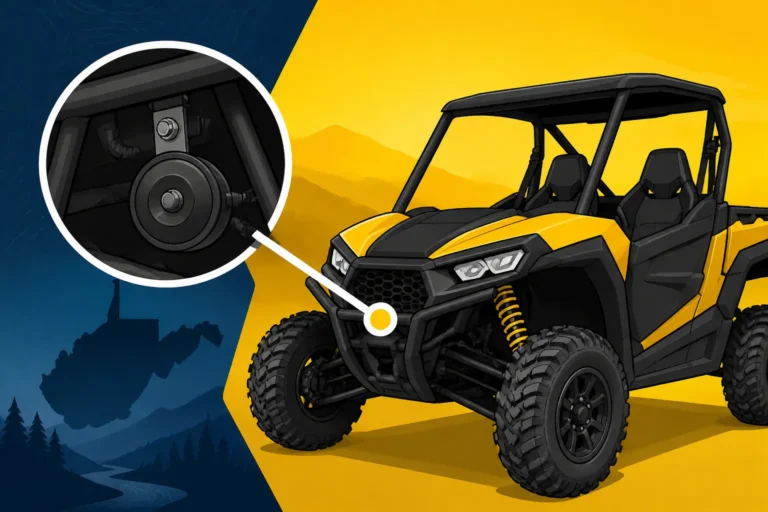
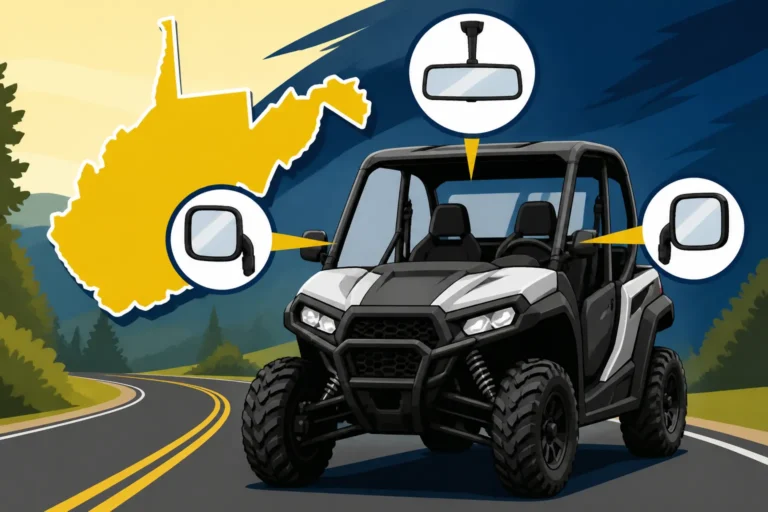
Mirrors are another essential. Even if only one is legally required, having both side mirrors allows you to monitor traffic approaching from behind without constantly turning your head, which can be difficult when hauling a load. A horn is also vital for alerting other drivers or pedestrians to your presence. While not always explicitly mandated for farm equipment on roads, common sense safety dictates that you should have functional brakes, steering, and tires in good condition. The goal is to avoid being a hazard to yourself or others. [Lights Required After Dark in West Virginia] are a must, regardless of whether you're "farm use" or "street legal."
Speed Limits and Road Types
One of the key limitations for farm-use UTVs on public roads is speed. Agricultural vehicles are generally expected to travel at slow speeds, often well below posted limits. If you're on a road, you should be moving at a speed that allows you to maintain control, react to hazards, and not impede traffic excessively. For county roads or less-trafficked routes, this might mean staying under 25 mph. On state routes, which are usually higher speed, your UTV's presence should be minimal, primarily to cross or move directly between adjacent farm properties.
It's paramount to understand that these exemptions are typically intended for local, low-volume roads, such as unpaved county roads or quiet state routes that bisect your property. They are generally not for extended travel on busier highways or interstates. Using your UTV on a major thoroughfare, even if you argue it's "farm work," is highly likely to draw attention from law enforcement and result in a citation. Stick to the shortest, least-trafficked routes possible when performing farm tasks on public roads.
Documentation You Should Carry
Even if your farm UTV doesn't require a traditional registration plate, it's always a good idea to carry certain documentation. This includes proof of ownership, such as your [Proof of Ownership for a West Virginia ATV Title] or a [West Virginia ATV Bill of Sale: What Belongs in It], which shows the UTV belongs to you and is not stolen. While farmers don't typically need to register an ATV or UTV for farm use, having the original title handy can clear up any questions about the machine's provenance.
Additionally, you should carry proof of insurance. While specific [West Virginia ATV Liability Coverage Limits] might not be legally mandated for farm use, having liability insurance is a smart decision. An accident can happen in a split second, and without insurance, you could be personally liable for significant damages or injuries. Showing an officer proof of insurance demonstrates responsibility and can often de-escalate a situation. Finally, consider carrying something that identifies you as a farmer, such as a farm business card or property tax statement, to further confirm the nature of your travel.
Potential Pitfalls and Best Practices for Farm UTVs
Even with the best intentions, it's easy to misunderstand the nuances of agricultural exemptions. What might seem like a common-sense use of your farm UTV could accidentally cross into territory that state law defines differently, leading to unwanted encounters with law enforcement. Understanding these grey areas and adopting best practices can save you a lot of headache and potential expense.
When Does Farm Use Become "Street Legal" Use?
The line between "farm use" and "street legal" can be incredibly blurry, and it largely comes down to intent and context. As discussed, if you're hauling feed from one field to another across a small, low-traffic road, that's clearly farm use. But what if you finish that task and then decide to run into the nearby town for a quick errand? That's where you cross the line. The moment your primary purpose shifts from direct farm operation to personal transportation or recreation, even for a short trip, you're no longer covered by the agricultural exemption.
Another tricky area involves the length and frequency of road travel. Short jaunts across or along property lines are generally fine. Long-distance travel, even if you argue you're going to "another farm," will likely be scrutinized. The exemptions are not designed to allow your UTV to become a primary mode of road transportation, even if you primarily use it for farm work. If you find yourself consistently using the public road for anything beyond the most direct, necessary farm access, it's time to consider a proper street-legal conversion for your UTV or using a different vehicle.
Equipping your UTV with a full windshield, turn signals, and mirrors — which can be sourced from a company like SuperATV — might make it feel more street-legal. However, adding accessories alone does not grant street-legal status. It must go through the full titling and registration process, including an inspection, to be legally recognized as a [West Virginia's Street-Legal Special Purpose Vehicle Law]. Without that, a UTV that looks street-legal but isn't properly registered is just as susceptible to a ticket as a bone-stock farm machine being used improperly.
Insurance Considerations for Farm UTVs
This is a big one that many farmers overlook. Even if your UTV is exempt from road registration, it doesn't mean it's exempt from the laws of physics or the potential for an accident. Most homeowner's insurance policies have very limited, if any, coverage for off-road vehicles, especially when they are being operated on public roads. Relying solely on your farm liability policy might not be enough if you get into a collision with a passenger car.
You need to have a serious conversation with your insurance agent about specific coverage for your UTV when it’s being used for farm work and occasionally on public roads. Ask about an off-road vehicle policy or an endorsement to your existing farm insurance that explicitly covers your UTV for liability and property damage while operating in an agricultural context, including those times it briefly travels on a public road. A minor fender bender with a car could quickly turn into a financial disaster if you’re uninsured. Better safe than sorry when it comes to protecting your livelihood and assets.
Neighborly Relations and Noise
Rural living often comes with a strong sense of community, and maintaining good neighborly relations is key. While your UTV is an essential piece of farm equipment, excessive noise or dust when operating on roads can quickly lead to friction with neighbors, especially those not directly involved in farming. Many aftermarket exhausts, while perhaps fun on the trails, can be quite loud and disruptive, particularly in quiet country settings. Consider your [West Virginia Muffler Rules for a Road Ride] for any use on public roads.
Even within the bounds of agricultural exemptions, being respectful of others is always a good practice. Drive slowly and carefully on public roads, especially near homes. Avoid churning up excessive dust on gravel roads or making unnecessary noise. If you know a neighbor is particularly sensitive, try to adjust your timing or route if possible. A little consideration goes a long way in preventing complaints to local authorities, which can sometimes lead to increased scrutiny of agricultural road use in your area.
Common Questions and Scenarios for Farmers
Farmers encounter a myriad of unique situations where their UTVs prove indispensable. However, these practical applications often raise specific questions about road legality. Let's delve into some common scenarios that West Virginia farmers face and clarify how the agricultural exemptions apply.
Can I Haul Firewood by UTV on a Back Road?
This is a very common scenario for rural West Virginians. Whether you're gathering downed timber from your own property for personal use or bringing firewood to sell locally, using a UTV to haul it out of the woods and then transport it a short distance on a back road to your home or a staging area seems like a logical choice. Under the agricultural exemption, if you are actively engaged in forestry management on your own land, and moving the firewood from one section of your property to another across a low-traffic county road, this activity would generally fall under the umbrella of farm use.
However, the key here is "farm use" and "your own land" or land you are managing agriculturally. If you are cutting firewood on someone else's property, or if your primary business is commercial logging rather than farming, the situation changes. The exemption is really for agricultural production, which can include managing timber on a farm for personal use or as a byproduct. If you're consistently using the UTV to transport large quantities of commercial firewood over long distances on public roads, you might start moving into territory that requires full registration and potentially commercial vehicle licensing. For short hauls directly related to managing your own farm's resources, especially on gravel or dirt roads, you should be fine.
What About Crossing State Routes to Reach Fields?
Crossing a state route to get from one section of your farm to another is often unavoidable for West Virginia farmers whose land is divided by such roads. The agricultural exemption does generally permit these crossings, as they are a direct and necessary part of farm operation. However, caution and safety are paramount here. State routes typically have higher speed limits and greater traffic volumes than county roads.
When crossing, treat your UTV like any slow-moving vehicle. Ensure you have clear visibility in both directions, yield to all oncoming traffic, and make the crossing as quickly and directly as possible. Your UTV should have clearly visible [Equipment West Virginia Requires on a Road Ride], especially brake lights and headlights, to signal your intentions to faster-moving vehicles. Avoid lingering on the paved surface; the goal is to get from point A to point B on your farm with minimal time spent interacting with highway traffic. Always be aware of your surroundings, and if visibility is poor due to hills or curves, consider having someone spot for you.
Outfitting Your UTV for Farm Road Duty
While the agricultural exemption might spare you from some of the full street-legal requirements, smart outfitting can significantly enhance safety and utility for farm road use. Think about robust cargo solutions; a sturdy cargo box or bed extender can secure tools, feed, or harvested crops, preventing spills or shifting loads that could become hazards on the road. SuperATV, for instance, offers a range of UTV cargo beds and racks designed to handle heavy loads, which can be invaluable for farm work.
Beyond cargo, consider durable, all-terrain tires that can handle both the muddy fields and short stints on pavement without excessive wear or compromise on grip. A high-quality set of mirrors is also a wise investment, allowing you to clearly see traffic behind you. If your UTV doesn't have a full windshield, a half windshield can still offer some protection from dust and debris while allowing for open airflow. Ultimately, while you might not have to meet every single DOT standard, equipping your UTV with common-sense safety and utility enhancements makes your farm work on roads safer and more efficient.
Disclaimer
This article is for general informational purposes only and does not constitute professional advice. Laws, prices and regulations vary by location and change over time. Consult a qualified professional for guidance on your specific situation.