Loading a Machine on a Roadside
We've all been there: you're wrapping up an incredible day on the trails, maybe out at Hatfield-McCoy, and you find yourself needing to load your ATV or UTV back onto your trailer right on the side of a busy West Virginia road. It feels awkward, dangerous, and sometimes, you're just not sure if you're doing it safely or even legally. This guide is all about navigating that tricky situation, offering practical advice and legal insights to help you load your machine roadside with confidence and, most importantly, safety.
The Challenges and Risks of Roadside Loading
Let's be honest, loading an ATV or UTV onto a trailer is rarely a simple, effortless task, even in the most ideal conditions. When you add the unpredictable variables of a roadside environment—passing traffic, uneven terrain, the rush to get home—it transforms from a minor chore into a potentially hazardous situation. It's not just about the inconvenience; it's about real risks to your personal safety, the integrity of your machine, and even legal repercussions if you're not careful.
The Perils of Passing Traffic
One of the most immediate and glaring dangers of roadside loading is the constant flow of traffic. Whether you're on a bustling state route or a quieter county road, vehicles are passing by, often at speeds that create significant wind buffeting. This isn't just a distraction; it can literally push you or your machine off balance, especially when you're trying to walk up a narrow ramp. Drivers might be distracted, not expecting someone to be performing such a maneuver on the shoulder, or simply not give you enough room. You're acutely vulnerable in this situation, and even the slightest misjudgment from yourself or another driver can have severe consequences. The stress of having vehicles whizzing past also adds pressure, making you more prone to rushing or making mistakes. It's a high-stakes environment where vigilance is paramount.
Uneven Ground and Stability Issues
Finding a perfectly flat, firm, and wide spot on a road shoulder is often like finding a needle in a haystack in West Virginia. Our beautiful mountain roads are known for their winding nature, steep grades, and often narrow, sloped shoulders. Trying to line up a trailer and ramps on ground that isn't level can create serious stability problems. Ramps might slip, the trailer itself might shift, or your ATV/UTV could roll off course. Soft ground, gravel, or mud can further complicate matters, causing ramps to dig in or slide out from under the tires. A seemingly innocuous dip or rise can throw off your alignment and increase the angle of your ramps, making the climb much steeper and more treacherous. Before you even think about engaging the throttle, a thorough assessment of the ground beneath you is absolutely critical.
Essential Gear for Safe Roadside Loading
You wouldn't head out on the trails without your helmet and eye protection, right? The same goes for roadside loading. Having the right equipment isn't just about convenience; it's a non-negotiable part of minimizing risk and ensuring your machine gets from the ground to the trailer safely. Skimping on quality or trying to make do with inadequate gear is a shortcut to trouble, especially when you're dealing with the added pressures of a roadside stop.
Ramps: Types, Features, and Safety
Ramps are your lifeline when it comes to loading. There are several types, each with its own advantages. Arched ramps are often preferred for ATVs and UTVs because they provide a less abrupt angle, preventing the machine's undercarriage from bottoming out at the top of the ramp or scraping the tailgate. Bi-fold ramps fold in half for easier storage, while tri-fold or even longer, wider single ramps offer more surface area and can be more stable. Aluminum is the material of choice for its strength and light weight, making it easier to handle after a long day of riding.
When selecting ramps, always check their weight capacity. This isn't just about the machine's weight; it's about the machine plus your weight if you're riding it up, or the dynamic forces involved as it moves. Ensure your ramps have secure attachment points to prevent them from slipping off the tailgate. Many come with straps or hooks for this purpose. Brands like SuperATV offer a variety of heavy-duty ramps designed to handle the weight and width of most modern UTVs, emphasizing stability and ease of use. Remember, the wider the ramp, generally the more stable it will feel, especially for larger side-by-sides.
Tie-Downs and Securement
Once your machine is on the trailer, the job isn't done. Proper securement is absolutely vital to prevent your ATV or UTV from shifting during transit, which can lead to serious accidents. Ratchet straps are the gold standard for their ability to provide high tension and hold strong. You'll typically need at least four robust straps—one for each corner of your machine—to create a secure "X" pattern that pulls the machine down and slightly forward or backward.
Look for straps with adequate working load limits (WLL) that exceed the weight of your machine. Always inspect your straps for fraying, cuts, or damaged ratchets before each use. Secure them to strong points on your ATV/UTV's frame, axles, or dedicated tie-down points, and to the trailer's frame or D-rings. Avoid attaching straps to handlebars, plastic components, or suspension parts that could be damaged or compress too much. Once tightened, give the machine a good shake to confirm it's not going anywhere. Investing in quality tie-downs is an investment in preventing a costly disaster on the highway.
Step-by-Step Safe Roadside Loading Procedures
Okay, the moment of truth. You've found a spot, you've got your gear, and now it's time to get that machine onto the trailer. This isn't a task to be rushed. Taking a moment to assess, plan, and execute each step methodically can prevent accidents and save you a world of headache. Think of it as part of your ride's pre-flight check—just as important as checking your oil or tire pressure.
Pre-Loading Site Assessment
Before you even think about lowering your ramps, you need to pick the safest possible spot. First, prioritize visibility. Can oncoming traffic see you from a good distance? Are there any blind curves or crests that would make your setup a sudden surprise? Try to find a straight stretch of road where drivers have ample time to react. Second, evaluate the shoulder itself. Is it wide enough to fully accommodate your truck and trailer without encroaching on the lane of travel? Is the ground firm and level? Avoid soft dirt, deep gravel, or steep slopes if at all possible. A slight incline away from traffic is generally safer than an incline towards it. Look for any obstacles like drainage ditches, rocks, or potholes that could impede your setup or cause a ramp to shift. It's better to drive an extra mile to a safer, more appropriate pull-off than to gamble with a precarious loading zone.
The Loading Process
Once your site is chosen and your trailer is properly parked (with emergency flashers on, of course!), it's time to set up.
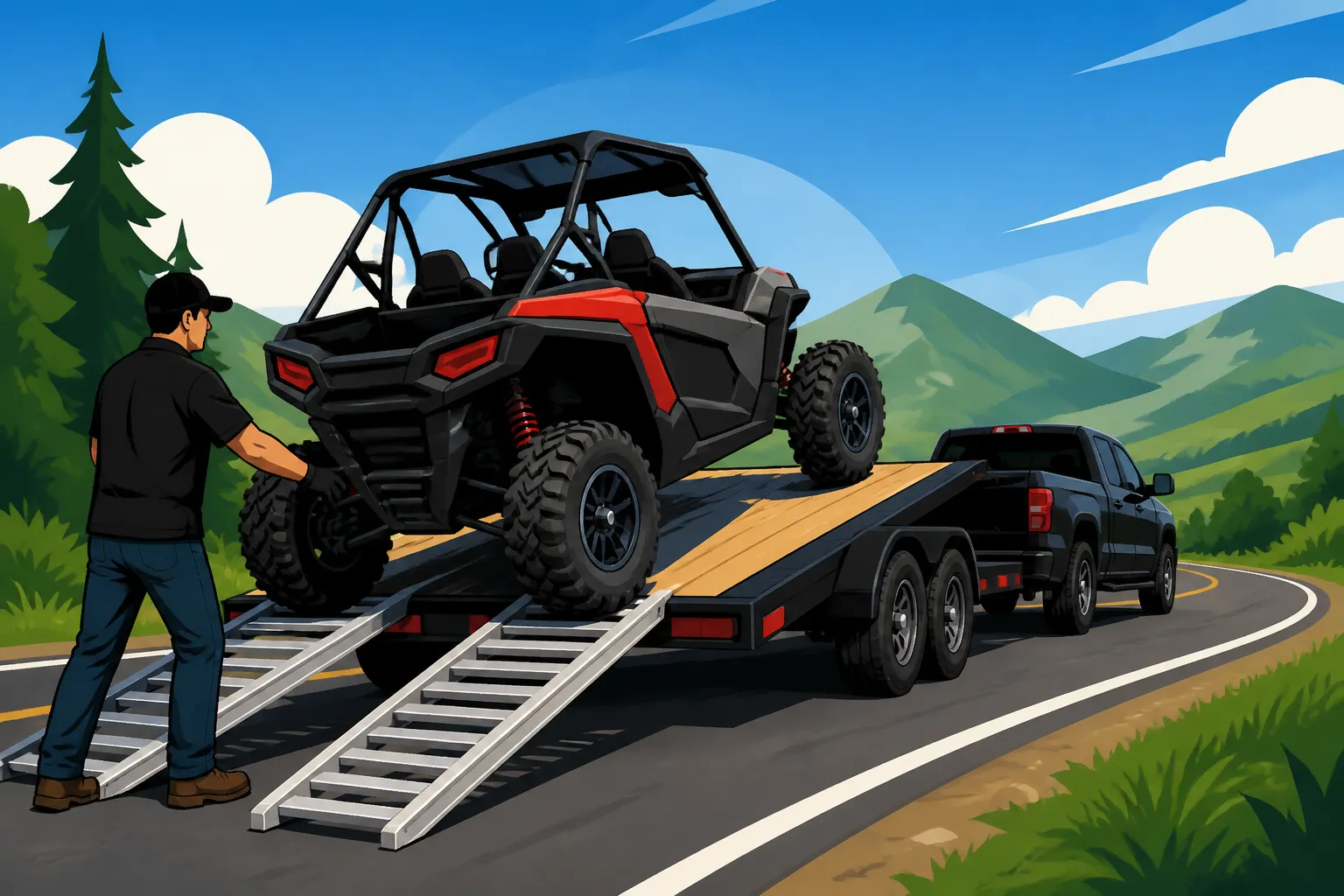
- Deploy Ramps: Securely attach your ramps to your trailer's tailgate or designated ramp attachment points. Double-check that they are firmly seated and won't slip. If your ramps come with safety straps, use them!
- Clear the Area: Ensure there are no people, pets, or loose items in the path of the machine or around the ramps. This is especially important if you have fellow riders or family with you.
- Position Your Machine: Line up your ATV or UTV with the ramps as straight as possible. For ATVs, you'll typically ride them up. For UTVs, it's often safer to drive them up, as their wider stance provides more stability.
- Engage Low Gear/4WD (if applicable): If your machine has a low gear or 4WD, engage it. This provides more controlled power and traction, reducing the risk of spinning tires or shooting up the ramps too quickly.
- Steady Ascent: Slowly and steadily drive or walk your ATV/UTV up the ramps. Maintain a consistent throttle. Avoid jerky movements or sudden stops. Keep your weight centered and look ahead to where you want the machine to settle on the trailer. If you're riding an ATV up, lean slightly forward to help with traction. If you feel uneasy, get off and walk it up the ramps, using controlled throttle.
- Secure Parking: Once on the trailer, immediately apply the parking brake, put the machine in gear (or park), and shut off the engine.
Many riders find that products like specific ramp extensions or even a good winch from SuperATV can make the loading process smoother, particularly for larger UTVs or in challenging conditions. Remember, never try to load a machine if you're fatigued or under the influence of anything that impairs your judgment.
Securing Your Machine for Travel
With your machine safely on the trailer, the final critical step is to secure it properly for travel. This is where those heavy-duty ratchet straps come into play.
- Strategic Placement: Position your ATV or UTV so that its weight is distributed evenly over the trailer axles, or slightly forward of center to ensure proper tongue weight. Too much weight in the rear can cause dangerous trailer sway.
- Cross-Pattern Strapping: Attach at least four quality ratchet straps. Connect each strap from a strong point on your machine (frame, axles, suspension A-arms, dedicated tie-down points) to a sturdy anchor point on your trailer (D-rings, frame rails). The goal is to create an "X" pattern—for example, front-left of the machine to rear-right of the trailer, and front-right of the machine to rear-left of the trailer. This method prevents both forward/backward and side-to-side movement.
- Crank it Down: Slowly and evenly tighten each strap using the ratchet mechanism. You want them to be taut and the machine to be firmly compressed into its suspension, but avoid over-tightening to the point of damaging components. A good rule of thumb is that the machine should not visibly move when you try to rock it.
- Inspect and Re-Check: After tightening, give all straps a final visual inspection. Tuck away any loose strap ends so they don't flap in the wind. Before you drive away, give the machine a good push and pull from various angles to confirm it's truly locked down. It's also a great idea to pull over after the first 10-15 miles of driving to re-check the tension on your straps, as things can settle.
West Virginia Laws and Best Practices for Roadside Stops
Beyond the practical mechanics of loading, there are also legal and safety considerations specific to stopping on public roads in West Virginia. You don't want to get a ticket for an improper stop or, worse, contribute to an accident because you weren't visible enough. Knowing the rules of the road and following best practices will keep you, your machine, and other drivers safe.
Where You Can Legally Stop and Load
In West Virginia, like most places, you are generally permitted to stop on the shoulder of a public road, but there are important caveats. You must ensure your vehicle and trailer are completely off the traveled portion of the roadway. This means all four wheels of your tow vehicle and all wheels of your trailer should be on the shoulder, not encroaching into the lane. Parking or stopping in active lanes of traffic, even momentarily, is illegal and incredibly dangerous.
Avoid stopping near or on bridges, in tunnels, or where signage prohibits stopping. Intersections and blind curves are also absolute no-go zones due to restricted visibility. While many of West Virginia's roads through trail towns are ATV-friendly, allowing you to ride [Riding an ATV on the Road in West Virginia] or even get a [West Virginia's Street-Legal Special Purpose Vehicle Plate], the rules for roadside parking and loading still apply to your tow vehicle and trailer. Always prioritize safety over convenience; if a shoulder is too narrow or unstable, keep driving until you find a suitable, safe pull-off, even if it's a bit further down the road.
Visibility and Signaling
When you're stopped on the side of a road, especially with a trailer and performing a task like loading, you become a hazard if not properly visible. Your emergency flashers are your first line of defense. Turn them on as soon as you begin to slow down and keep them on throughout the entire loading process. If it's dusk, dark, or foggy, your vehicle's headlights and taillights should also be on.
Consider carrying high-visibility items in your tow vehicle, especially if you frequently load in remote areas or adverse conditions. Reflective triangles, flares, or even a brightly colored safety vest can dramatically increase your visibility to passing motorists. These items create a visual warning for drivers, giving them more time to react and move over. Remember, while a West Virginia deputy might be understanding of a quick, necessary stop, they will take safety violations seriously. Being highly visible isn't just a suggestion; it's a critical safety measure when you're momentarily part of the roadside environment.
| Aspect of Roadside Loading | Good Practice | What to Avoid |
|---|---|---|
| Location Selection | Wide, flat, firm shoulder; good visibility for 500+ feet in both directions; dedicated pull-offs | Blind curves, hillcrests, soft/muddy shoulders, active traffic lanes, bridges/tunnels |
| Visibility | Emergency flashers on, headlights on (if low light), safety vest, reflective triangles/flares | Assuming drivers see you, no additional visibility aids, stopping without flashers |
| Ramp Usage | Arched, rated for machine + rider weight, securely fastened to trailer, wide enough | Straight or flimsy ramps, unfastened ramps, using undersized ramps, rushing |
| Loading Technique | Slow, steady throttle; 4WD/low gear engaged; walk-up if unsure; spotter (if available) | Jerky movements, excessive speed, standing on unstable ground, rushing without a plan |
| Securement | 4+ ratchet straps, cross-pattern, frame-to-frame connections, all slack removed | Bungee cords, rope, strapping to handlebars/plastic, loose straps, not re-checking |
| Awareness | Constantly monitoring traffic, clear communication with helpers, calm and focused | Distraction (phone, conversation), rushing, turning your back to traffic, impatience |
The reality of riding ATVs and UTVs in West Virginia means that sooner or later, you'll likely find yourself loading a machine on a roadside. Whether you're coming off a thrilling day on the [Rockhouse Trail System] or simply moving your machine from one area to another, knowing how to do it safely and legally is paramount. Don't be caught off guard; equip yourself with the right gear, the right knowledge, and a commitment to safety. You'll be glad you did when you're back home, machine securely stowed, reflecting on another great ride. And hey, for more specific tips on staying safe, you might even find resources on [West Virginia's ATV Safety Awareness Course] valuable. For those considering making their machine street legal, there are specific [Equipment a West Virginia SPV Must Carry] requirements, but roadside loading will still be a part of owning a machine. And if you're ever worried about the legality of a machine you're buying, make sure you know how to [Running a VIN Check Before You Buy] and always have your [West Virginia ATV Bill of Sale: What Belongs in It] ready. Don't forget that even in West Virginia's famous [Hatfield-McCoy Trails, West Virginia's 1,200-Mile Network], you still need to be mindful of how you get your machine to and from the trailheads. Staying safe on the road is just as important as staying safe on the trail.
Disclaimer
This article is for general informational purposes only and does not constitute professional advice. Laws, prices and regulations vary by location and change over time. Consult a qualified professional for guidance on your specific situation.