West Virginia Rules for Riding After Dark
There's nothing quite like the thrill of a night ride on your ATV or UTV in West Virginia. The stars seem brighter, the trails take on an entirely new character, and the hum of your engine under the moonlight can be truly unforgettable. However, that magical experience can quickly turn stressful—or even dangerous and illegal—if you haven't properly prepared for the unique challenges and specific rules of riding after dark. This comprehensive guide will illuminate exactly what West Virginia law requires for operating your machine once the sun goes down, ensuring you stay safe, legal, and ready for whatever the night trails, or roads, throw your way.
Understanding West Virginia's Basic Lighting Requirements for Night Riding
When the sun dips below the Appalachian peaks, your ATV or UTV becomes a different beast in the eyes of West Virginia law, especially concerning visibility. Whether you're on private land, a designated trail system, or even just crossing a short section of road, having proper illumination isn't just a suggestion—it's a critical safety measure and a legal mandate. It's easy to think a simple headlight is enough, but the rules are more nuanced, designed to protect you and everyone around you.
The primary goal of these regulations is to ensure your machine is seen and that you can see where you're going. This means you need a good forward-facing light source, something for people behind you to spot, and often, reflective elements to catch stray light. Many riders invest in robust aftermarket lighting, perhaps adding a powerful LED light bar or brighter headlights from a reputable supplier like SuperATV, which offers a range of options far exceeding stock performance. This can make a huge difference in spotting fallen trees, unexpected washouts, or wildlife that might dart across your path on a dark trail.
Headlight Rules After Sunset
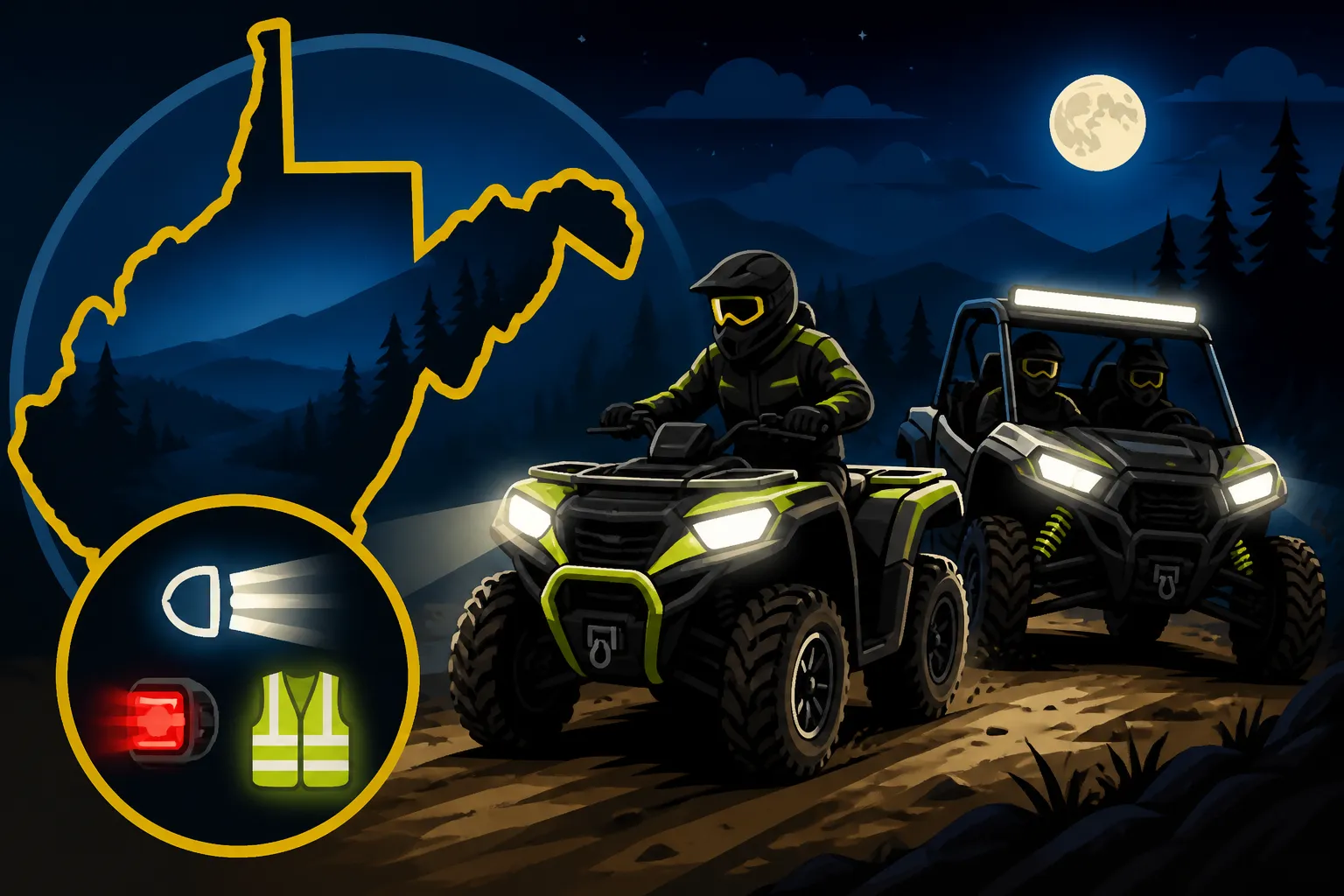
When it comes to headlights, West Virginia doesn't mess around. If you're operating your ATV or UTV between sunset and sunrise, or during times of low visibility like fog or heavy rain, your machine absolutely must be equipped with at least one white headlight. This light needs to be visible from a distance of at least 200 feet, which is farther than you might think when you're out on a twisty trail. Just having a light isn't enough; it needs to be functioning correctly and adequately bright.
Think about the conditions you ride in. A factory headlight might be fine for a leisurely cruise home at dusk, but if you're planning a serious night run on challenging terrain, you'll quickly realize its limitations. Many experienced riders upgrade their headlights for enhanced safety and visibility. A single, dim halogen bulb can leave you peering into the darkness, increasing your risk of an accident. When you're dealing with blind curves and uneven surfaces, you need all the light you can get to react quickly and safely. For specific details, you can always check out the [West Virginia Headlight Rules After Sunset] to make sure you're fully compliant.
Taillight and Brake Light Requirements
Just as crucial as seeing where you're going is ensuring others can see you, especially from the rear. West Virginia law dictates that if you're riding after dark, your ATV or UTV must have at least one red taillight mounted on the rear. This taillight needs to be visible from a distance of at least 200 feet, just like your headlight. This is particularly vital when riding with a group, as it prevents collisions and helps everyone maintain proper spacing in low light conditions.
In addition to a basic taillight, most modern ATVs and UTVs also come equipped with brake lights. While not always explicitly required for all off-road scenarios, a functional brake light is a smart safety feature to have. If you’re riding on any public road section, even a short one connecting trails, working brake lights are often a non-negotiable part of the [Equipment West Virginia Requires on a Road Ride]. Imagine signaling your intent to stop or slow down without one—it’s a recipe for confusion and potential rear-end collisions, especially if the rider behind you isn't expecting it. Always double-check your lights before you head out, and if your brake light isn't working, get it fixed immediately. For comprehensive information, consult [West Virginia Taillight and Brake Light Requirements].
Reflectors for Added Visibility
Beyond active lighting, West Virginia also emphasizes passive visibility, especially with reflectors. While often overlooked, these simple additions can be lifesavers. Your ATV or UTV should have a red reflector on the rear, positioned to be visible to anyone approaching from behind. This isn't just for when your lights are on; if your electrical system fails or your battery dies, those reflectors become your only line of defense in the dark, bouncing back any light from an approaching vehicle or another rider's machine.
For machines that venture onto public roads, the requirements for reflectors can become even more stringent. Depending on the type of road and the time of day, you might need additional side reflectors or even reflective tape to ensure you're seen from all angles. It’s always a good idea to exceed the minimum requirements when it comes to visibility after dark. Adding reflective elements, perhaps on your helmet or jacket, provides an extra layer of protection. Don't underestimate the power of a few well-placed reflectors; they can make all the difference in a low-visibility situation. For road-specific needs, refer to [Reflectors on a Road-Ridden Quad].
Essential Equipment for Legal West Virginia Road Riding After Dark
Venturing onto West Virginia's public roads with your ATV or UTV after dark brings a whole new set of legal requirements beyond just basic lights. While many riders dream of connecting trails by briefly riding on paved surfaces, the state classifies these machines differently when they hit the asphalt, particularly if they're registered as a [West Virginia's Street-Legal Special Purpose Vehicle Plate]. This distinction means you're no longer just an off-road enthusiast; you're sharing the road with cars, trucks, and motorcycles, and you need to be equipped accordingly to ensure everyone's safety.
The list of necessary gear expands considerably when you move from the secluded trail to the open road. It’s not just about seeing and being seen, but also about signaling your intentions and controlling your machine in a way that’s expected of street-legal vehicles. For those planning to use their UTV for road sections, investing in a robust street-legal kit is almost a necessity. Companies like SuperATV offer kits that bundle many of these required items, making the conversion process much simpler and ensuring you meet all the standards.
Turn Signals and Hazard Lights
When you're navigating public roads after dark, hand signals simply won't cut it. West Virginia law, much like other states, requires any street-legal vehicle to have functional turn signals. These need to be visible both from the front and the rear, clearly indicating your intention to turn left or right. Without them, changing lanes or making a turn becomes a dangerous guessing game for other drivers, especially at night when visual cues are already limited.
Furthermore, hazard lights (often integrated into turn signal kits) are another crucial safety feature. Imagine pulling over on a dark, unlit rural road due to a mechanical issue. Having working hazard lights flashing provides a vital warning to oncoming traffic, preventing potential rear-end collisions. Many aftermarket kits, including those you might find from a brand like SuperATV, will include these features, simplifying the process of making your machine road-ready. It's not just about avoiding a ticket; it's about minimizing risk in an environment that wasn't primarily designed for your off-road vehicle.
Mirrors and Horns
While you might not think much about mirrors and a horn on the trails, they become indispensable on public roads, especially after dark. West Virginia law requires street-legal ATVs and UTVs to be equipped with at least one rear-view mirror, allowing you to see traffic approaching from behind without constantly turning your head. Many riders opt for two side mirrors, as this provides a much wider field of vision and significantly reduces blind spots, which are amplified in the darkness.
Equally important is a working horn. This isn't just for aggressively honking at slow drivers; a horn is a vital communication tool on the road. It can alert a distracted driver to your presence, warn pedestrians, or signal other riders in your group. On a dark, winding West Virginia backroad, the ability to audibly alert others to your position can be a critical safety feature. Ensure your horn is easily accessible and produces a sound loud enough to be heard over road noise. For more on these requirements, check out [Mirrors and Horns on a Street-Legal Build].
Proper Tire and Equipment Standards
Beyond lighting and signaling, a street-legal ATV or UTV operating on West Virginia roads after dark must also meet specific standards for other equipment. This includes DOT-approved tires, which are designed to handle the stresses of pavement and provide adequate traction, unlike some aggressive off-road tires that can wear quickly and perform poorly on asphalt. While tire blowouts are dangerous at any time, they pose a far greater risk at night when visibility is compromised.
Additionally, ensuring all other essential components of your machine are in good working order is paramount. This includes properly functioning brakes, a secure windshield (if equipped), and even seat belts or restraint systems in UTVs. While some of these might seem less critical for trail riding, they are non-negotiable for road safety. If your machine isn't equipped with spark arresters, for example, it might also run afoul of certain local ordinances or forest service rules, even if not directly tied to night riding. Keeping your machine well-maintained and compliant with all street-legal provisions is the best way to ensure a safe and legal ride, day or night.
Where You Can (And Can't) Ride Your ATV or UTV After Sunset in West Virginia
Knowing the equipment you need for riding after dark is only half the battle; understanding where you're legally permitted to ride after sunset is just as crucial. West Virginia is a rider's paradise, but even here, there are distinct rules governing night operation that vary significantly depending on whether you're on designated trails, private land, or public roads. Ignoring these distinctions can lead to citations, fines, or even losing your riding privileges. It's really important to respect these boundaries, not just for legal reasons, but for landowner relations and overall trail preservation.
The complexities of land ownership and public access mean that a trail you rode freely during the day might be off-limits at night, or a short section of road might require specific permits or equipment. Being informed about these nuances is key to enjoying your night rides without unwanted consequences.
Night Riding Rules on West Virginia's Trail Systems
The Hatfield-McCoy Trails, and other managed trail systems across West Virginia, are fantastic places to ride, but they often have strict rules about operating hours. Generally speaking, most managed trail systems in West Virginia, including the Hatfield-McCoy Trails, enforce a "daylight-only" riding rule. This means riding is typically permitted from 30 minutes before sunrise until 30 minutes after sunset. While this might seem restrictive, it's a measure put in place for rider safety, trail maintenance, and to minimize disturbances to local wildlife and nearby residences.
Attempting to ride these trails outside of designated hours, even with proper lighting, is a violation of the permit rules and can lead to significant penalties. Trail Rangers and local law enforcement patrol these areas, and they take these rules seriously. It's always best to check the specific operating hours for the trail system you plan to visit before heading out. Sometimes, special events or guided night rides might be organized, but these are exceptions, not the norm. To avoid any issues, always consult the [West Virginia Trail Hours by Season] before planning an evening adventure.
Public Road Access After Dark
For those times when your ATV or UTV needs to traverse a public road, such as connecting two trail systems or accessing a gas station in a trail town, West Virginia has specific rules. If your machine is street-legal with a Special Purpose Vehicle (SPV) plate, you generally have more leeway, provided you meet all the equipment requirements discussed earlier. However, even with an SPV plate, there might be local ordinances in specific towns or counties that further restrict night-time operation on certain roads.
For non-SPV machines, West Virginia allows limited road use, typically for short distances (often 10 miles or less) and at reduced speeds (25 mph or less) on roads without a centerline, primarily for agricultural or hunting purposes, or to access an approved riding area. These rules apply day or night, but the risks are exponentially higher after dark due to poor visibility. Always be aware of the specific [West Virginia Rules for Riding Trail to Trail] if you plan on using public roads, and remember that [West Virginia Sheriff Patrols in Trail Towns] are vigilant about enforcing these regulations. If you're caught riding an unequipped or unpermitted ATV on a public road after dark, the consequences can be severe.
Private Land Night Riding
Riding on private property after dark is typically less restrictive in terms of state-level equipment requirements than public roads or managed trails, provided you have explicit permission from the landowner. On your own land, or land where you have been granted permission, you generally have more freedom to operate your machine as you see fit. However, even on private land, common sense and safety should always prevail.
Just because it's legal doesn't mean it's smart to ride without proper lighting or safety gear. The same hazards exist—trees, ditches, uneven terrain—and they are magnified in the dark. Furthermore, be mindful of noise ordinances, especially if your private property is near residential areas. A loud exhaust at 2 AM could lead to neighbor complaints and potential issues with local authorities, even if you're technically on private land. Always ensure your lights are working, and consider the comfort and safety of anyone riding with you.
Staying Safe and Avoiding Penalties When Riding After Dark in West Virginia
Riding your ATV or UTV after dark in West Virginia offers a unique adventure, but it also carries increased risks and stricter legal scrutiny. The low light conditions inherently make obstacles harder to spot, distances harder to judge, and other vehicles or riders more difficult to see. Because of this, staying safe and avoiding penalties requires a proactive approach to both your machine's setup and your riding habits. Think of it as gearing up for a different kind of expedition, one where preparedness is your most valuable tool.
Ignoring regulations or safety guidelines isn't just about risking a ticket; it's about risking your well-being and the well-being of others. West Virginia law enforcement takes night riding very seriously, especially on roads and managed trails, to prevent accidents and ensure responsible outdoor recreation.
Essential Night Riding Safety Practices
Safety should be your absolute top priority when riding after dark. Here are some practices that can dramatically reduce your risk:
- Slow Down: Your reaction time is naturally slower in the dark. Reduce your speed, especially on unfamiliar trails or roads. What you can see in daylight at 30 mph might only be visible for a split second at night, not giving you enough time to react.
- Ride with Others: Never ride alone after dark, especially in remote areas. A riding buddy can provide assistance in case of a breakdown, injury, or getting lost. Two sets of eyes are always better than one.
- Wear Appropriate Gear: Beyond your lights, wear reflective clothing, a bright helmet, and eye protection that allows for clear night vision. A clear visor or goggles are essential to keep dust, bugs, and debris out of your eyes while maintaining visibility.
- Know Your Route: If possible, ride trails you're familiar with during the day first. The terrain can look completely different at night, and knowing what to expect can prevent surprises.
- Carry a Backup Light Source: A headlamp or a powerful flashlight can be invaluable if your machine's lights fail, or if you need to perform trailside repairs.
- Watch for Wildlife: Animals are often more active at night. Reduce your speed and be extra vigilant for deer, bears, or other creatures that might cross your path unexpectedly.
Common Penalties for Non-Compliance
The penalties for not following West Virginia's night riding rules can range from minor citations to more severe consequences, depending on the nature and location of the infraction.
| Infraction | Potential Consequence (General) | Severity |
|---|---|---|
| Missing or inadequate headlights/taillights | Fine, possibly an order to correct before further operation | Moderate |
| Riding on closed trails after dark | Fine, loss of trail permit, potential trespass charges | High |
| Riding on public roads without proper SPV equipment | Fine, citation for unregistered/unlicensed vehicle, towing | High |
| Reckless riding after dark | Significant fine, license points, potential jail time | Very High |
| Operating under the influence (OUI) | Major fines, license suspension, jail time, vehicle impoundment | Extreme |
It's important to remember that these are general guidelines. Local ordinances in specific trail towns or counties might have their own set of rules and associated penalties. A violation can quickly escalate if it leads to an accident or if you're found to be riding recklessly. [West Virginia Penalties for Reckless Riding] can include substantial fines and even the suspension of your driver's license, even if the ATV isn't a highway vehicle. Always prioritize compliance to ensure your safety and enjoyment of the sport.
How to Ensure Your ATV/UTV is Ready for Night
Before you even think about hitting the ignition for a night ride, do a thorough check of your machine. This goes beyond just flipping on your lights.
- Battery Check: Ensure your battery is fully charged and capable of handling the load of all your lights and accessories. Cold weather can reduce battery performance, so be extra cautious in winter.
- Wiring Inspection: Look for any loose or frayed wiring, especially around light fixtures. Vibrations from riding can loosen connections over time.
- Bulb Functionality: Test all your lights: headlights (high and low beam if applicable), taillights, brake lights, and turn signals. Replace any burnt-out bulbs immediately.
- Lens Clarity: Clean your headlight and taillight lenses. Mud, dust, and scratches can significantly reduce light output.
- Aiming: Ensure your headlights are properly aimed. Lights that are too high can blind oncoming riders or drivers, while lights that are too low won't illuminate enough of the trail ahead.
- Reflective Elements: Confirm that all factory reflectors are intact and clean. Consider adding additional reflective tape to your machine or gear for extra visibility.
By following these simple steps, you'll be well on your way to a safer, more enjoyable, and fully legal night riding experience in the beautiful West Virginia landscape.
Disclaimer
This article is for general informational purposes only and does not constitute professional advice. Laws, prices and regulations vary by location and change over time. Consult a qualified professional for guidance on your specific situation.