Minimum Size Requirements for Young Riders
Choosing an ATV or UTV for a young rider is not just a question of engine size. A machine can meet an age guideline and still be too heavy, tall, or difficult for a child to control. Here’s how to assess fit, understand trail access in West Virginia, and check the rules before you ride.
Is there a minimum machine size for young riders in West Virginia?
There is no single engine-size figure that answers every question about a young rider and every West Virginia riding area. Rules can depend on where the machine will be used, the rider’s age, the trail operator’s requirements, and the manufacturer’s age and size guidance for that model.
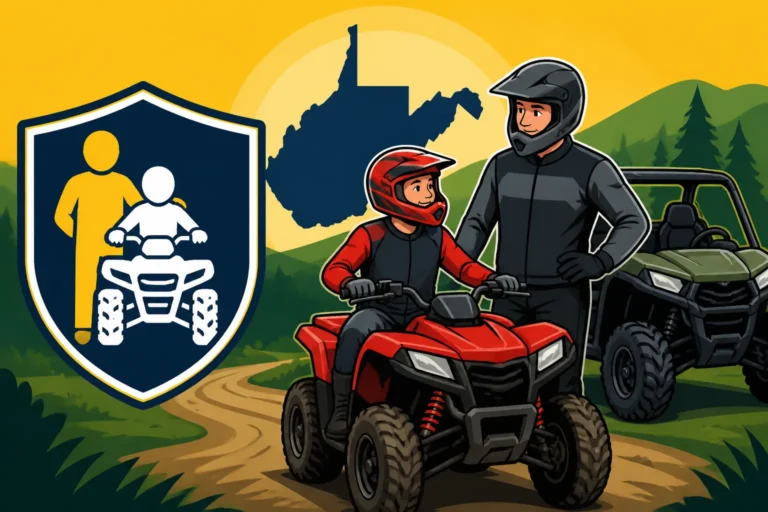
On Hatfield-McCoy managed trails, children must meet the system’s age requirements, and riders under 16 are subject to direct-supervision rules. The system also expects riders to follow the manufacturer’s age and size recommendations for the machine they operate. Those rules are separate from whether a particular ATV or UTV is physically manageable for a child.
That distinction matters. A child might be old enough to ride on a trail but not be ready for a particular machine. A bigger engine does not automatically make a machine unsuitable, and a small engine does not automatically make it safe. Weight, seat height, throttle response, braking, and the child’s ability to follow directions all affect whether the machine is a sensible match.
Do not assume an ATV’s advertised engine displacement is a statewide age classification. Before choosing a machine, check the current trail rules and the owner’s manual for that exact model. Manufacturer Age and Size Requirements explains why the manufacturer’s recommendations deserve attention, while Youth Machines Allowed on the Trails can help clarify what kinds of youth machines may be accepted on managed trails.
If you are considering a child’s first machine, treat these as separate questions:
- Is the rider old enough for this location and activity?
- Does the trail operator allow this type of machine?
- Does the manufacturer recommend it for the rider’s age and size?
- Can the child operate the controls and manage the machine’s weight?
- Can the adult supervising the ride respond quickly if something goes wrong?
A “yes” to one question does not answer the others. Check each one before committing to a machine or planning a trail day.
How to tell whether an ATV fits the child
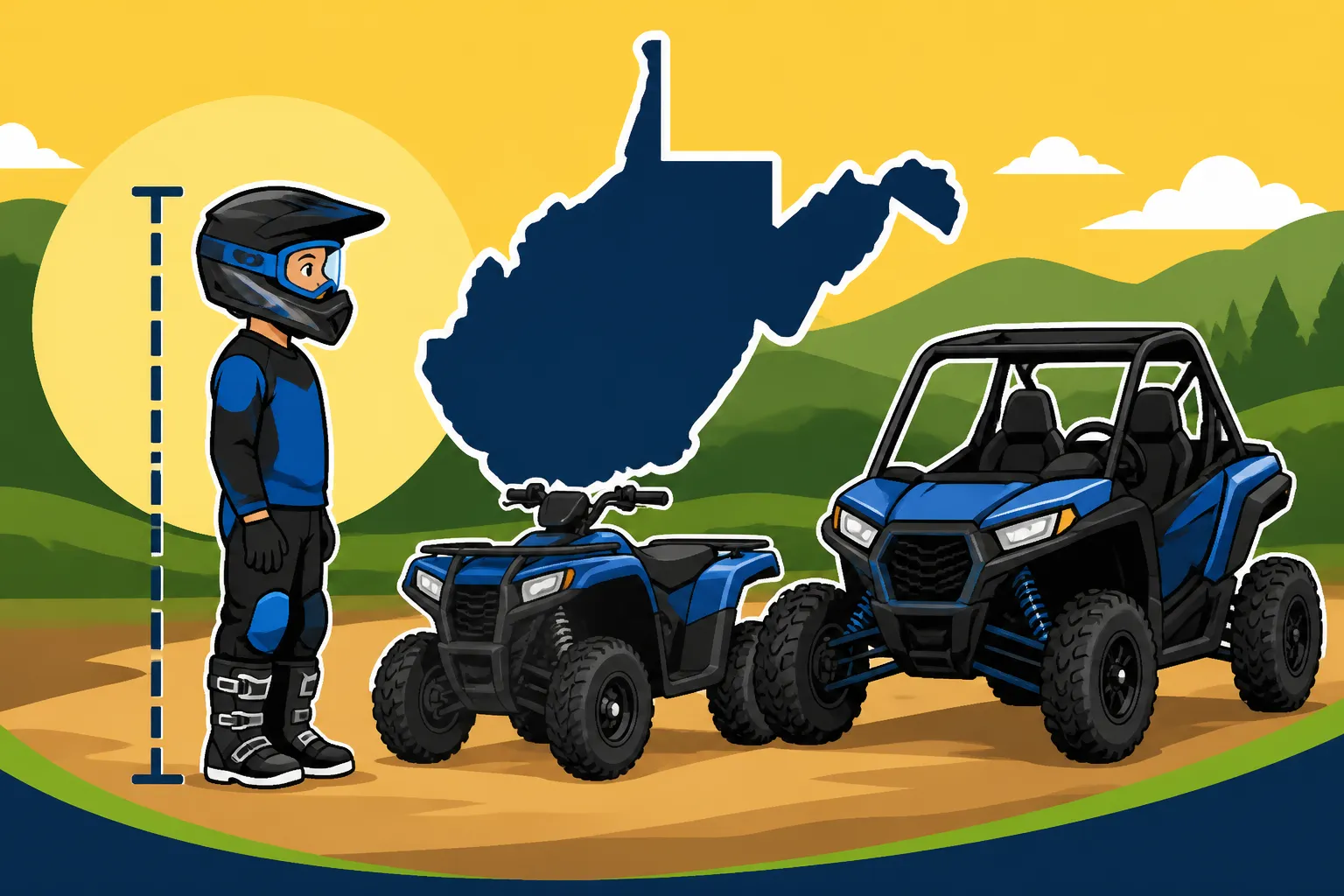
A useful fit check starts with the child, not the engine. A rider needs to reach and operate the controls without stretching, shifting position awkwardly, or relying on an adult to steer or brake. The child should be able to sit securely, understand the controls, and stop the machine when asked.
Check reach, posture, and control
With the machine off and on level ground, have the child sit in the riding position. Check whether they can:
- Reach the handlebars comfortably while keeping a controlled posture.
- Operate the throttle and brake levers without losing their grip.
- Shift their weight without sliding off the seat.
- Keep their feet in the intended riding position.
- See the route ahead without leaning far forward or twisting.
- Turn the handlebars through the full range without their arms becoming locked.
These checks are only a first screen. A child may be able to touch the controls while parked but struggle to use them smoothly when moving. Practice in a suitable, open area and follow the machine’s instructions before riding a trail. A child who cannot stop, turn, and control speed reliably is not ready for that machine or terrain.
Consider weight and power together
A machine’s weight affects how difficult it is to move, steer, and control, especially on a slope or uneven ground. A powerful machine can also accelerate more quickly than a young rider expects. The two factors should be considered together, along with the rider’s judgment and experience.
Avoid choosing a machine on the assumption that a child will “grow into it.” A machine that is too large now can make ordinary tasks harder: starting, slowing down, turning, or recovering from a small mistake. A properly matched machine is not necessarily the one with the smallest engine; it is the one the rider can control safely and confidently under the conditions where it will be used.
For a UTV, check the fit of every intended occupant, not just the driver. Confirm that the child can sit correctly, use the restraint system as designed, and remain within any seating or passenger limits in the owner’s manual. An adult-sized UTV is not automatically suitable for every child simply because the child can sit inside it.
Use the model’s manual, not a general age chart
Age charts and engine-size labels can be useful for narrowing choices, but they cannot account for every model’s weight, dimensions, power delivery, or controls. Read the exact machine’s owner’s manual and safety labels. If the manual gives an age recommendation, treat it as a minimum suitability warning—not as proof that every rider of that age is ready.
Ask a dealer or knowledgeable service professional about features that affect control, including throttle response and braking. Do not modify a machine to bypass an age or safety recommendation. If you are buying used, check that the machine is complete and functioning correctly before letting a child ride it. Pre-Purchase Inspection Before You Sign covers checks that can help identify problems before a sale.
| Fit factor | What to check | Why it matters |
|---|---|---|
| Age recommendation | Owner’s manual and safety labels for the exact model | A machine may be unsuitable even if the child can physically reach the controls |
| Reach | Hands comfortably operate steering and controls | Poor reach can interfere with steering, braking, and throttle control |
| Weight | Child can manage the machine in the intended setting | A heavy machine can be difficult to control or recover |
| Power delivery | Acceleration feels manageable during supervised practice | Sudden speed can overwhelm a new rider |
| Riding skill | Child can start, stop, turn, and follow instructions | Trail eligibility is not a substitute for practical control |
| Trail access | Current rules for the riding area and machine type | A suitable machine may still be restricted at a particular location |
Age, supervision, and trail access are separate requirements
West Virginia trail rules are not the same as a machine’s age recommendation. A young rider may meet an age threshold for a managed trail but still need to comply with supervision, safety, helmet, and equipment requirements. Likewise, a child who is permitted to operate a youth ATV in one setting might not be allowed to ride the same way on another property or road.
Hatfield-McCoy has a minimum rider age and direct-supervision requirements for riders under 16. Confirm the current wording before traveling, particularly if the child will be riding a separate machine rather than riding as a passenger. “Supervision” should not be treated as simply having an adult somewhere in the group: understand what the applicable rule requires and plan the ride so the adult can actually monitor the child. See Direct Supervision Rules for West Virginia Riders Under 16 for the details to verify.
Safety-course rules can also depend on the kind of riding and location. Do not assume that a child’s age, a parent’s course card, or a rule for managed trails automatically satisfies requirements elsewhere. Check Who Needs the West Virginia Safety Course and confirm whether an exception applies to the specific riding area.
Before you go, confirm:
- The rider’s age meets the trail system’s current minimum.
- The child’s machine is allowed and meets the manufacturer’s age and size guidance.
- The adult knows what supervision is required and can maintain it.
- The child has the required helmet and eye protection.
- The trail system’s rules allow the intended passenger arrangement and machine type.
- Any required permit or riding credential is arranged for the machines and riders involved.
Permits and machine eligibility are related but different. A permit does not make an otherwise unsuitable or restricted machine acceptable. Ask the trail operator how permits apply when a group brings a youth ATV in addition to adult machines; do not assume one machine’s permit covers another. For the broader process, see Where to Buy a Hatfield-McCoy Trail Permit and One Permit for Every Trail System. Rules can change, so confirm permit and access details with the official trail operator before the trip.
The safest plan is to choose a route based on the least experienced rider, not the largest or fastest machine in the group. A child can be legally eligible and still need an easier route, shorter ride, or more practice. West Virginia Trail Difficulty and How It Is Marked can help with route planning, but check trail conditions and closures close to departure.
A practical checklist before a young rider’s first trip
Good preparation makes it easier to spot a poor machine fit before it becomes a problem on the trail. Work through the checks below at home, then repeat the important ones when you arrive.
- Read the manual. Find the age recommendation, passenger limits, operating instructions, and safety warnings for the exact model. If the manual is missing, obtain the correct one before the child rides.
- Check the rider’s fit. Have the child sit in position and reach every control. Make sure they can steer and operate the brakes without losing a stable posture.
- Practice stopping and turning. In an appropriate open area, confirm the child can control speed, stop on command, turn in both directions, and respond calmly to instructions.
- Use protective gear that fits. A helmet that is loose or shifts out of place is not a good fit. Follow the trail system’s requirements for helmets and eye protection; Helmet Requirements on West Virginia Trails is a useful rule check.
- Inspect the machine. Check tires, brakes, throttle return, steering, lights where required, and other safety-critical parts. Do not put a child on a machine with a fault or uncertain control response.
- Set a realistic ride plan. Choose manageable terrain, keep the group together, and give the child a clear way to signal that they need to stop.
- Confirm the rules and permit details. Check the trail system’s current age, supervision, machine, and permit requirements rather than relying on an old trip plan or a general rule for another location.
If purchasing gear online, including through Amazon, check the product’s fit information and certification details carefully rather than relying on a product title or a general age label. A helmet and goggles should fit the rider and meet the applicable requirements; a low price or appealing design does not establish that they are suitable.
A child’s confidence should not be the only test. Young riders may underestimate how much room a machine needs to stop, how quickly conditions change, or how difficult it can be to turn around on a narrow trail. Adults should be prepared to shorten the ride or turn back if the child becomes tired, loses focus, or has trouble controlling the machine.
The key is to match the rider to the machine and the ride—not to shop by engine size alone. Verify the manufacturer’s guidance, assess the child’s actual control, and confirm trail access, supervision, safety, and permit rules before setting out.
Disclaimer
This article is for general informational purposes only and does not constitute professional advice. Laws, prices and regulations vary by location and change over time. Consult a qualified professional for guidance on your specific situation.