West Virginia’s Rule for Roads Without Center Lines
The narrow, winding roads of West Virginia often present a unique challenge for ATV and UTV riders looking to connect trails, head into town, or simply enjoy a scenic drive. Among these, the stretches of pavement or gravel that lack a painted center line can be particularly confusing. Riders frequently wonder how to legally and safely navigate these unmarked paths without drawing unwanted attention from law enforcement or, more importantly, risking a collision with other traffic. This guide will clarify West Virginia's specific rules for operating an ATV or UTV on public roads where no center line exists, offering practical advice to keep you compliant and safe.
Understanding West Virginia's General Road Riding Rules for ATVs and UTVs
Before diving into the specifics of roads without center lines, it's crucial to grasp the foundational rules that govern ATV and UTV use on any public road in West Virginia. The state has made some significant strides in recent years to accommodate off-road enthusiasts, particularly around its renowned trail systems like the Hatfield-McCoy, but this access comes with clear limitations and requirements. Ignoring these basic rules, even on a seemingly deserted back road, can lead to fines and legal trouble. It's all about balancing the freedom of the ride with the safety of everyone on the road.
The 10-Mile, 25 mph Limit
One of the most frequently asked questions about riding an ATV or UTV on a public road in West Virginia revolves around the distance and speed limits. Generally, outside of designated trail towns where local ordinances allow for broader use, you're restricted to riding your off-road vehicle for a maximum of ten miles on a public road. This isn't a continuous ten-mile stretch, but rather the total distance you can travel on public roads as part of a journey. Furthermore, your speed is capped at 25 miles per hour. This limitation is in place to ensure that these vehicles, which aren't designed for highway speeds or heavy traffic, can safely share the road with traditional automobiles.
Imagine you're trying to connect two sections of a trail, or perhaps you're just running to the nearest gas station from your cabin. You can legally use a public road for these purposes, but you must keep an eye on your odometer and speedometer. Going beyond ten miles or exceeding 25 mph could result in a citation from local law enforcement. It's a critical rule to remember, especially when traversing between trail systems or heading to a nearby store. These rules are designed to bridge the gap between trail segments, not to turn your ATV into a daily commuter. [West Virginia's 10-Mile, 25 mph Road Rule] offers more insight into these limitations.
Who Can Ride on West Virginia Roads
Operating an ATV or UTV on a public road in West Virginia isn't something just anyone can do. There are specific age and licensing requirements that must be met to ensure safety and responsibility. For starters, you generally need to possess a valid driver's license to operate an ATV or UTV on a public road, just as you would for a car or truck. This means that younger riders, even if they're experienced on the trails, typically cannot operate these machines on roads until they meet the state's licensing age.
Furthermore, there are specific age requirements for passengers, particularly for those under 18, and rules about how many people can ride a machine designed for single occupancy. These regulations are in place to prevent accidents and protect vulnerable riders. Understanding [Driver's License Rules for West Virginia Road Riding] is key to staying legal and safe, preventing issues that could arise from operating a machine without the proper credentials. Always check the current regulations before you hit the pavement with your off-road vehicle.
Required Equipment for Road Use
To be legally allowed on any public road, your ATV or UTV needs to be equipped with certain safety features beyond what might be necessary for trail riding alone. This isn't about personal preference; it's about meeting minimum safety standards to ensure you're visible and can operate predictably alongside other traffic. Essential equipment includes proper lighting – headlights, taillights, and brake lights are non-negotiable, especially if you plan to be out during low-light conditions. Many aftermarket companies, like SuperATV, offer excellent lighting kits and accessories designed specifically to bring off-road vehicles up to road-legal standards.
Beyond lighting, you'll need mirrors to see traffic behind you, a horn to signal your presence, and often turn signals to indicate your intentions. Helmets are also typically required for riders under 18 and highly recommended for everyone else, even if not explicitly mandated for adults on specific road types. These requirements ensure that your off-road machine is as visible and communicative as possible to other motorists, reducing the risk of collisions. It’s not just about compliance; it’s about making your presence known and being able to react to unexpected situations on the road. For a deeper dive into what your machine needs, check out [Equipment West Virginia Requires on a Road Ride].
The Specifics of Roads Without Center Lines
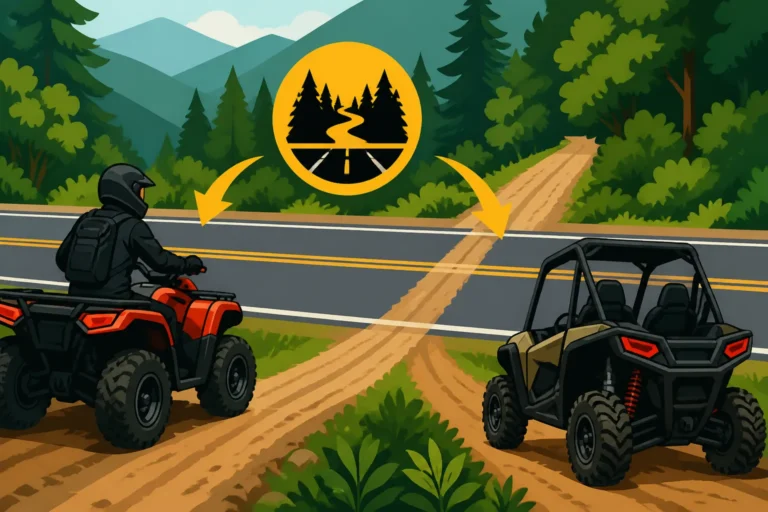
Now let's zoom in on those peculiar roads that often leave riders scratching their heads: the ones without a clearly marked center line. West Virginia, with its mountainous terrain and rural communities, has an abundance of such roads, ranging from narrow paved county routes to unpaved back roads winding through hollows. These are often the very roads riders need to use to access trailheads, connect to small towns, or simply get from point A to point B in areas where main highways are few and far between. Understanding the specific legal framework for these roads is vital, as the absence of a line doesn't mean the absence of rules.
Defining a Road Without a Center Line
What exactly constitutes a "road without a center line" in West Virginia's legal context? It's pretty straightforward: any public roadway that doesn't have a painted yellow or white line dividing opposing lanes of traffic. These can be gravel roads, older paved county roads that haven't been re-striped in years, or even some residential streets in smaller towns. The key is that the absence of a physical marker means you can't assume typical lane usage. These roads often feel more intimate and less structured than multi-lane highways, but they are still public thoroughfares where standard traffic laws apply, albeit with some unique interpretations for ATVs and UTVs.
The lack of a center line forces drivers, including ATV and UTV operators, to be more vigilant and consciously manage their position on the road. You can't rely on the painted guidance you'd find on a major state route or interstate. Instead, you're expected to use common sense and defensive driving practices to navigate safely. This definition becomes particularly important when considering where you're legally supposed to ride your off-road vehicle on such a road. It shifts the burden of lane discipline from the road itself to the operator.
Where These Roads Are Common
Roads without center lines are a common sight across West Virginia, especially in the more rural, mountainous regions. You'll find them frequently connecting small communities, leading to remote homes, or serving as access points for timber and mining operations. These often include county routes, designated with numbers like "County Route 1," as well as many unpaved forest service roads or roads within state parks (though state park rules can be even stricter). They are the arteries of rural life in the Mountain State, often winding and narrow, sometimes with steep grades or blind curves.
Think about the roads leading into and out of many of West Virginia's trail towns. While the main streets might be clearly marked, the feeder roads that connect to the broader network of trails, or even to nearby gas stations and general stores, are often these unmarked varieties. For riders looking to experience the full scope of West Virginia's off-road offerings, it's almost inevitable that you'll encounter these types of roads. Being familiar with [West Virginia Rules for Riding a County Route] can help you navigate these scenarios confidently and legally, ensuring your trip stays on track.
The "Right Edge" Rule
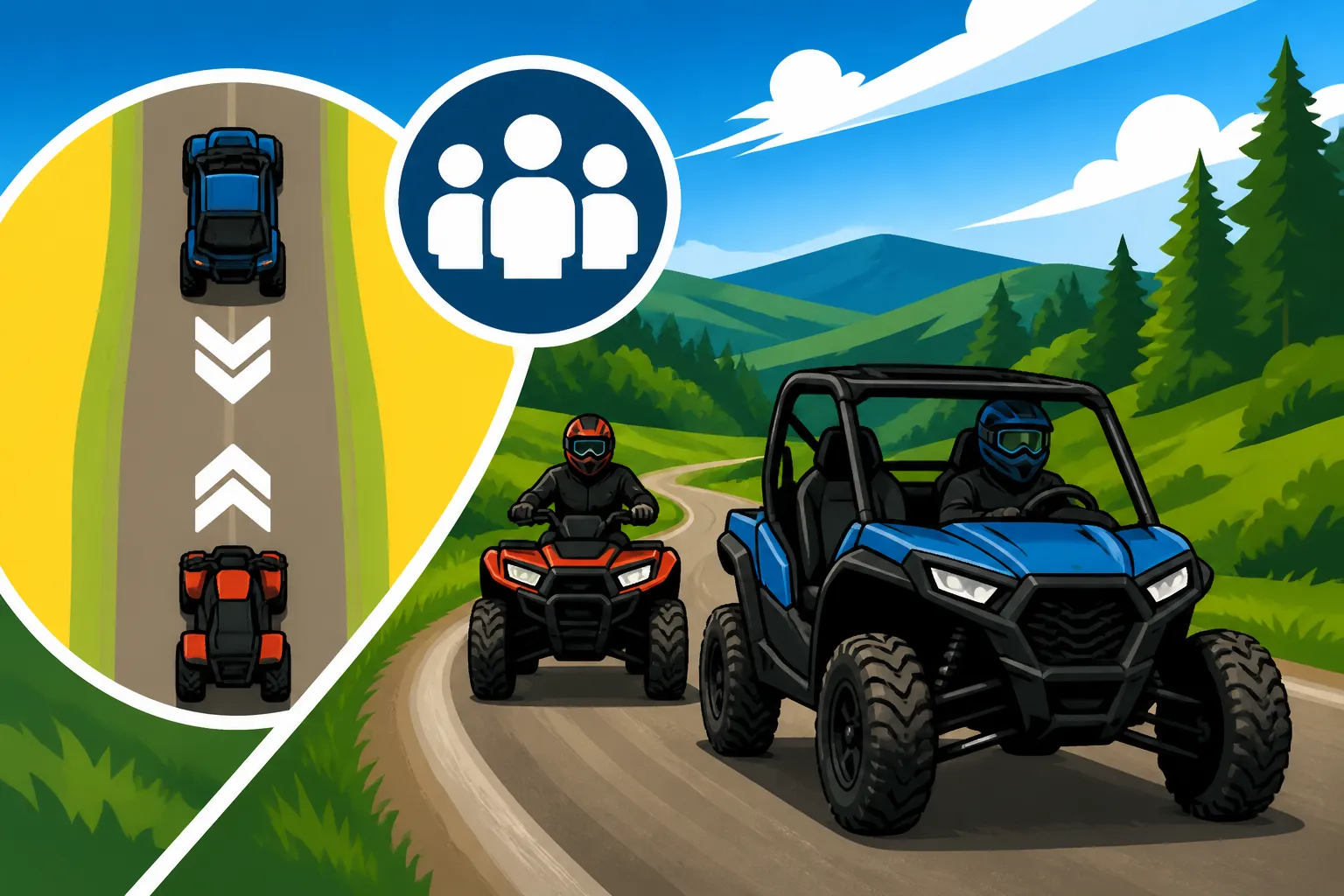
This is the crux of the matter when it comes to roads without center lines for ATV and UTV operators in West Virginia. When you're on a public road that lacks a painted center line, the law dictates that you must ride as far to the right edge of the paved or maintained portion of the roadway as practicable. This isn't just a suggestion; it's a legal requirement. The intent behind this rule is safety: by staying to the far right, you maximize the space between your machine and any oncoming traffic, reducing the risk of a head-on collision on a narrow road.
Consider a scenario where you're riding your UTV on a winding, single-lane county road with no center line, and a large pickup truck suddenly appears around a blind curve. If you've been hugging the right edge, you've already given yourself the best possible chance to avoid an incident. If you've been cruising down the middle, you've created a far more dangerous situation. This rule demands constant attention to your positioning, especially on curves and hills where visibility is limited. It requires a proactive approach to safety, rather than waiting for other vehicles to react to you. [Riding the Right Edge of a West Virginia Road] details this further and highlights its importance.
Navigating Different Types of Unmarked Roads
While the "right edge" rule provides a foundational principle, the reality of West Virginia's unmarked roads is diverse. Not all roads without center lines are created equal. You might encounter smoothly paved but narrow county routes, rugged gravel paths, or even industrial access roads. Each type presents its own set of challenges and nuances that ATV and UTV riders need to be aware of. Understanding these distinctions helps you apply the general rule effectively and adjust your riding style for maximum safety and compliance.
County Routes and Gravel Roads
Many of West Virginia's rural county routes fit the description of roads without center lines. These can be paved, but often they are older, narrower, and might have deteriorated shoulders. Gravel roads are another common category, ranging from well-maintained, smooth surfaces to rough, washboarded paths. When riding your ATV or UTV on these types of roads, the "right edge" rule is paramount. On gravel, it's even more critical because dust can reduce visibility for both you and oncoming vehicles.
The key here is vigilance. On county routes, anticipate blind curves and hills. On gravel roads, be mindful of loose surfaces, especially when braking or turning. Your off-road tires, while excellent for trails, might not offer the same grip on gravel as a car tire, so adjust your speed accordingly. Many riders consider adding accessories like improved mirrors or even a small windshield from SuperATV to help with dust and debris on these routes, enhancing both visibility and rider comfort. Always remember that even if it feels like a trail, it's a public road, and you're sharing it with other vehicles, including large farm equipment or logging trucks that might not expect to see an ATV.
Coal Haul Roads and Industrial Areas
In parts of West Virginia, particularly in the southern coalfields, you might encounter roads primarily used for industrial purposes, such as coal hauling. These roads often lack center lines and can be surprisingly busy with heavy truck traffic. While some of these might technically be private roads, others are publicly accessible or serve as connections between public roads and industrial sites. The rules for public roads without center lines generally apply here, but with an added layer of caution due to the sheer size and speed of the vehicles you might encounter.
Riding on these roads demands extreme defensive driving. The massive trucks that use them have large blind spots and require significant braking distances. Staying far to the right, being highly visible, and anticipating their movements are crucial. If you're using an ATV or UTV to access a hunting camp or connect to a trail system in these areas, be acutely aware of the industrial traffic patterns. It's often advisable to avoid these roads during peak industrial hours if possible. For more information on specific types of roads, you might want to review [Riding a West Virginia Coal Haul Road on an ATV].
Private Roads with Public Access
Sometimes, what looks like a public road without a center line is, in fact, a private road that has historically been used by the public, or one where access has been granted for specific purposes, such as reaching a trail network or a remote cabin. While the "right edge" rule is generally for public roads, the spirit of safe, defensive driving applies universally. However, the legal standing can be murkier. If a road is truly private, the landowner's rules might supersede state public road regulations, or they might simply prohibit ATV/UTV use entirely.
It's essential to understand the ownership and access rights of any road you're on, especially if it's unmarked and appears to be in a secluded area. Always look for signage indicating private property or restricted access. If you're uncertain, it's always safer to err on the side of caution and find an alternative route. Trespassing, even unintentional, can lead to serious consequences and reflects poorly on the ATV/UTV riding community as a whole. Understanding [West Virginia Trespass Rules Along Roads] is crucial for any rider venturing into less defined areas.
Safety Considerations for Unmarked Roads
Riding an ATV or UTV on any public road, especially those without a center line, inherently carries greater risks than riding on dedicated trails. The shared environment with larger, faster, and often less forgiving vehicles demands a heightened sense of awareness and proactive safety measures. It's not just about following the law; it's about staying alive and preventing accidents. The unique characteristics of these unmarked roads amplify certain dangers that every rider should meticulously consider.
Visibility and Blind Spots
On narrow, winding West Virginia roads, visibility is often severely limited by dense foliage, steep hills, and sharp curves. This issue is compounded when there's no center line to help delineate lanes, making it harder to anticipate oncoming traffic or for others to see you. ATVs and UTVs, being smaller than cars and trucks, can easily disappear into the landscape or be obscured by roadside vegetation. This makes it crucial to assume that you are invisible to other drivers, especially around blind spots.
To combat this, actively scan the road ahead and around corners. Use your horn judiciously before blind curves, particularly if you hear or see signs of oncoming traffic. Consider adding high-visibility flags or bright reflective tape to your machine, especially if you have a SuperATV roof or roll cage that can easily accommodate them. Wearing brightly colored riding gear also significantly increases your conspicuity. The goal is to make yourself as large and noticeable as possible, compensating for the natural tendency of off-road vehicles to blend in. [Fog and Visibility on a Mountain Road Ride] touches on some of these challenges, especially in adverse weather.
Encountering Oncoming Traffic
The moment of truth on an unmarked road often comes when you encounter an oncoming vehicle, especially a larger one. Without a center line, there's no visual cue for either driver to maintain their lane. The "right edge" rule is your guide, but you also need to understand that the other driver might not be familiar with it, or with the presence of ATVs/UTVs on that particular road. This creates a situation that requires quick judgment and defensive maneuvers.
When you see an oncoming vehicle, immediately assess the available space. If the road is wide enough for two vehicles to pass comfortably side-by-side, maintain your position hugging the right edge. If it's exceptionally narrow, be prepared to slow down, pull further onto the shoulder if safe, or even stop completely to allow the other vehicle to pass. Never assume the other driver will yield or see you. Communication through headlights or a quick horn tap can sometimes help. It's about minimizing conflict and prioritizing your safety above all else, especially when dealing with commercial vehicles or large trucks.
Weather Conditions and Road Surface
West Virginia's weather is notoriously unpredictable, and its impact on unmarked roads can be severe. Rain can turn dirt and gravel roads into slick, muddy hazards and make paved surfaces slippery with oil and debris. Fog dramatically reduces visibility, making blind curves even more perilous. Snow and ice can render these roads impassable or extremely treacherous, even for off-road vehicles. Your ATV or UTV's capabilities on a trail might not translate well to a slippery, narrow public road.
Always check local weather forecasts before planning a road-connecting ride. If conditions are poor, it's often best to reschedule or find an alternative trail-only route. Even light rain can drastically change traction, making braking distances longer and cornering more challenging. Be particularly wary of low-water crossings that might become impassable or obscured by high water after heavy rain. Adjust your speed to suit the conditions, and if you're uncertain, turn around. Safety is always paramount, and pushing your luck in bad weather on an unmarked road is a recipe for disaster. [West Virginia Road Riding in Heavy Rain] discusses these dangers in more detail.
Enforcement and Penalties on Unmarked Roads
It's easy to assume that because a rural road lacks a center line, it's somehow less regulated or that law enforcement might be less vigilant. This couldn't be further from the truth. Sheriffs, State Police, and local officers in West Virginia are well aware of ATV and UTV usage on these roads, particularly in areas near popular trail systems. They are tasked with enforcing all traffic laws, and that includes the specific regulations governing off-road vehicles on public thoroughfares. Understanding how these rules are enforced and the potential penalties can help you avoid costly mistakes.
How Law Enforcement Interprets the Rule
When a law enforcement officer observes an ATV or UTV on a road without a center line, they will typically be looking for adherence to the "right edge" rule, among other things. They're assessing whether you're operating your machine as far to the right as is safely possible, given the road conditions. They'll also be checking for compliance with the 10-mile, 25 mph limit, proper licensing, and required equipment. The absence of a center line doesn't mean a relaxed standard; it means you are expected to demonstrate greater awareness and control over your position on the road.
Officers are generally looking for safe and responsible operation. If you're hugging the middle of the road, weaving, or clearly operating at speeds exceeding the limit, you're signaling a disregard for safety and the law. They understand that these roads are narrow, but they expect you to actively mitigate the risks. Explaining that there was no center line won't excuse you if you weren't maintaining the furthest right position. They want to see you taking precautions to avoid conflicts with other vehicles, especially when there's no painted line to separate traffic.
Common Citations on Unmarked Roads
Riders who don't follow West Virginia's rules on unmarked roads can face a variety of citations, much like any other vehicle operator. Some of the most common offenses include:
- Failure to Keep Right: This is the direct result of not adhering to the "right edge" rule.
- Exceeding Speed Limit: Going over 25 mph on a public road, even a gravel one.
- Operating Without Proper Equipment: Lacking mirrors, a horn, adequate lights, or sometimes even turn signals. Many riders get caught here, not realizing their trail machine needs more.
- Operating Without a Valid Driver's License: If you're under age or your license is suspended.
- Exceeding the 10-Mile Limit: While harder for an officer to prove without tracking your entire journey, it can be a factor if you're clearly far from any reasonable access point.
- Reckless Operation: Anything from excessive speed to unsafe passing or riding under the influence.
These citations can come with fines, points on your driver's license, and potentially even impoundment of your machine in severe cases. It's not worth the risk for a few extra minutes of speed or a moment of carelessness. For a better understanding of potential legal repercussions, refer to [West Virginia ATV Ticket Costs].
The Importance of Knowing Your Local Ordinances
While state law provides the overarching framework, local municipalities and counties in West Virginia can implement their own ordinances regarding ATV and UTV use on public roads, especially within town limits. Some "trail towns" actively encourage road use to connect businesses and lodging to the trails, often waiving or adjusting the state's 10-mile, 25 mph rule within their boundaries. However, even in these towns, the "right edge" rule for unmarked roads, or specific designated routes, will likely still apply.
Conversely, other towns or counties might have stricter rules, or even outright prohibitions on ATV/UTV road use, outside of very specific circumstances. It's absolutely crucial to research the local ordinances for any town or county you plan to ride through, particularly if you're departing from designated trail areas. Don't assume that because one town is ATV-friendly, all adjacent areas are. A quick call to the local sheriff's department or town hall before your trip can save you a lot of grief. [How a West Virginia Town Becomes ATV-Friendly] provides context on these local variations.
Making Your Machine Legal for Any Road Section
For riders who frequently use public roads, even the unmarked ones, to connect trails, access services, or simply explore, considering a more permanent "street legal" conversion for your ATV or UTV is a smart move. While the state's general road rules are designed for limited use, obtaining a Special Purpose Vehicle (SPV) plate offers greater freedom and clarifies your machine's legal standing on a much broader range of roads. This involves more than just a few lights; it's a comprehensive upgrade to meet specific automotive standards.
General Street-Legal Requirements
To make an ATV or UTV truly street legal in West Virginia, you'll need to go beyond the basic equipment required for casual road crossings. This typically includes a full suite of DOT-compliant lights (headlights, taillights, brake lights, turn signals), a horn, mirrors on both sides, a windshield (often requiring safety glass or equivalent material), and DOT-approved tires. Some riders will also install speedometers, odometers, and even windshield wipers to meet all the requirements. Companies like SuperATV offer extensive lines of parts and conversion kits specifically designed to help off-road enthusiasts meet these street-legal standards, making the process much more manageable.
This level of conversion ensures your machine can operate safely and predictably in various traffic conditions, similar to a traditional car. It's a significant investment, both in terms of parts and time, but it pays off in peace of mind and greater legal flexibility. The goal is to transform your off-road machine into something that can confidently share the road with other vehicles, not just sneak across for a few miles. [Equipment a West Virginia SPV Must Carry] provides a detailed list of what you'll need.
Insuring Your Road-Ready ATV/UTV
Once you've made the investment to make your ATV or UTV street legal, securing the proper insurance is absolutely non-negotiable. Standard off-road ATV insurance might not cover you for incidents on public roads, especially if you're operating with an SPV plate. You'll need a policy that specifically covers street-legal operations, often akin to motorcycle or automobile insurance. This typically includes liability coverage, which is legally required, and often comprehensive and collision coverage to protect your investment.
Imagine an accident on a public road: without the right insurance, you could be personally liable for significant damages or medical bills. Don't let your excitement about riding legally on the road overshadow the critical step of ensuring you're fully covered. Talk to your insurance provider about your intentions to operate your ATV or UTV as a street-legal vehicle and ensure your policy reflects this. The peace of mind that comes with knowing you're financially protected is invaluable. [Insurance Required for a West Virginia SPV Plate] dives into the specifics of what kind of coverage you'll need.
The Special Purpose Vehicle SPV Plate Option
For West Virginia riders, the ultimate pathway to greater road access for their ATVs and UTVs is through the Special Purpose Vehicle (SPV) plate. This unique registration allows certain modified off-road vehicles to operate on most public roads in West Virginia, largely bypassing the 10-mile, 25 mph restrictions (though other rules, like the "right edge" rule on unmarked roads, still apply). It opens up a world of possibilities for exploring the state's vast network of roads and connecting directly to trail systems from your home or lodging.
Obtaining an SPV plate involves a rigorous inspection process to ensure your machine meets all the necessary safety and equipment requirements. This isn't a casual affair; it's a serious commitment to making your off-road vehicle truly roadworthy. While the process can seem daunting, the freedom and flexibility it provides are often well worth the effort for dedicated riders. It's the state's way of allowing enthusiasts to enjoy their machines in a broader context, while still maintaining public safety. You can learn more about the complete process by checking out [West Virginia's Street-Legal Special Purpose Vehicle Plate].
| Road Type Characteristic | General ATV/UTV Rule | SPV ATV/UTV Rule | Safety Implication |
|---|---|---|---|
| With Center Line | 10-mile, 25 mph limit, stay right | Full road access, stay right | Clear lane guidance, but smaller profile still needs vigilance. |
| No Center Line | 10-mile, 25 mph limit, stay far right | Full road access, stay far right | Requires active lane management, higher risk of head-on on narrow stretches. |
| Paved Surface | Adhere to limits & equipment | Adhere to equipment & speed limits | Good traction, but higher speeds possible for other vehicles. |
| Gravel/Dirt Surface | Adhere to equipment & limits | Adhere to equipment & speed limits | Reduced traction, dust concerns, requires careful speed adjustment. |
| Blind Curves/Hills | Extreme caution, signal presence | Extreme caution, signal presence | Limited visibility, highest risk areas, defensive riding is crucial. |
| Residential Roads | Check local ordinances | Check local ordinances | Varying local rules, watch for pedestrians/children, speed limits enforced. |
Disclaimer
This article is for general informational purposes only and does not constitute professional advice. Laws, prices and regulations vary by location and change over time. Consult a qualified professional for guidance on your specific situation.