West Virginia Inspection Rules for a Street-Legal Machine
So, you’ve decided to take the plunge and make your ATV or UTV street legal in West Virginia. That’s a fantastic step toward opening up a whole new world of riding opportunities, connecting trails, and cruising through our wonderful trail towns. But let's be honest, the thought of getting your beloved machine inspected for street legality can feel like navigating a winding mountain road blindfolded. You're probably wondering what exactly you need, what the inspector will actually look for, and how to avoid the headache of a failed inspection. This guide is here to cut through the confusion and give you a clear roadmap to successfully passing your West Virginia street-legal machine inspection, so you can hit the pavement with confidence.
Understanding the Street-Legal Special Purpose Vehicle (SPV) Designation in West Virginia
Making your off-road vehicle street legal isn't just a matter of slapping on a license plate; it's about transforming it into a "Special Purpose Vehicle" (SPV) as defined by West Virginia law. This designation comes with specific requirements that ensure your machine is safe for shared roads, protecting both you and other drivers. It's a journey many riders undertake, driven by the desire for more freedom and connectivity between our state's incredible trail systems and the welcoming communities that embrace them.
What Makes an ATV or UTV an SPV?
At its core, an SPV is an ATV or UTV that has been modified and equipped to meet certain safety standards, allowing it to legally operate on designated public roads. Think of it as bridging the gap between a pure off-road machine and a traditional vehicle. It means outfitting your quad or side-by-side with components that are standard on cars and trucks, like headlights, brake lights, and turn signals, all while maintaining its off-road prowess. The goal is to make these machines visible, controllable, and predictable to others on the road, which is why the inspection process is so vital. It's not about making a car out of your UTV, but rather ensuring it can safely share the road for those critical short distances that link up all the fun.
This transformation opens up access to countless miles of pavement, allowing you to ride directly from your cabin to the trailhead, or even from one trail system to another. Instead of loading and unloading your machine from a trailer multiple times a day, an SPV allows for seamless transitions, maximizing your time on the trails and minimizing logistics. This convenience is a game-changer for many riders, especially those exploring the vast [The Hatfield-McCoy Trails, West Virginia's 1,200-Mile Network] or visiting our charming [West Virginia Trail Towns You Can Ride Into].
Why Inspections are Crucial for SPVs
The inspection isn't just a bureaucratic hoop to jump through; it's a critical safety measure. When you're riding your SPV on public roads, you're interacting with cars, trucks, and even pedestrians. The inspection ensures that your machine has the necessary equipment to communicate your intentions (like turning or stopping), maintain visibility, and respond predictably in traffic. Without these vital checks, you'd be putting yourself and others at unnecessary risk. It’s about more than just getting the [West Virginia's Street-Legal Special Purpose Vehicle Plate]; it's about adhering to the spirit of safe road sharing.
Many riders initially feel frustrated by the perceived "red tape" of the inspection process. You've spent hard-earned money and countless hours outfitting your machine, and now you have to prove it's "good enough." But consider the alternative: if there were no standards, our roads would be chaotic, and the privilege of riding SPVs on public roads might quickly be revoked. The inspection is the gatekeeper, ensuring that this privilege remains available to all responsible riders. It’s also important to remember that these rules are in place because West Virginia wants to welcome riders, and maintaining safety is key to that welcome lasting.
The Specifics of the West Virginia SPV Inspection Checklist
So, what exactly do you need to have on your machine, and what will the inspector be looking for? This is where the rubber meets the road, quite literally. Preparing thoroughly for your inspection means understanding the comprehensive list of required equipment and knowing what to expect when you pull into the inspection station. It can feel like a lot to remember, but breaking it down makes it much more manageable.
Essential Equipment for a Street-Legal Conversion
West Virginia has a specific list of items that your ATV or UTV must have to qualify for an SPV plate. These aren't suggestions; they are non-negotiable requirements designed to make your machine function safely alongside other vehicles on the road. Many riders turn to aftermarket kits from brands like SuperATV to ensure they have all the necessary components. These kits often bundle turn signals, horns, and mirrors, making the conversion process much simpler than sourcing each part individually.
Here's a detailed rundown of the absolute essentials:
- Headlights: You need at least one, but two are usually better for visibility, emitting a white light visible from 500 feet. They must be operational on both high and low beams, just like a car.
- Taillights: At least one red taillight, visible from 500 feet, is required. It should illuminate when the headlight is on.
- Brake Lights: A red brake light must activate when the brakes are applied, visible from 100 feet. This is crucial for signaling stops to drivers behind you.
- Turn Signals: Both front and rear turn signals are mandatory. They must be amber in the front and amber or red in the rear, visible from 100 feet, clearly indicating your intention to turn.
- Horn: A horn that can be heard from at least 200 feet away is needed to alert other drivers or pedestrians to your presence.
- Mirrors: You must have at least one rearview mirror, providing a clear view of the road to the rear for at least 200 feet. Many riders opt for two mirrors for enhanced safety and visibility. These are often included in a [Mirrors and Horns on a Street-Legal Build] package.
- Windshield: While not explicitly required for all ATVs, if your UTV has an open-cab design, a windshield is often a practical and advisable addition for protection from debris. If it has a factory-installed windshield, it usually needs to be safety glass.
- DOT-Approved Tires: Your tires must be specifically rated for highway use (DOT-approved). Off-road only tires often lack the proper construction and tread for safe road operation. Look for the "DOT" stamp on the sidewall of your [DOT Tires for a Street-Legal Side-by-Side].
- Spark Arrester and Muffler: Your machine needs a functioning spark arrester to prevent trail fires and an adequate muffler to keep noise levels within acceptable limits. This is part of the [Spark Arrester and Muffler Requirements in West Virginia].
- License Plate Mount and Light: A securely mounted license plate holder with a white light that illuminates the plate after dark is essential.
- Seatbelts/Restraints: If your machine came with factory-installed seatbelts, they must be present and fully functional.
Remember, simply having these items isn't enough; they must be functional and properly installed. For a full breakdown, you can refer to the [West Virginia SPV Plate Requirements List].
The Inspection Process and What Inspectors Look For
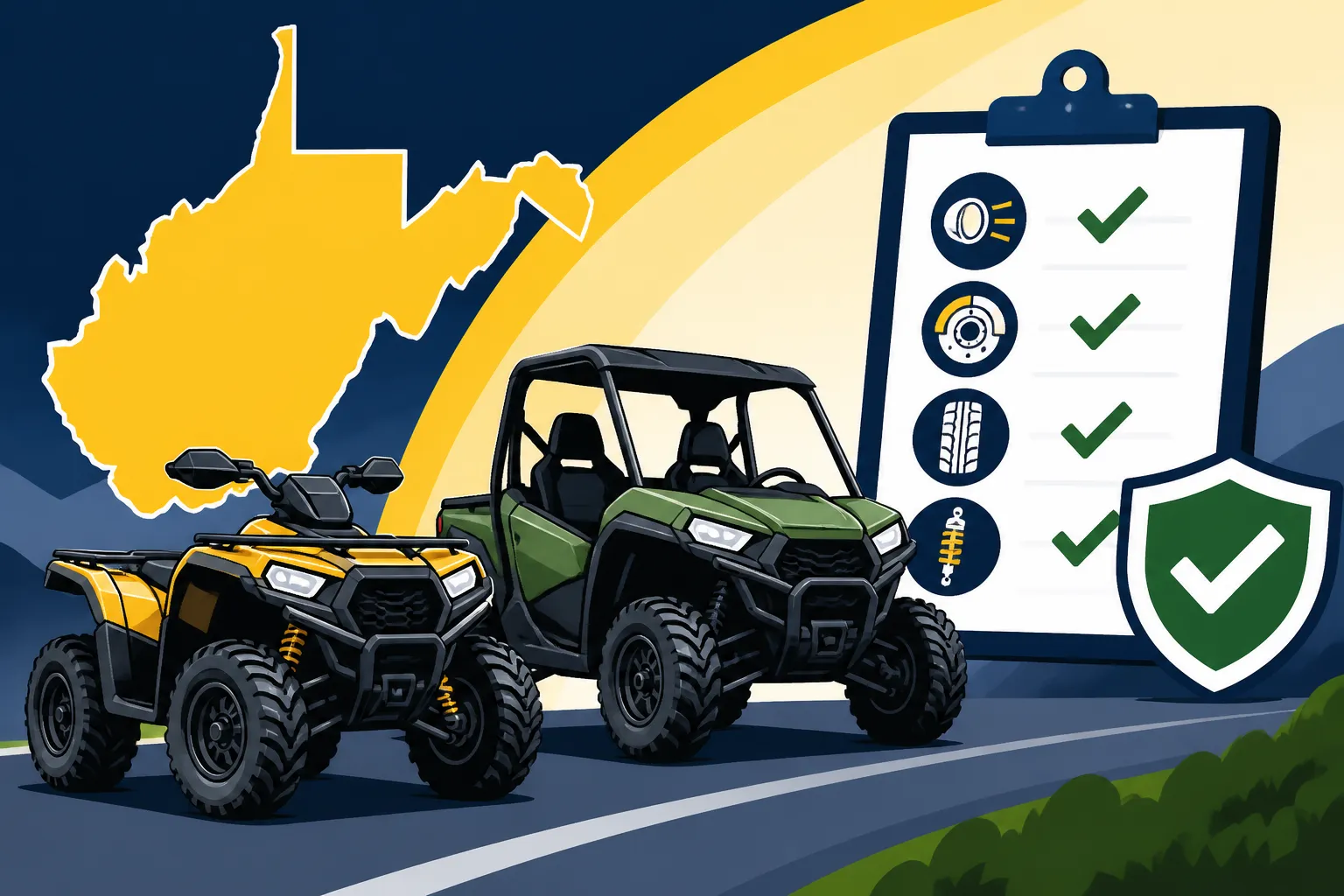
When you take your machine to an authorized West Virginia inspection station, a certified inspector will meticulously go through a checklist, verifying that every required component is present and working correctly. This isn't a quick glance; it's a thorough examination. They're looking for compliance, but also for general safety.
Here’s a glimpse into what they’ll be scrutinizing:
- Visual Check of All Equipment: The inspector will physically check for the presence of headlights, taillights, brake lights, turn signals, mirrors, and a horn. They’ll also check your tires for the DOT stamp and adequate tread depth.
- Functionality Test: Every light will be turned on, every turn signal activated, and the horn will be honked. They’ll verify that the brake lights come on when you hit the brake pedal or lever. They'll also check [Lights Required After Dark in West Virginia].
- Brakes: They'll test both front and rear brakes for proper function and stopping power. This includes checking brake fluid levels (if applicable) and the condition of brake lines and pads.
- Steering and Suspension: The inspector will look for excessive play in the steering system, worn ball joints, tie rods, or wheel bearings. They want to ensure your machine tracks straight and responds predictably.
- Frame and VIN: They'll verify the Vehicle Identification Number (VIN) on your machine matches your documentation and that the frame is free from significant damage or unsafe modifications.
- General Condition: While not directly on the SPV checklist, a good inspector will also assess the overall condition of your machine. Excessive rust, loose parts, or obvious safety hazards might lead to a closer look or even a rejection. It’s always best to present a machine that is well-maintained and clean.
It’s a good idea to call ahead to your chosen inspection station to confirm they are authorized to inspect SPVs, as not all stations handle them. This can save you a wasted trip.
Navigating Common Hurdles and Ensuring a Smooth Inspection
Even with all the right gear, the inspection process can sometimes throw a curveball. The key to a smooth experience is proactive preparation and knowing how to handle potential issues if they arise. Don't let a small oversight lead to frustration and delays.
Pre-Inspection Checks You Can Do at Home
Before you even think about driving to an inspection station, perform your own comprehensive pre-inspection check in your driveway. This not only builds your confidence but can save you time, money, and the annoyance of a re-inspection. Think of yourself as the inspector and be just as thorough.
Here’s a checklist for your at-home walkthrough:
- All Lights Work: Turn on your headlights (high and low), taillights, and brake lights. Engage each turn signal individually. Have a friend or family member stand behind you to confirm they all illuminate brightly.
- Horn Honks: Give your horn a good blast. Is it loud enough?
- Mirrors Adjusted: Are your mirrors securely mounted and adjusted so you can see clearly behind you?
- Tires Inflated and Marked: Check your tire pressure and visually confirm the "DOT" stamp on the sidewall of each tire. Look for any excessive wear or damage.
- Brakes Function: Test your brakes repeatedly. Do they feel firm? Does the machine stop in a straight line without pulling to one side?
- Steering Tight: With the machine off, grab the handlebars or steering wheel and gently try to turn it without moving the wheels. Is there excessive play or looseness?
- Seatbelts Click: If applicable, ensure all seatbelts latch and unlatch easily and are in good condition.
- Fluids Checked: While not typically part of a lights and safety inspection, ensuring engine oil, coolant, and brake fluid are at appropriate levels shows good maintenance and prevents other issues.
- Cleanliness: Give your machine a good wash. A clean machine often gives the impression of a well-maintained one, which can subtly influence the inspector's perception.
Taking these steps can prevent minor issues from becoming major headaches at the inspection station. It's also a great practice to perform these checks before any significant ride, street legal or not.
What Happens If Your SPV Fails Inspection?
It happens. Sometimes, despite your best efforts, your SPV might fail the inspection. This isn't the end of the world, though it can certainly feel frustrating in the moment. The important thing is to understand the process for correction and re-inspection. The inspector will provide you with a detailed list of the items that failed. This list is your repair roadmap.
Here’s what typically happens:
- Receive a Rejection Form: The inspector will give you documentation outlining exactly why your machine failed. This could be anything from a burnt-out turn signal bulb to excessive play in a suspension component.
- Make the Necessary Repairs: Take this list seriously and address each item thoroughly. For example, if your turn signals aren't bright enough, you might need to check wiring or even upgrade to brighter LED units. This might involve purchasing specific parts from an outfitter like SuperATV or visiting a local mechanic.
- Re-Inspection: Once all repairs are made, you'll need to return to the inspection station for a re-inspection. Depending on the station and the severity of the initial failure, they might only re-check the failed items, or they might perform a full inspection again. It's always best to assume a full re-check and ensure everything is still in top shape. There is often a window of time during which a re-inspection on the same failed items might be free or discounted, so be sure to ask the inspector about their policy.
Don't get discouraged if you fail the first time. Use it as an opportunity to ensure your machine is truly safe and compliant. Many riders have gone through this, and successfully passing the re-inspection is a common part of the street-legal journey.
Beyond the Inspection: Maintaining Your SPV's Street Legality
Passing the inspection is a fantastic achievement, but it's not a one-and-done deal. Maintaining your SPV's street legality involves ongoing vigilance and adherence to road rules. Just like any other vehicle, your off-road machine requires continuous care to remain safe and compliant on public thoroughfares.
Ongoing Maintenance and Compliance
Once your machine has its shiny new SPV plate, the responsibility to keep it street legal falls squarely on your shoulders. This means more than just making sure the engine runs; it means ensuring all those street-legal components remain in perfect working order. A burnt-out headlight or a broken mirror won't just hinder your visibility, it could also lead to a citation if caught by law enforcement on a public road.
Here are some practices for ongoing maintenance:
- Regular Pre-Ride Checks: Before any ride that involves public roads, perform a quick check. Test all your lights, honk the horn, and ensure your mirrors are clean and adjusted. It takes only a few minutes and can prevent a lot of trouble.
- Component Integrity: Pay attention to the physical condition of your street-legal additions. Are your turn signals securely mounted? Is your horn still loud and clear? Road vibrations and trail dust can take a toll, so tighten connections and clean components regularly.
- Tire Health: Continuously monitor your DOT-approved tires for proper inflation, even wear, and any damage. Road riding can wear down tires differently than trail riding, so keep an eye on them.
- Brake Performance: If your brakes start feeling spongy or less effective, don't delay. Get them checked immediately. Safe stopping is paramount on public roads.
Staying on top of these things not only keeps you legal but, more importantly, keeps you safe. It’s also a sign of respect for the privilege of sharing the road with other vehicles.
Renewal and Road Rules
Your West Virginia SPV plate isn't a lifetime pass. It typically requires annual renewal, similar to a regular vehicle registration. This is another opportunity for the state to ensure that only compliant machines are operating on public roads. While a full annual re-inspection might not always be mandated, the expectation is that your machine continues to meet all initial requirements. Keep an eye on your renewal dates to avoid any lapse in legality. You can typically find information on [West Virginia SPV Plate Renewal] on the DMV website.
Beyond the machine itself, understanding and adhering to West Virginia's specific road rules for SPVs is equally critical. These machines have unique limitations compared to cars, and the laws reflect that:
- Speed Limits: SPVs often have lower maximum speed limits on public roads, such as 25 mph, even if the posted limit for cars is higher. Ignoring these limits can result in tickets and endanger yourself and others.
- Centerline Rule: In many areas, SPVs are restricted to roads that do not have a painted center line. However, West Virginia has specific rules, like the [West Virginia's 20-Mile Centerline Limit for an SPV], which allows SPVs on roads with centerlines for up to 20 miles to connect trails. It's crucial to know the difference and where you can and cannot ride. Pay close attention to [West Virginia Rules on Roads Without Center Lines].
- Driver's License: You typically need a valid driver's license to operate an SPV on public roads.
- Insurance: [Insurance Required for a West Virginia SPV Plate] is usually a prerequisite for registration and operation, providing financial protection in case of an accident.
Operating a street-legal ATV or UTV in West Virginia is a fantastic way to enhance your riding experience, but it comes with the responsibility of upholding safety standards and respecting the rules of the road. By diligently preparing for your inspection, maintaining your machine, and understanding the laws, you can confidently enjoy the freedom that a street-legal SPV provides.
| SPV Equipment Requirement | Description | Purpose on Public Roads |
|---|---|---|
| Headlights | At least one, white, visible 500 ft; high/low beam. | Illuminates road, makes machine visible to oncoming traffic. |
| Taillights | At least one, red, visible 500 ft; on with headlight. | Makes machine visible from rear. |
| Brake Lights | Red, activates with brake, visible 100 ft. | Signals slowing or stopping to traffic behind. |
| Turn Signals | Front (amber), rear (amber/red), visible 100 ft. | Communicates intended change of direction. |
| Horn | Audible from 200 ft. | Alerts others to presence or potential hazard. |
| Rearview Mirror(s) | At least one, clear view 200 ft to rear. | Allows operator to monitor traffic approaching from behind. |
| DOT Tires | Specifically rated for highway use. | Provides proper traction, durability, and handling on pavement. |
| Spark Arrester | Prevents ignition of flammable materials. | Essential for fire prevention, especially when riding off-road sections. |
| Muffler | Keeps noise levels within legal limits. | Reduces disturbance to communities and wildlife. |
| License Plate Light | Illuminates rear license plate after dark. | Ensures license plate is readable for identification. |
| Brakes | Functional front and rear, capable of safe stopping. | Essential for safe deceleration and stopping. |
| Seatbelts | If factory-installed, must be present and functional. | Provides occupant restraint in case of collision or sudden stop. |
Disclaimer
This article is for general informational purposes only and does not constitute professional advice. Laws, prices and regulations vary by location and change over time. Consult a qualified professional for guidance on your specific situation.