What a Hatfield-McCoy Permit Costs in 2026
A Hatfield-McCoy permit is a real trip expense, and it can be frustrating to plan a weekend without knowing what you’ll pay for each machine. This guide explains what affects the permit cost, how to check the correct 2026 price before you travel, what the permit covers, and which extra paperwork or expenses riders often mistake for part of the permit.
What determines the cost of a Hatfield-McCoy permit
There isn’t one price that applies to every rider and every situation. The amount you’re charged can depend on the permit category, the number of machines, and where or how you buy it. That makes it worth checking the details before you set out for Gilbert, Logan, Williamson, or another trail town.
Resident and nonresident categories
The first question to settle is whether you qualify for a West Virginia resident permit or need a nonresident permit. The categories are not interchangeable, and a rider should not assume that staying in the state, owning property there, or having relatives in West Virginia automatically qualifies them as a resident.
Check the permit rules for the specific documentation the issuing program accepts as proof of residency. If you have recently moved, split your time between states, or hold multiple addresses, sort this out before checkout. A mistake can mean buying the wrong permit and having to contact the permit administrator to ask about a correction or refund.
For a group trip, residency can differ from rider to rider. A West Virginia resident and an out-of-state visitor riding together may need different permit categories, even when they are using the same trailhead and trail system. Confirm each person’s status rather than assuming that one person’s residency sets the price for everyone.
For further background, see West Virginia Resident Discounts on Trail Permits and Proving West Virginia Residency for a Permit. Use the official permit instructions to resolve edge cases, particularly if your documents show an address that differs from where you currently live.
One machine can mean one permit expense
When you budget, count the machines that will be on the trails—not just the people in your party. A driver and passenger sharing one side-by-side generally ride on one machine, while a family bringing two separate ATVs should expect to check the permit requirement for each one. Don’t assume a permit bought for one vehicle follows its owner to another vehicle.
This distinction matters when a group shares a trailer or alternates drivers. For example, two friends might bring one four-seat UTV and switch who drives during the weekend. That is different from bringing a UTV and a separate quad. Check the permit rules for the machine and use rather than the names on the travel reservation.
Before you pay, confirm how the permit program treats each type of vehicle in your group, including ATVs, UTVs, and dirt bikes. If a rental, cabin package, or guided trip is involved, ask whether a permit is included and for which machine. An included permit may apply only to the rental vehicle; it may not cover another machine you tow along.
West Virginia Trail Permits for a Second Machine explains the multi-machine question in more detail. If you are booking for several people, make a list of vehicle types and match each one to the applicable permit before you buy.
Purchase channel and package details
The permit’s listed price may not be the only figure shown at checkout. The purchase channel, transaction details, or a package offered by a lodging provider or rental shop can affect what you pay overall. Read the final order summary rather than relying on a search result, an old screenshot, or a price quoted in a travel discussion.
Ask whether a seller is an authorized permit vendor and whether it can issue the specific permit you need. A shop may sell permits but have limited opening hours, or a trailhead vendor may not be the most convenient option for a late arrival. Confirm operating details directly before building your travel schedule around an in-person purchase.
A package also needs close reading. “Permit included” could refer to one rider’s machine, a specific rental, or a particular travel date. It does not necessarily mean every vehicle in your group is covered. Get the inclusion confirmed in writing and ask what you will still need to purchase separately.
See Where to Buy a Hatfield-McCoy Trail Permit and Authorized Permit Vendors Across Southern West Virginia when comparing purchase options. If you are already staying at a trail-side property, also check Permits Included With a West Virginia Cabin Stay rather than assuming the permit is part of the reservation.
How to check the 2026 permit price before you buy
If you searched for “What a Hatfield-McCoy Permit Costs in 2026,” you likely want a number you can put straight into a trip budget. The reliable way to get that figure is to check the official permit seller’s current checkout information for your category and machine. Permit prices and terms can change, so a past season’s figure is not a safe substitute.
Use the official permit seller’s checkout
Start with the official Hatfield-McCoy permit purchasing channel or an authorized seller listed by the trail program. Choose the correct permit category, enter the relevant details, and review the total shown before confirming payment. The checkout is where you can see what applies to the particular purchase you are making.
Check the date range or validity terms shown during purchase, too. A permit bought for one trip period might not match another visit, and a permit’s validity rules can affect whether it is economical for a return trip. Don’t infer validity from the date printed on an older sticker or from a friend’s permit.
If you use a third-party page to find a vendor, verify that the vendor is authorized before sharing payment details. A page that appears in a search or a social post may be outdated. When in doubt, use the trail program’s own purchasing information to find the correct channel.
The related guide Buying a Permit Online Before You Drive can help you think through the online purchase process. If you would rather buy after arriving, confirm the location and hours of the specific seller instead of assuming every trailhead or welcome center can issue permits at any time.
Confirm what the displayed total includes
Read the checkout line by line. Look for the permit category, machine count, validity dates or period, delivery or processing details if applicable, and any added transaction charge. The amount displayed in a promotional post or an old receipt may not match the total you will be asked to pay.
Keep the confirmation and any receipt in a place you can access during the trip. A digital copy can be useful if you need to resolve a purchase question, while a printed copy can help if your phone battery dies or you lose service. Save the permit information before leaving home rather than expecting reliable connectivity in a remote hollow.
If the checkout does not make an important detail clear, pause before paying. Contact the permit seller or trail authority and ask a specific question: “Does this permit cover this machine for these dates?” That is more useful than asking only whether a permit is “included,” because it prompts the seller to clarify the category and coverage.
Be cautious with old figures and screenshots
Permit prices circulate in trip reports, forum comments, rental listings, and social media posts. Those can be helpful for understanding how the process works, but they may describe an earlier season, a different category, or a package that is no longer available. Treat them as clues, not as the final amount.
A screenshot is particularly easy to misread. It may show a resident permit when you need a nonresident one, a price before an added charge, or a purchase for a different kind of machine. A friend might also be quoting the amount they paid for a prior visit without realizing that the rules or cost structure have changed.
If you are collecting estimates for a group, include a note beside every figure about where it came from and when it was checked. Then replace informal estimates with the amount shown by the official seller before taking payment from the group. This small step can prevent an awkward last-minute request for more money.
| Budget item | What to check | Why it matters |
|---|---|---|
| Permit category | Resident or nonresident eligibility | The categories may have different prices and documentation rules |
| Machine count | Every ATV, UTV, or other permitted vehicle | A permit for one machine may not cover a second |
| Validity period | The dates or term displayed at purchase | It affects whether the permit fits one trip or multiple visits |
| Purchase channel | Official seller or authorized vendor | Vendor availability and checkout details can differ |
| Package inclusion | Which machine and dates are covered | A rental or lodging package may not include every permit in the group |
| Additional trip costs | Lodging, fuel, rental, transport, and gear | These are separate budget items, not necessarily part of the permit |
What a Hatfield-McCoy permit covers and what it does not
A permit is important, but it is not a general pass that makes every machine road-legal or gives permission to ride anywhere in West Virginia. Understanding the boundary between trail access and other requirements can save you from a costly misunderstanding.
Trail access is not the same as title or registration
A Hatfield-McCoy permit is associated with riding the managed trail system under its rules. It does not, by itself, replace a state title, prove ownership, or satisfy every requirement that might apply to operating a machine on a public road. Those are separate questions with their own rules.
A visitor from Ohio or Kentucky may be able to obtain a trail permit without first titling the machine in West Virginia. That does not automatically mean the vehicle is exempt from the laws of the state where it is titled or from rules applying to the route used to reach the trail. Keep trail access paperwork separate from vehicle ownership and road-use paperwork.
Likewise, a machine that has a title is not automatically cleared to ride every trail. The rider still needs to follow the permit process, trail rules, equipment requirements, and any machine-size restrictions that apply to the route. A title is proof-related paperwork; a trail permit is an access-related requirement.
For the distinction between trail paperwork and road rules, see [Do Out-of-State Riders Need a West Virginia Title?] and Permits Riders Actually Need. If you plan to ride on public roads as part of your trip, check the relevant road requirements separately rather than treating a trail permit as permission for roadway use.
A permit does not authorize riding beyond managed trails
The permit is not permission to enter private land, cross a closed gate, or continue onto an unmarked route. Southern West Virginia includes a patchwork of trail corridors, private property, public roads, and land managed under separate arrangements. A route that looks rideable on the ground may still be off limits.
Follow marked routes and any closure notices, even when a detour seems short or familiar. A gate or barrier is not an invitation to find a way around it. Trail access depends on respecting land boundaries and current restrictions, and an unauthorized shortcut can create trouble for the rider and threaten future access for everyone.
Plan your route with current trail maps and pay attention at intersections. If you are unsure whether a connector is open, stop and check rather than relying on another rider’s confident guess. Conditions and access can change, and an old track saved to a navigation device may not reflect a closure.
Read Staying on Marked Trails in West Virginia and What a Trail Permit Does Not Cover before you ride. They reinforce an important point: having a permit does not override trail signs, landowner agreements, or restrictions in place on the day of your visit.
Other permits, safety rules, and equipment may still apply
The trail permit is only one item in a rider’s preparation. Age-related requirements, helmets, eye protection, safety-course rules, and machine suitability may apply depending on the rider and vehicle. A permit purchase should not be treated as confirmation that every person in the group is otherwise ready to ride.
This is especially important for families. A child’s age, machine size, ability to reach controls, and the supervision rules can all matter. Buying a permit does not make an oversized machine appropriate for a young rider, nor does it substitute for required safety gear or training.
Make a separate checklist for each rider and each machine. Include the permit, proof of purchase, any applicable safety documentation, properly fitting helmets and eye protection, and the information you may need in an emergency. If the family is new to the trails, review West Virginia’s ATV Safety Awareness Course and [West Virginia Age Rules on the Trails] before deciding who will ride.
Who needs a permit and how to plan for a group
Permit planning is easiest when you treat it as a vehicle-by-vehicle task. A little organization before the trip can prevent a group from arriving at the trailhead with the wrong number or category of permits.
Out-of-state visitors should check the same details
Visitors coming from Virginia, Ohio, Kentucky, Pennsylvania, or farther away should not assume that a registration, sticker, or trail pass from home automatically grants access to Hatfield-McCoy. Reciprocity depends on the specific program and rules; the safe approach is to verify the requirement for the West Virginia trail system itself.
The paperwork you use in your home state may still be relevant for ownership, transport, or road use. But a home-state document and a Hatfield-McCoy permit serve different purposes. Confirm both sides of the trip: what you need to access the trails and what you need to legally transport or operate your machine elsewhere.
If your group rides multiple trail networks during one trip, ask each system about its own permit rules. A pass accepted on one network may not cover another. Nearby riding opportunities do not necessarily share a permit, even when they are part of the same vacation itinerary.
For a practical starting point, see [Out-of-State Riders on West Virginia Trails], Do Other States’ Registrations Work in West Virginia?, and Spearhead Trails Versus Hatfield-McCoy Permits. Verify the details for each system before buying, especially if the plan includes crossing state lines or using more than one network.
Rentals and lodging packages need a close read
Renting a UTV can simplify transport, but it does not remove the need to ask about permits. Some packages may include a permit for the rental machine, while others may require you to buy it separately. Ask which machine is covered, what dates apply, and whether any other riders or vehicles in your group need their own permits.
Do not assume the rental company and lodging provider have coordinated every detail. A cabin package may include a machine rental without covering the permit, or the permit might be included only for a particular rental option. Put the questions to the provider before arrival, and save the response with your booking documents.
A good message to send is: “Does this booking include the Hatfield-McCoy permit for the machine we will ride, and are there any other permit or trail fees we need to buy separately?” If the answer is yes, ask whether the permit is already issued or whether you must complete a separate purchase.
The guides Does a West Virginia Rental Include the Trail Permit? and Rentals That Include a Hatfield-McCoy Permit are useful when comparing packages. If you are looking at a rental in Gilbert or another trail town, ask the shop directly rather than relying on a listing that may not describe the package details.
Organize the group before checkout
One person can coordinate the purchase, but that person needs accurate details from everyone. Make a simple list of each rider, their resident or nonresident status, the machine they will use, and whether that machine is rented or privately owned. This reduces the chance of ordering too few permits or selecting the wrong category.
For a family trip, include children and passengers in the planning even if they do not operate a separate machine. Ask the permit provider whether passenger status affects the permit requirement, and check age and safety rules separately. Avoid assuming that only drivers matter for every trail rule.
For a club ride or large group, choose a deadline for collecting information and share the final purchase summary with the group. Include the permit category, machine count, validity details, and purchase confirmation. If someone changes machines at the last minute, pause and confirm whether the existing permit still matches the new plan.
The related posts Buying West Virginia Trail Permits for a Group and Does a Passenger Need a West Virginia Trail Permit? can help you frame those questions. Don’t leave them until the morning of the ride, when a missing detail can hold up the entire group.
How to buy a permit and avoid common mistakes
The buying process is straightforward when you know what you are purchasing, but small assumptions can cause delays. Set aside a few minutes to check the permit details and preserve the proof of purchase.
Buy before you travel when possible
Buying ahead can reduce the amount of paperwork you need to handle after a long drive. It also gives you time to spot a wrong category, duplicate purchase, or typo in the order. If you plan to buy online, complete the transaction while you have reliable internet and save the confirmation where it will be accessible offline.
Before submitting payment, check the rider or purchaser information, machine details, permit category, and validity terms. If you are buying more than one permit, review each entry individually. It is easy to assume the second item copied the first correctly when it may have retained a different category or machine selection.
If online purchase is not practical, identify an authorized seller near your destination and confirm when it is open. A long drive to a trailhead can be frustrating enough without discovering that the vendor is closed or does not issue the category you need. A quick phone call before departure can save an unnecessary detour.
For location-specific purchasing guidance, see Buying a Permit at a Hatfield-McCoy Trailhead and Permit Sales Hours at West Virginia Trailheads. The best option is the one that is authorized, available when you need it, and clear about the permit you will receive.
Save proof and know how the permit must be displayed
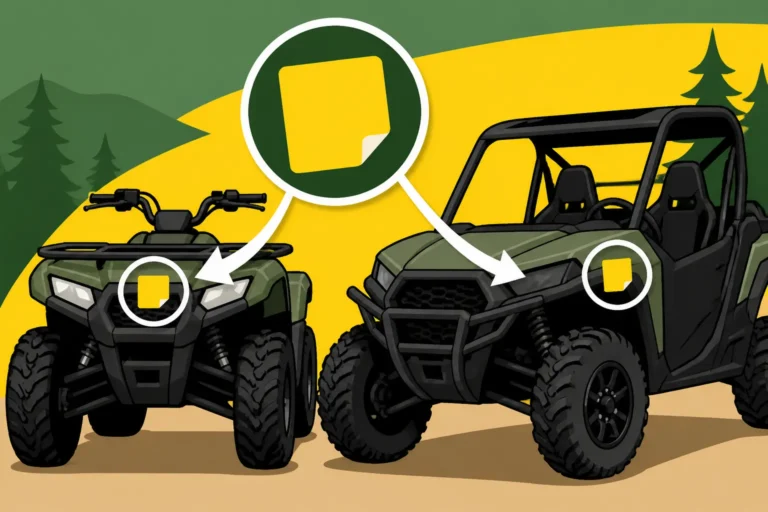
Follow the program’s directions for carrying or displaying the permit. If a sticker must be mounted on the machine, place it where the instructions specify and make sure it is visible and secure. Do not put it somewhere that is likely to peel off in mud, water, pressure washing, or repeated transport.
Keep the receipt or digital confirmation as well. A permit sticker may show that you have completed one part of the process, while the receipt can help answer a question about the purchase or its validity. Store a copy on your phone and, if convenient, keep a printed backup in your tow vehicle or riding bag.
A waterproof document pouch can help protect paper confirmations and emergency details from trail dust and wet weather. If you browse Amazon or another retailer for one, choose a pouch that closes securely and fits the documents you actually plan to carry. The pouch is only for organization; it does not replace any display requirement set by the permit program.
If a sticker comes loose or is damaged, don’t improvise a substitute or assume that a receipt alone will resolve the issue. Check the official replacement process and keep the purchase record available. See Mounting a Hatfield-McCoy Permit Sticker and Permit Stickers That Fall Off for more on avoiding and addressing that problem.
Don’t confuse a trail permit with a rental waiver or insurance
A rental agreement, damage waiver, insurance policy, and trail permit are different documents. A rental shop may ask you to sign a waiver and may offer coverage options, but those arrangements do not automatically pay for or replace the trail permit. Read each item as its own requirement.
Before the trip, ask what happens if a rental machine is damaged, stuck, or needs recovery. Those costs may be separate from the permit and can be much larger than the permit itself. Understand the contract, know how to contact the rental provider, and stay within the permitted trail system.
Insurance also deserves its own check. Ask your insurer what the policy covers and whether the machine is covered while riding on managed trails. A trail permit is not proof of insurance, and an insurance card does not grant access to a managed trail.
For more detail, read West Virginia Rental Insurance Options and What a Trail Permit Does Not Cover. If the rental shop gives you a checklist, compare it with your permit confirmation and insurance information so you can see what is still missing.
A realistic trip budget beyond the permit
The permit is a necessary line item, but it is rarely the whole cost of a Hatfield-McCoy weekend. Building a complete budget keeps the purchase from feeling like a surprise and helps you decide whether to bring your own machine or rent.
Transportation, fuel, and lodging
If you bring a machine, include fuel for both the tow vehicle and the ATV or UTV, trailer needs, and the cost of getting to your selected trail town. A route to southern West Virginia can involve mountain roads and changing conditions, so leave room for travel time and fuel stops rather than planning as if the trip were a short local ride.
Lodging varies with the kind of trip you want. A cabin with trail access may reduce trailer shuttling, while a campground or hotel could suit riders who prefer a different setup. Compare the total stay, parking, machine storage, and proximity to the trailhead rather than choosing only by nightly cost.
Food also adds up, particularly for a family or group staying several days. Some riders pack meals and snacks; others plan to stop in town. If you are riding into a trail town, check route access and local rules instead of assuming every restaurant or store can be reached legally from every trail.
The list Fuel and Food Along West Virginia Trails and Cabins With Direct West Virginia Trail Access can help you plan around practical trip needs. When comparing lodging, ask whether a package includes permits, parking, or rental arrangements rather than relying on the headline description.
Rentals, repairs, and recovery
Renting avoids hauling your own machine, but the rental bill may include conditions that matter more than the advertised base package. Ask about the machine type, passenger capacity, fuel expectations, required deposits, damage terms, mileage or usage limits, and what happens if the vehicle needs trail recovery.
If you bring your own machine, consider the cost of pre-trip maintenance. Inspect tires, brakes, steering, lights, belts, fluids, and tie-down points before leaving home. A small repair in your garage is usually easier to handle than discovering a problem on a remote trail far from your trailer.
Recovery is another budget item that riders often forget. Mud, steep grades, and narrow trail sections can turn a small mistake into a long wait or a paid recovery. Riding within your skill level and choosing routes suited to your machine can reduce the chance of trouble, though no preparation eliminates it completely.
Check Recovery and Towing on West Virginia Trails and Pre-Purchase Inspection Before You Sign if you are deciding whether to rent or bring a used machine. If you’re shopping for basic ride organization, a waterproof pouch or phone mount from Amazon may be convenient, but it is not a substitute for safe navigation, communication planning, or a recovery plan.
Gear and incidentals
Budget for a properly fitting helmet, eye protection, gloves, layers, water, and any machine-specific safety equipment. Riders often discover that a low-cost purchase at home is more comfortable than scrambling for gear after arriving, especially when several family members need different sizes.
Weather can change quickly in the mountains. Rain gear, spare socks, a warm layer, and a way to keep essential documents dry can make a wet day much more manageable. Pack for the conditions you may encounter rather than the forecast you hope for.
Small extras—parking, meals, permit replacement, supplies, and unexpected lodging changes—are easier to absorb if you leave some room in the budget. For a family or group, keep a modest shared reserve rather than asking one person to cover every last-minute expense.
If you use Amazon to shop for goggles, gloves, or a document pouch, check fit, safety markings, and compatibility before buying. An item with a convenient listing is not automatically suitable for trail use. A helmet, in particular, should meet the applicable requirements and fit securely.
Frequently asked questions about Hatfield-McCoy permit costs
Is there one Hatfield-McCoy permit price for every rider?
No single amount should be assumed for everyone. The relevant price can depend on the permit category, the number and type of machines, validity terms, and purchase details. Check the official seller’s checkout for the specific trip you are planning.
If someone gives you a figure without saying whether it is for a resident or nonresident, one machine or several, or a particular purchase channel, it is incomplete information. Ask for those details before using the amount in your budget.
Does a permit cover every machine I own?
Do not assume that it does. Check whether the permit is tied to a particular machine and how the program treats additional vehicles. If you plan to bring a second ATV or UTV, confirm the requirement before purchase.
Does a rental package include the permit?
Sometimes a package may include a permit for a specified rental machine, but you need to confirm the details with the rental provider. Ask which machine and dates are covered and whether another rider or vehicle in your group requires a separate purchase.
Can an out-of-state rider use a home-state registration instead?
A home-state registration and a Hatfield-McCoy trail permit serve different purposes. Verify the permit requirement for trail access, then separately check any ownership, transport, or road-use rules that apply to your machine.
Is the permit the same as permission to ride on West Virginia roads?
No. Trail access and public-road use are separate matters. A trail permit does not automatically make a machine street legal or authorize riding on roads. Check the rules for the specific road and vehicle before planning a connector route.
What should I do if I bought the wrong permit?
Keep the receipt and confirmation, stop before relying on the incorrect permit, and contact the official seller or permit administrator for instructions. Ask whether the purchase can be corrected or whether a different permit is required. Don’t assume that the sticker or receipt will be accepted for a different category or machine.
A practical checklist before you ride
Use this checklist a few days before departure, then review it again before leaving for the trailhead:
- Identify every machine that will ride and who will operate it.
- Confirm each rider’s resident or nonresident permit category.
- Check the official checkout for the correct permit details and total.
- Confirm the permit’s validity terms for your travel dates.
- Ask rental and lodging providers exactly what, if anything, is included.
- Save purchase confirmations and follow instructions for displaying the permit.
- Check trail status, closures, route restrictions, and machine suitability.
- Review age, safety-course, helmet, and eye-protection requirements.
- Keep trail access paperwork separate from title, insurance, and road-use documents.
- Budget for transportation, fuel, lodging, food, gear, and possible recovery costs.
The most reliable answer to “What does a Hatfield-McCoy permit cost in 2026?” is the amount shown by the official permit seller for your category and machine at the time you buy. Build the rest of your budget around the actual trip—not just the sticker—so you can arrive prepared, ride within the rules, and avoid preventable surprises at the trailhead.
Disclaimer
This article is for general informational purposes only and does not constitute professional advice. Laws, prices and regulations vary by location and change over time. Consult a qualified professional for guidance on your specific situation.